

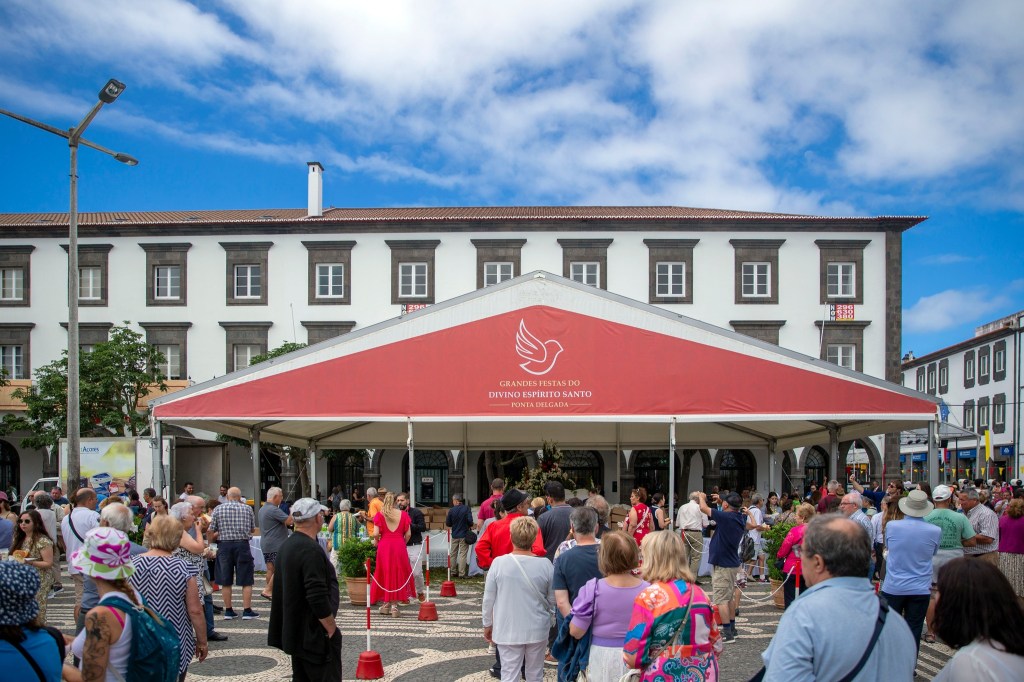
When the clock struck noon, a parade formed by the Ponta Delgada municipal executive and the volunteers who prepared the soups left the Micaelense Coliseum toward Campo de São Francisco.
“Long live the mordomo (steward)! Long live the Holy Spirit!” was heard as the entourage arrived at its destination.
The symbolic moment marked the start of one of the highlights of the Holy Spirit Festivities in Ponta Delgada, where 14 thousand doses of soup and 10 thousand doses of rice pudding were served, prepared by dozens of volunteers over the past few days.
“Everything related to the Holy Spirit, I am there. I like these celebrations”, Dina Medeiros, 69 years old, the oldest team volunteer that prepared the meal, told the Lusa news agency.
The sopas take “a lot of things,” such as cloves, bread, meat, and mint. After “so much work,” it is a satisfaction to see that “everything is spectacular,” she acknowledged.
“The sopas are delicious. We recommend it to everyone who wants to come here. To our emigrants, if they can’t come this year, hopefully, they will come next year. This is a great celebration,” she added.
Next to her, Paula Mendonça was a volunteer this year for the first time. Next year she will repeat the experience: although it is a lot of work, the “conviviality is very healthy”.
“I couldn’t imagine what it was like. I’m tired of helping at all the Holy Ghost Festivals in my parish, but I couldn’t imagine this. People should see the amounts. I enjoyed it. I like to contribute. Next year, God willing, I’ll come back again”, she affirmed.
The sopas are served in several stations along the Campo de São Francisco, with thousands of people forming long lines waiting their turn.
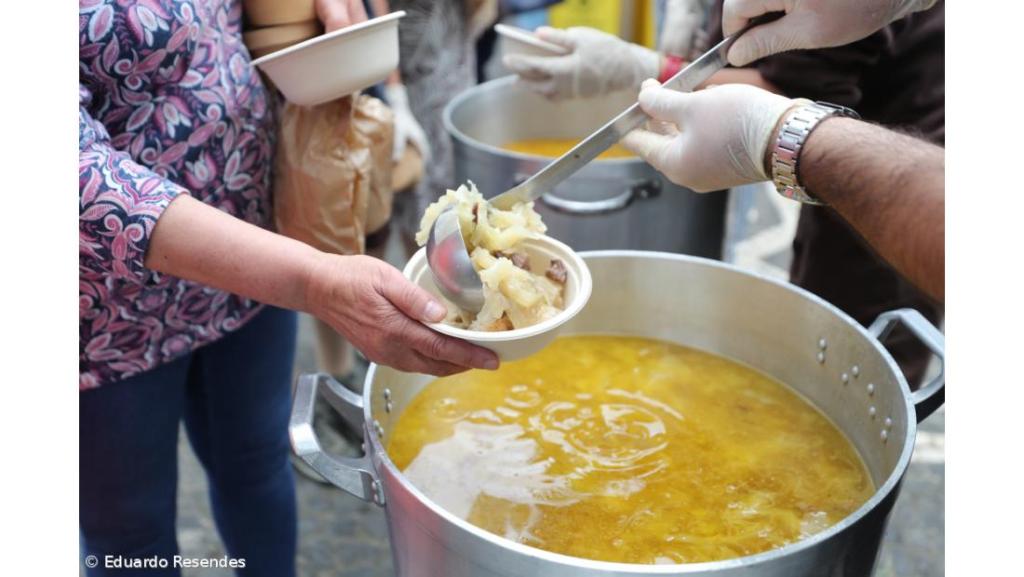
“The sopas are good, very tasty. It’s a very healthy way to socialize, both for the young and the old,” said Herberto Quaresma after serving himself.
The native of Pico island, who has been living in São Miguel “for many years”, reveals that he has been coming to those celebrations for 20 years, ever since the Ponta Delgada City Hall started organizing the festivities as a way to honor the secular tradition, which happens in all the islands of the Azores.
“This is also a tradition in Pico. Since I can’t be there, I’m here,” he said.
The community meal was lively. Some improvised a stage for the dinner, and those who came early in the morning to get a place at one of the tables.
Maria de Lourdes Pragana, from Lagoa, who went to the Campo de São Francisco at 10:00 a.m.: “I really like these parties. I come every year whenever I can. I love these parties. […] I like the sopas the most, and I like socializing with people.”
At the site, groups of tourists looked admiringly at the participants while receiving the guides’ explanation of what was happening there. There were people of all ages and from various parts of the island and the Azorean diaspora.
“It’s good that the tradition is maintained. It’s a very typical tradition. Faith in the Holy Spirit is something very Azorean. I like the sopas,” said Margarida, 14 years old.
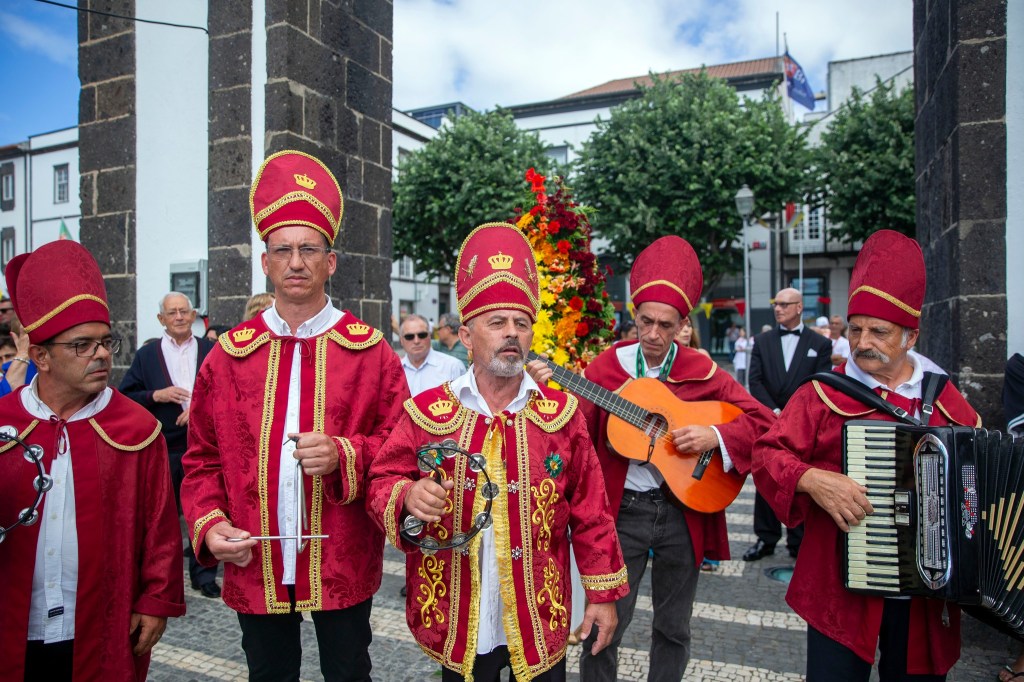
The “citizen” José Manuel Bolieiro, president of the Azores government, was also present and, in statements to Lusa, stressed the importance of the tradition as an intricate part of the “Azorean identity”.
“He is a citizen who is here and who believes very much in this magnificent tradition of our devotion to the Divine Holy Spirit and in the experience of the great lessons that the Holy Spirit gives to the common life and the community: sharing, equality, and this communion is best represented through the sopas”, he declared.
The leader of the regional executive witnessed the tourists’ surprise when invited to share a free meal: “We have tourism that loves nature, which is magnificent, but also a cultural tourismo that likes to participate in our cultural identities.”
The mayor of Ponta Delgada, who went to all the tables to greet those present, also explained that the sopas “give meaning and body to the essentials of the Holy Spirit.”
“These sopas, this rice pudding, this conviviality that we do here in Campo de São Francisco is nothing more than the exteriorization of the Feasts of the Divine Holy Spirit. In the religious part that we all assume, but also giving body to the reality of sharing”, reinforced Pedro Nascimento Cabral.
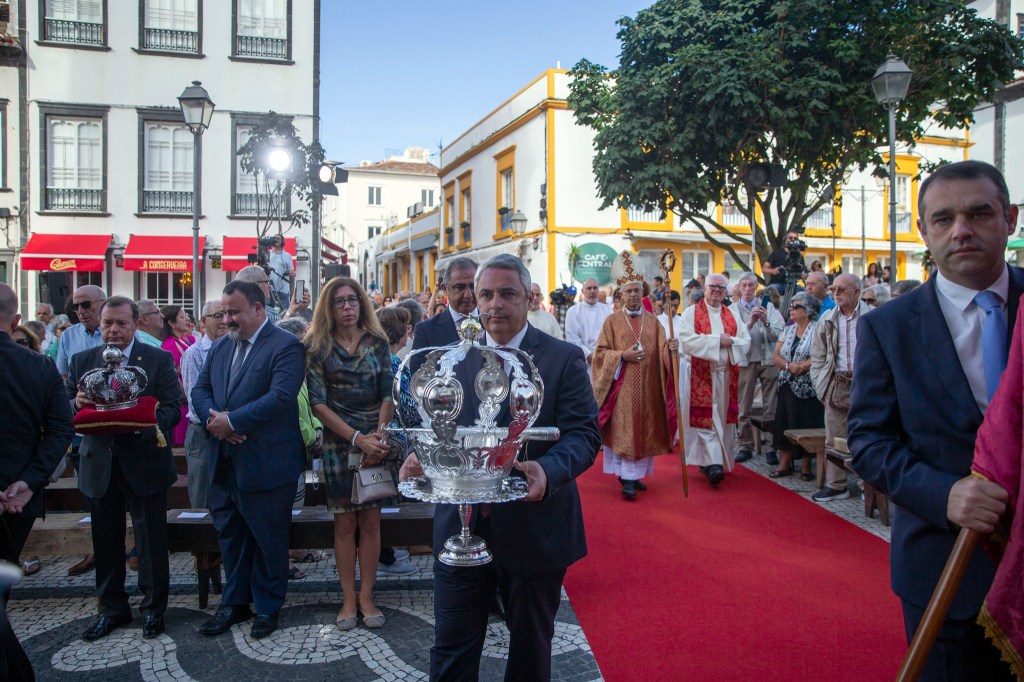
He said this is a special edition, not only because it is the twentieth, but also because Ponta Delgada has signed a twinning agreement with Alenquer (Lisbon district), where the festivities in honor of the Holy Spirit were born in 1321.
“With this gesture of sharing, we assume what the gifts of the Holy Spirit: wisdom, intelligence, knowledge, fortitude, and counsel are,” he concluded.
LUSA-Açoriano Oriental news story translated to English by PBBI-Fresno State as a part of our community outreach through our NOVIDADES digital publications.
 Novidades - The Islands and the Diaspora