

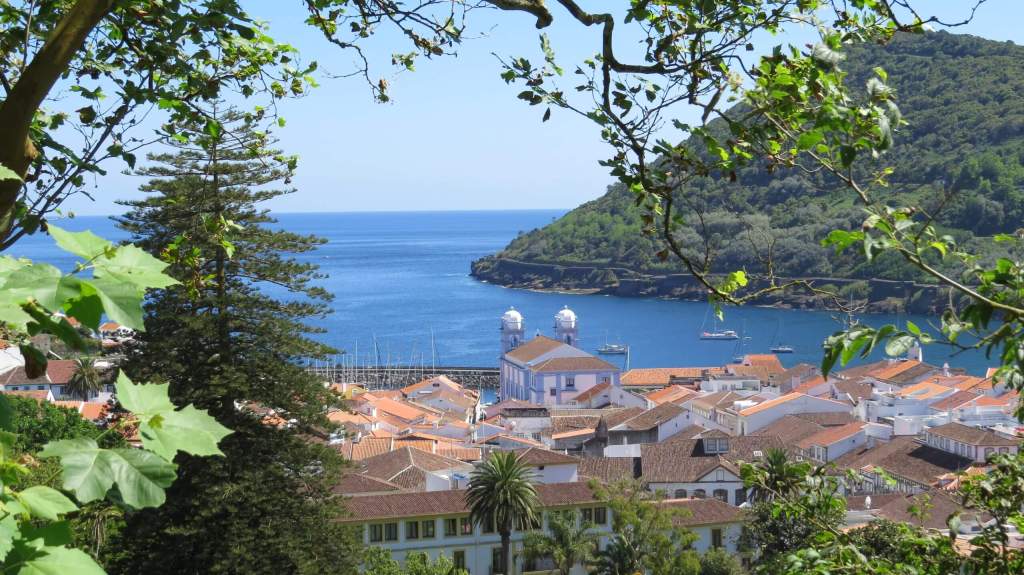
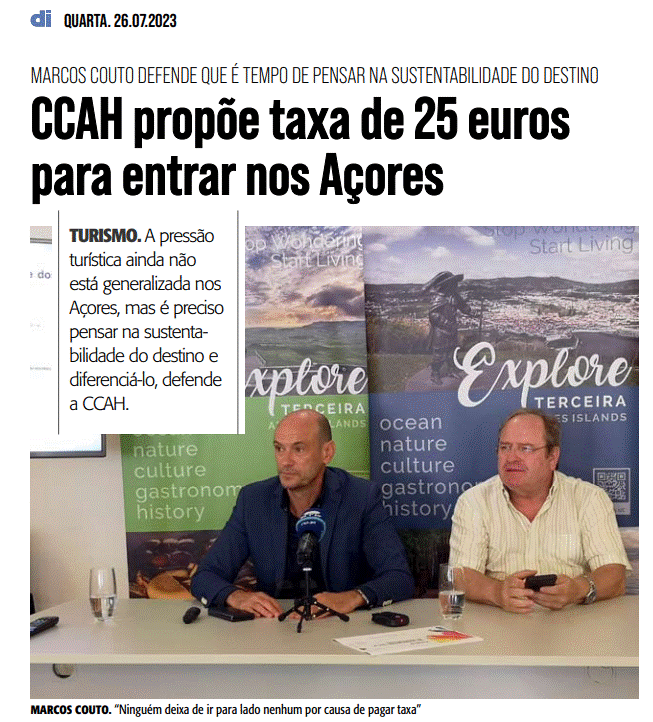
The Angra do Heroísmo Chamber of Commerce (CCAH) advocates the creation of a sustainability fee in the Azores, with a value of 25 euros, for those arriving from outside the region.
“This type of fee differentiates us from other destinations and allows us to work what we want. We cannot be a cheap destination; we have to be a differentiated destination,” said the president of the business association, Marcos Couto, at a press conference.
The CCAH will launch a petition on the Internet for the proposal to be discussed in the Legislative Assembly of the Azores, which is possible from 300 signatures.
The aim is to create a regional fee of €25, charged on entry to the region to non-residents over 12.
The business association suggests the creation of an online platform where, in addition to paying the fee, tourists sign a commitment that they do not visit the Azores “to pollute” but to “be part of the ecosystem.”
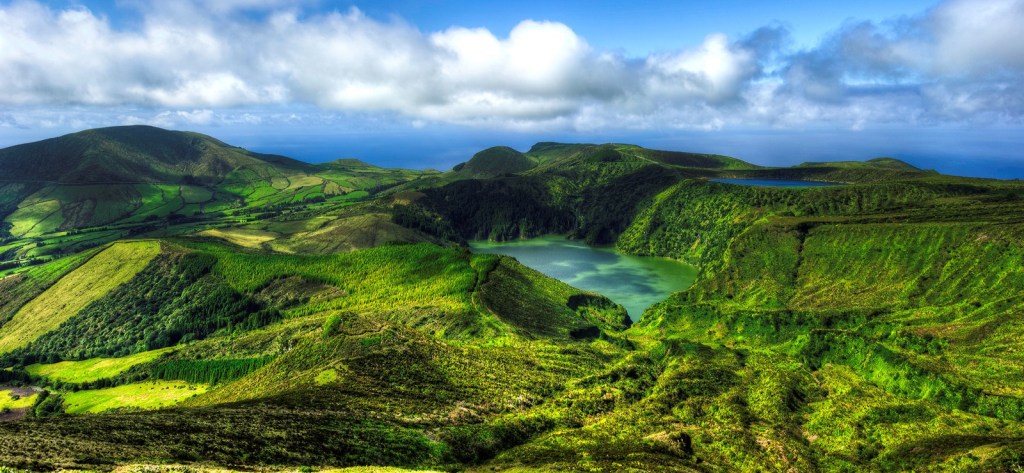
The idea was inspired by the policies of other regions and countries with characteristics similar to the Azores, such as Fernando Noronha (Brazil), Costa Rica, and Palau.
According to Marcos Couto, the Azores do not yet feel widespread tourist pressure on all islands. Still, they must “start preserving the destination now” instead of “finding measures later to mitigate the mistakes made.”
“At the moment, in some areas and particular periods of the year, namely in high season, we have some pressure points, specifically on the island of São Miguel. We don’t even have that in the rest of the Azores. But we have to start preparing for the future and differentiate ourselves from our competition,” he said.
Recognizing that “it is early to put limits,” the businessman warned of the need to “start to understand what the limits [of the region] are. Otherwise, it will be too late”. “It is essential to start now to preserve the destination and the sustainability of our region instead of coming up with measures later to mitigate mistakes made,” he appealed.
The Legislative Assembly recently approved the creation of a maritime ecotax of three euros for passengers disembarking on cruise ships starting in 2025.
In April 2022, a tourist tax of one euro per overnight stay (up to four nights) or two euros per disembarkation in ports for non-residents was approved. The measure was eventually revoked before it entered into force, scheduled for January 2023, after generating opposition from business associations, associations linked to tourism, and municipalities.
Marcos Couto defended, however, that CCAH’s proposal is different because it is “structural,” unlike the tourist tax.
“The revenue was not distributed evenly by all entities that participate directly or indirectly in the promotion and sustainability of the destination; it had no clear objectives; it was a fee for the fee,” he criticized.
“Something must be created that is not cyclical, that is structural, and that is a non-tourist sustainability fee, but environmental, economic, social, that has transversality in its application and in the objectives it has,” he stressed.
The president of the business association also rejected that the sustainability fee could be seen as an obstacle to the development of tourism in the Azores, as he emphasized.
Nobody stops going anywhere because of paying a fee
If we think that Europe is considering creating an entry fee, it is increasingly widespread from the point of view of destinations”, he stressed.
By the accounts of the Angra do Heroísmo Chamber of Commerce (CCAH), the measure would have an estimated revenue of 25 million euros, which would be divided between the Regional Government (40%), municipalities (40%), and parish councils (20%).
The money would be applied to “environmental awareness, infrastructure improvement, environmental preservation, ensuring the continuity of sustainability policies and destination promotion.”
Marcos Couto also pointed out that with the creation of the portal for payment of the fee, the regional authorities would have access to information on the profile of tourists visiting the archipelago, to define a much better tourism policy better.
From the Diário Insular newspaper, José Lourenço-director.
Translated to English as a community outreach program from the Portuguese Beyond Borders Institute (PBBI) and the Modern and Classical Languages and Cultures Department (MCLL) as part of Bruma Publication and ADMA (Azores-Diaspora Medial Alliance) at California State University, Fresno.
 Novidades - The Islands and the Diaspora
This is a horrible policy especially that fact that you mention some fees will go to infrastructure. That is laughable. You continue to make this harder and harder for. Person to visit family and friends. I guess you forget that majority of us go to visit family and we are responsible adults. We are not there to destroy anything . From the way this person talks one would think he is part of the Biden administration.
LikeLike