

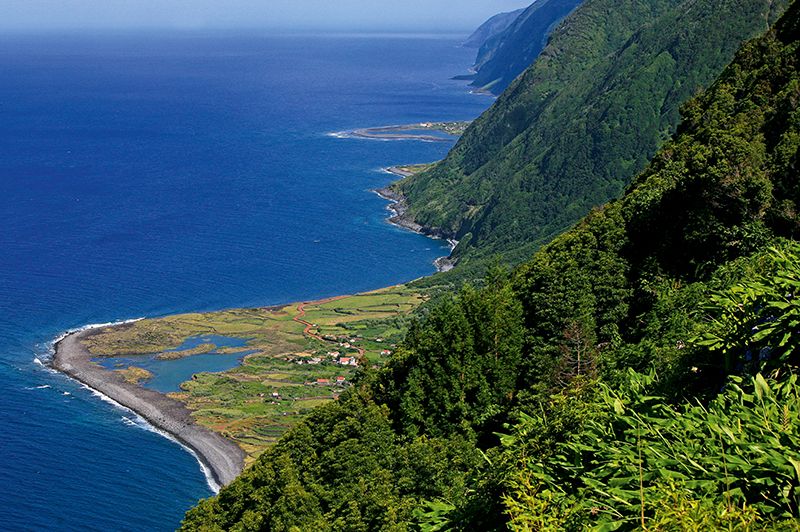
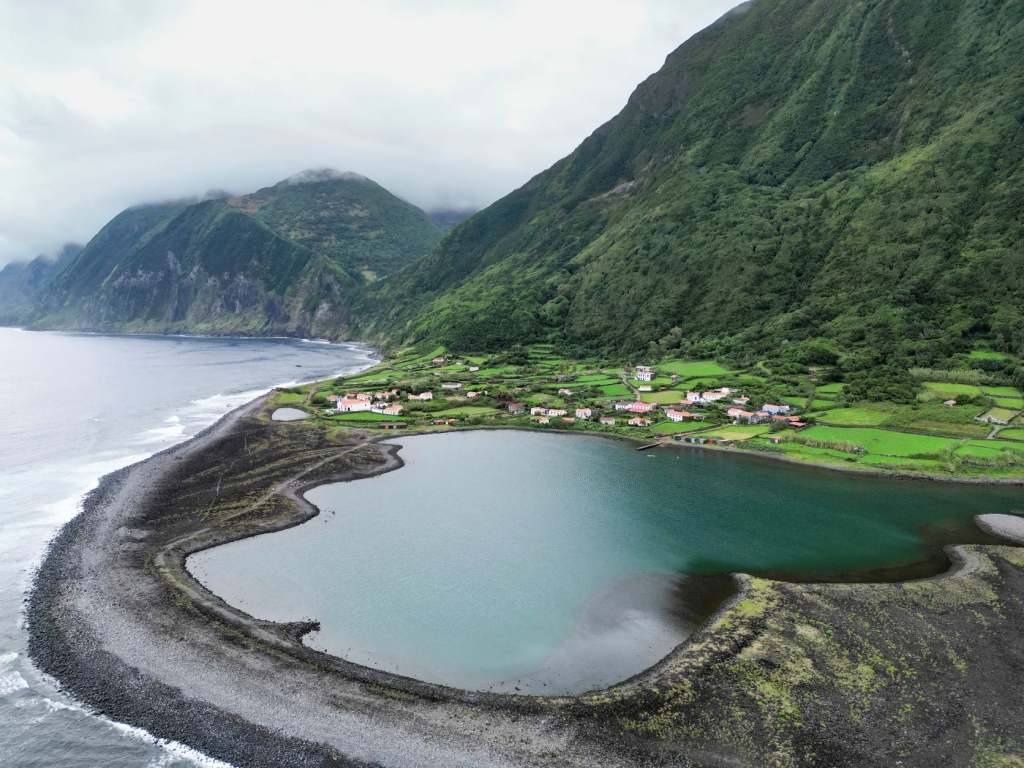
The fajã of Caldeira do Santo Cristo is considered a sanctuary for bodyboarding and surfing, being the only place in the Azores where clams reproduce.
According to a press release published on the official website of the Azorean Government, the Regional Secretariat for Sea and Fisheries, through the Regional Directorate for Fisheries, signed this week contract with the Portuguese Institute for Sea and Atmosphere (IPMA) for the acquisition of services for the classification and monitoring of the Fajã de Santo Cristo Lagoon as a Bivalve Mollusc Production Zone (ZDP).
“This is a strategic action for the region since, in addition to complying with EU food safety regulations, Lagoa da Fajã de Santo Cristo will be the first site in the Azores included in the National Bivalve Mollusc Monitoring System (SNMB),” says the Regional Government (PSD/CDS-PP/PPM).
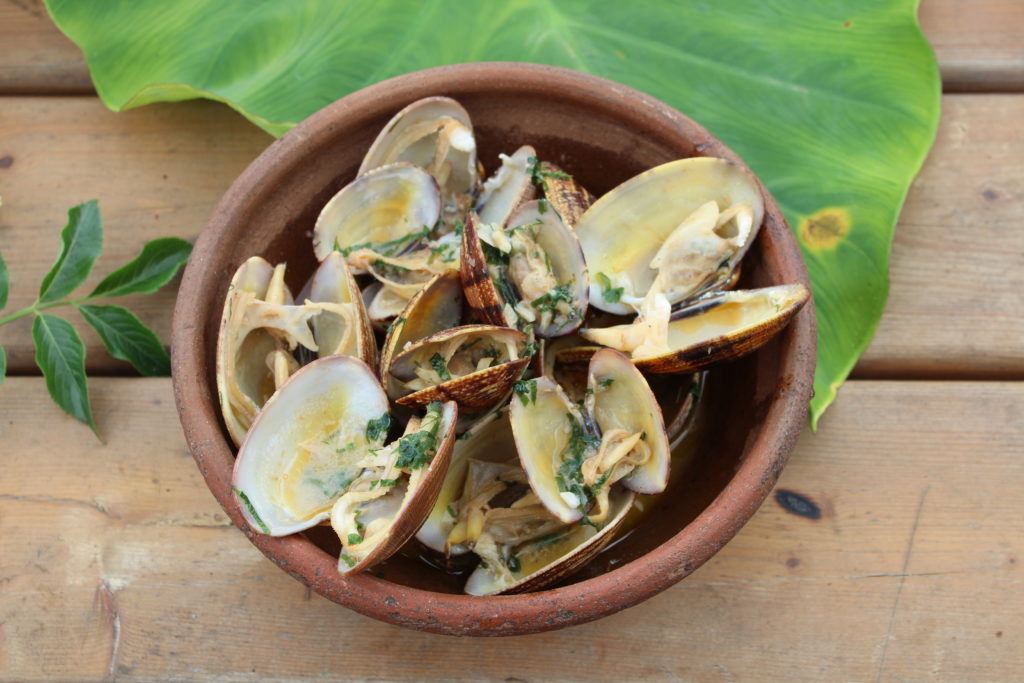
The bivalve clam (Ruditapes decussatus) produced in the Fajã da Caldeira de Santo Cristo Lagoon is the only bivalve mollusk species currently commercialized in the Azores. In the press release, the Regional Secretariat for the Sea explains that the classification and monitoring of the production area were proposed “consensually, by the members of the Adaptive Co-management Group of the Clam of Fajã da Caldeira de Santo Cristo (GCA FCSC).” The contract has an execution period of 24 months and will have different phases.
According to the Azorean Government, the training of elements responsible for collecting and sending samples to IPMA will be initially conducted. Subsequently, a health study will be carried out, including sampling, to identify the possible sources of pollution in the Santo Cristo Lagoon and define the limits of the ZDP and the monitoring sampling points. “This project, unique in the region, is the starting point for an approach to the management of marine living resources, based on a process of sharing knowledge, information, and power of influence in decision making, to promote mutual collaboration and consensus among the main stakeholders to formulate proposals for sustainable solutions regarding the responsible capture of the clam and protection operations of the Fajã de Santo Cristo Lagoon,” states the press release.

IPMA is the authority in Portugal for creating, classifying, and monitoring bivalve mollusk production areas, according to the quality of the bivalves and the waters, to determine whether the clams can be placed directly on the market for human consumption, whether they need purification treatment or whether the harvest should be banned entirely. For the Government of the Azores, establishing this food safety and traceability system “meets the importance and need to offer safe and certified products to consumers.”
The monitoring of the quality of the clam and the lagoon “is fundamental for the future traceability project” of the Fajã de Santo Cristo mollusk that is being elaborated in a consensual way, he adds. The Regional Secretariat for the Sea also stresses that the management model will serve other species produced in the region to promote “food security, the quality of fisheries products and the sustainable and responsible capture of the region’s natural resources.”
LUSA news service, published in the Açoriano Oriental newspaper, Paulo Simões, director.
This news story was translated to English as a community outreach program from the Portuguese Beyond Borders Institute (PBBI) and the Modern and Classical Languages and Cultures Department (MCLL) as part of Bruma Publication and ADMA (Azores-Diaspora Medial Alliance) at California State University, Fresno.
 Novidades - The Islands and the Diaspora