

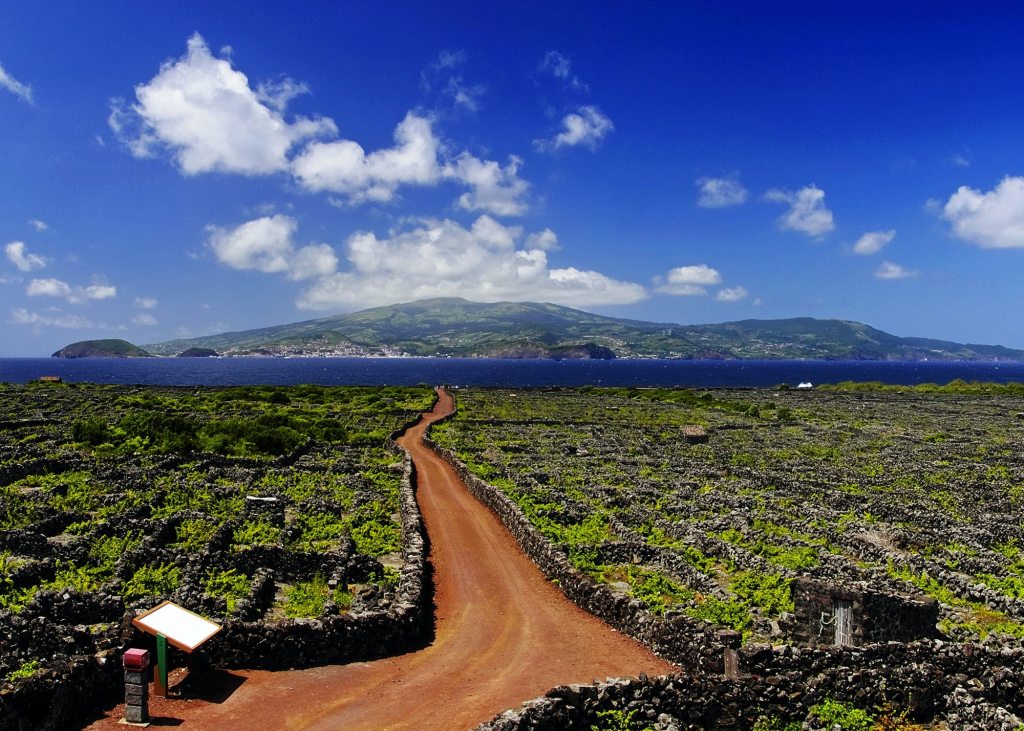
According to forecasts published by the Vine and Wine Institute, the Azores will see a record increase in wine production this year. At the national level, wine production in all of Portugal is expected to increase by 8% this year.
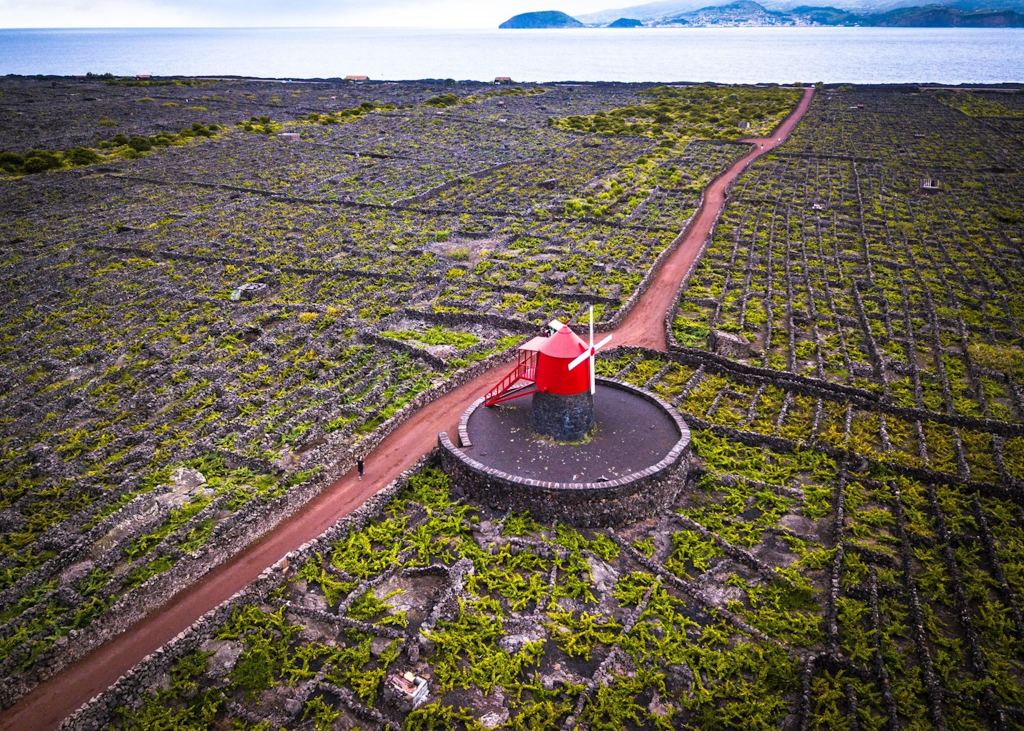
In the Azores, the forecast is for an increase of +165% to 12,000 hectoliters.
The increase in production in the Azores is due, on the one hand, to the fact that the starting point is low – of the 14 Portuguese wine regions, it is the one that produces the least volume – and, on the other, to the fact that the last three wine years have been low in the region, with successive decreases in production and the effects of tropical storm Lola, in 2021, according to the Público new story, quoting from official sources.
The IVV’s (Vine and Wine Institute) statement confirms another fact: to date, “in general, the grapes are in a good phytosanitary state, thus allowing us to anticipate a good quality production, subject of course to the climatic conditions that occur until the harvest.”
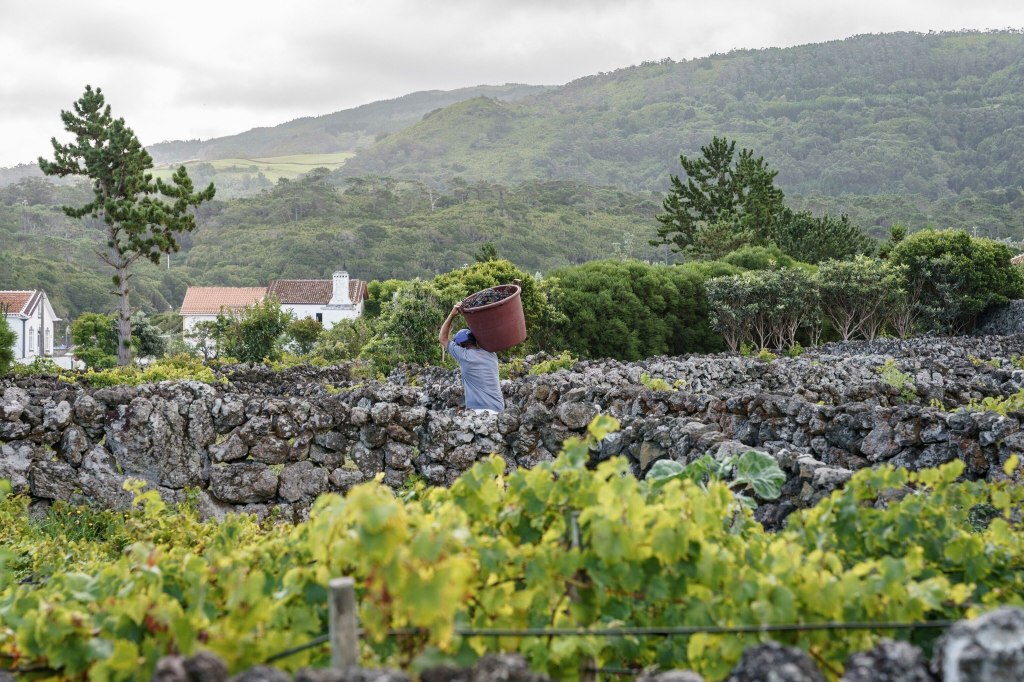
It was already known that this year would be productive because the harvest has already started, particularly in the south, in the Algarve, and that this year’s wine production in Portugal would (will) be higher than that recorded in 2022.
Generally speaking, the country is having an excellent wine-growing year (surreal, compared to what’s happening in the Mediterranean basin), which is partly due to the anticyclone in the Azores, which protected the country from the heatwaves that suffocated southern Europe, says Público.
“The Douro (+10%) and Lisbon (+10%) regions are the ones showing the biggest increases in volume compared to the last campaign, with increases of more than 100,000 hectoliters,” says the same press release.
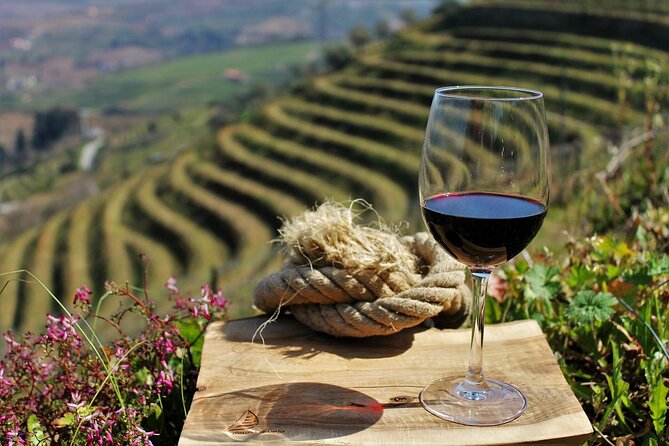
The Dão “doesn’t expect any change in production” (expecting a volume of 279,000 hectoliters), while the Madeira region points to a slight decrease (-1%, 38,000 hectoliters) compared to the previous campaign.
In addition to the Douro and Lisbon, which are forecasting volumes of 1.6 million hectoliters and 1.3 million hectoliters, the other two regions that produce the most wine, Alentejo and the Vinho Verde Region, are expected to increase their production by 5%, the former to almost 1.2 million hectoliters and the latter to 1 million hectoliters.
Tejo is expecting a 10% increase to 755,000 hectoliters. The Setúbal Peninsula expects the same increase (+10%), to 550,000 hectoliters.
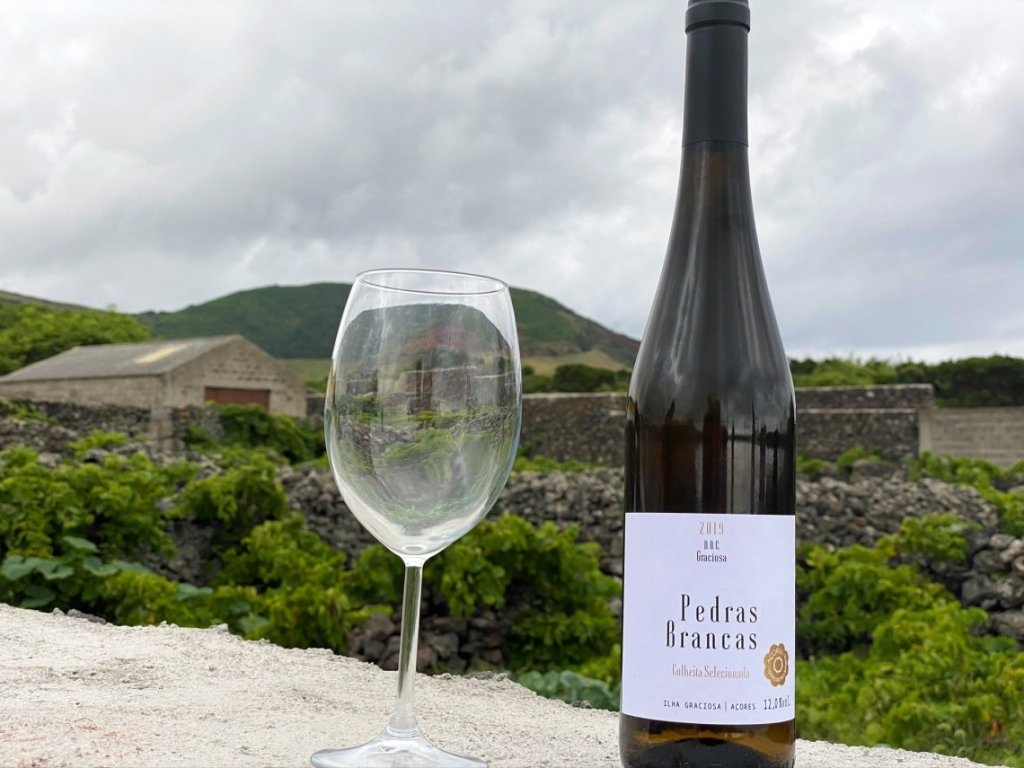
Beira Interior (+15% to 232,000 hectoliters), Bairrada (+10% to 222,000 hectoliters), Trás-os-Montes (+15% to 95,000 hectoliters), Távora-Varosa (+10% to 53,000 hectoliters), the Algarve (+5% to 17,000 hectoliters) and the Azores (+165% to 12,000 hectoliters) are also expecting increases.
This news story is from Correio dos Açores, Natalino Viveiros-director, based on a Público news story.
Translated to English as a community outreach program from the Portuguese Beyond Borders Institute (PBBI) and the Modern and Classical Languages and Cultures Department (MCLL) as part of Bruma Publication and ADMA (Azores-Diaspora Medial Alliance) at California State University, Fresno.
 Novidades - The Islands and the Diaspora