

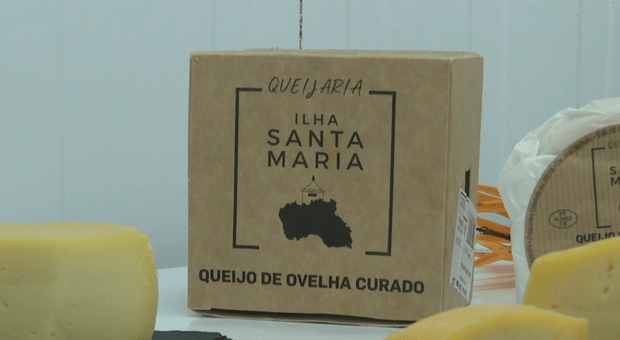
Interview by the Corrieo dos Açores newspaper
How is ARCOA doing these days?
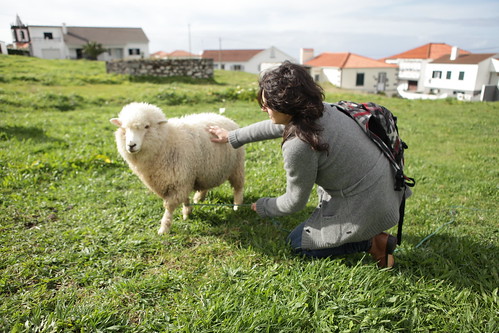
When I joined the Board of the Association, it was almost inactive and had no members. I went to get sheep and goat members, and we made it because it used to be the Regional Sheep Association, the Sheep and Goat Association. We worked our way up; this association is now 37 years old and a regional association. Today we have the experience of dairy sheep, and that’s what we’re working on. These sheep were introduced from abroad to Santa Maria. They are of the Lacaune breed, originally from France.
How many members are currently registered with ARCOA?
We have around 70 members, and the number of members has been growing.
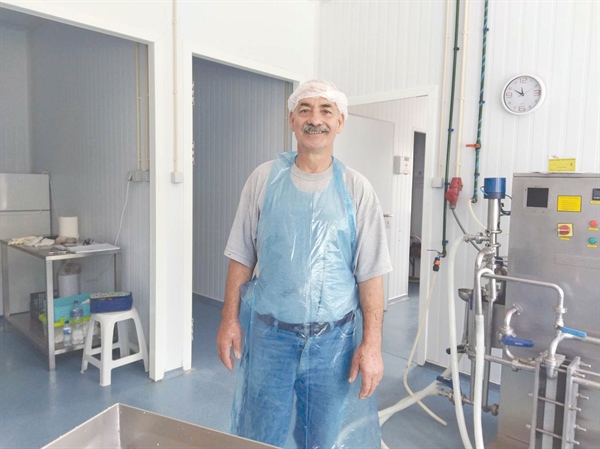
Are most of the members from the island of Santa Maria?
The majority are from the island of Santa Maria, but we also have members from the islands of Pico, São Miguel, Faial and Terceira.
How many animals are in Santa Maria at the moment?
In total, we have around 3,000 animals, including sheep and goats. This figure includes all breeds.
With regard to cheese, this year you finally launched sheep’s cheese, a long-standing goal of ARCOA…
Last year we carried out some experiments. Some went well, others did not, and we had a few setbacks last year. This year we started off on the right foot with a perfect, unusually well-received cheese; it was a success, and we no longer have any sheep’s cheese because we’ve sold everything. We’ve also put another cheese on the market, made from a mixture of sheep’s milk and cow’s milk, which the public has received very well. This leads us to believe that we are on the right track. Of course, success doesn’t come immediately, it takes a lot of work and hassle, but with a bit of persistence, I think we’re on the right track.
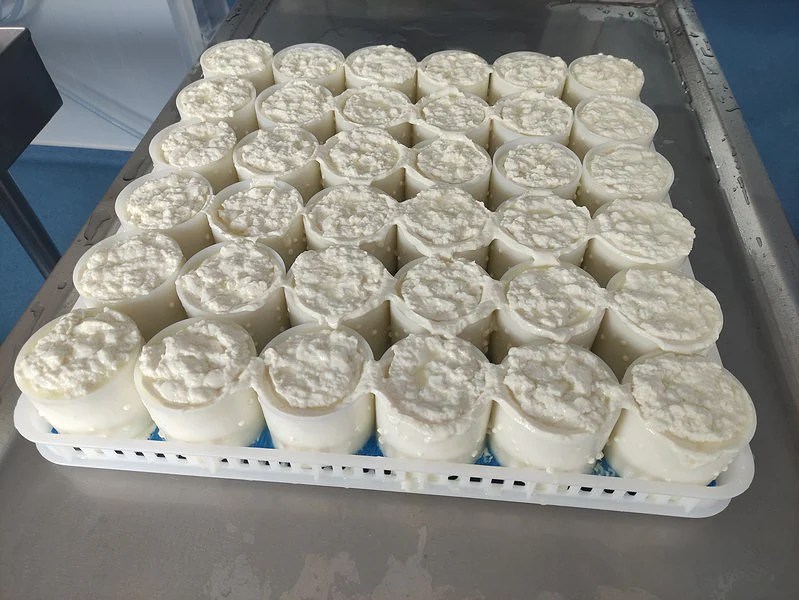
How long is your sheep’s milk cheese?
It’s a 45-day aged cheese, semi-buttery, so it’s neither soft nor hard. I can tell you that we process around 100 liters of milk every day.
Given this first year’s success, are you planning to increase production?
We are planning to increase production. We only milked the sheep once a day, and this year I’m going to see how much more milk they give by milking them twice daily. Then that will naturally be reflected in an increase. New ewes are coming in now for the first time, so we will definitely increase milk production.
Do you believe it’s possible to double the current production?
More than that would be over-optimism; if we manage to double it or get close to it, it’s already terrific.
Have most of your sales occurred in Santa Maria, or have you managed to export the product?
This year, we placed our product in Rei dos Queijos and Príncipe dos Queijos. Continente (a large supermarket chain in the Azores) sells our cheeses. We were also at the Azores Fair, where the cheeses were so successful that we agreed to supply Guarita Supermarkets in Terceira. We don’t have the capacity to supply anyone else. But we don’t just supply sheep’s cheese. We also have matured cow’s cheese. We have this cow’s milk to sustain the cheese factory, and we make a traditional Santa Maria cheese, with quality, different, and made with raw milk. We can’t have a cheese that’s the same as the others, and we want to stand out.
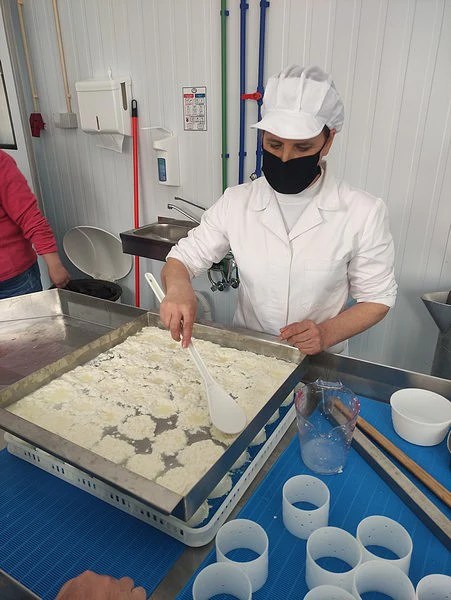
Is that exactly what sets your cheese factory apart from the others?
Of course, it does. It has to be about quality and difference. We’re thinking of innovating and launching a new product. Let’s see…
What new product specifically?
It’s too early to reveal what we will launch (laughs). At the beginning of the year, we hope to have something new.
In terms of facilities, does ARCOA have all the conditions it needs to work?
Of course, we always need more. We started with many sacrifices; there’s little money and never enough. We also have the problem of being a non-profit association and can’t apply for grants to buy specific equipment. Right now, we need a new pasteurizer. The one we bought when we started working was in good condition, but it takes a long time to pasteurize the milk. Time is money, and if we had a machine that, instead of taking two hours to treat 250 liters, took half an hour, that would be better. We still have a vat in which we have to stir manually, but nowadays, there is equipment where this isn’t necessary, and all we have to do is add the rennet. Otherwise, the factory is new, has all the conditions, and is well-built.
As well as cheese, you have also invested in the production of lamb…
Santa Maria lamb is our strong suit. It’s been selling well, and the breeders are betting on it. This year, the price of meat has increased a bit, and at the moment, even though we’ve had an increase.
Luís Lobão-journalist for Correio dos Açores, a newspaper directed by Natalino Viveiros.
The island also produces other great cheeses.
Translated to English as a community outreach program from the Portuguese Beyond Borders Institute (PBBI) and the Modern and Classical Languages and Cultures Department (MCLL) as part of Bruma Publication and ADMA (Azores-Diaspora Medial Alliance) at California State University, Fresno.
 Novidades - The Islands and the Diaspora