


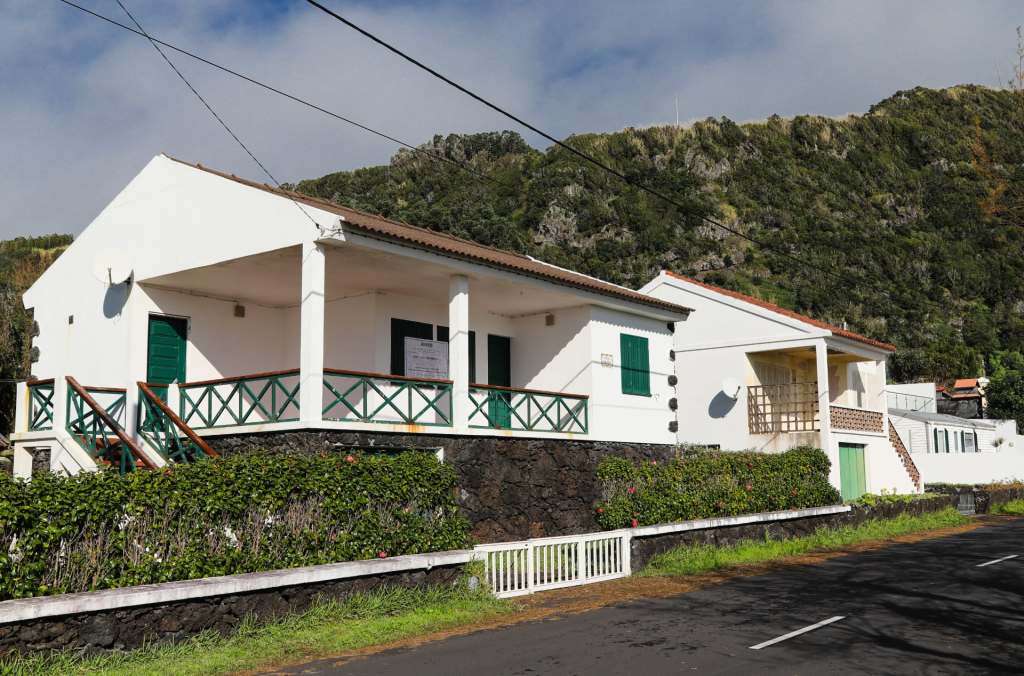
Last July, the price per m2 of homes for sale in the Azores stood at 1,346 euros, down 0.9% from the previous month. While, on the one hand, the quarterly variation in the price of homes for sale fell (-0.9%), on the other, the price per m2 of homes increased by 11% compared to July 2022. At a national level, the Azores is the region where the price per m2 is lowest, just behind the 1,400 euros recorded in the Central zone. While in Madeira, the figure was 2,607 euros, the highest price in the country was in the Lisbon metropolitan area (3,492 euros).
It should also be noted that the all-time high for houses for sale in the region dates back to February of this year when the price per m2 was 1,389 euros. Within the Azores, there are natural variations in prices by island, with São Miguel being the one where, last month, the price per m2 of houses for sale was the highest (1,499 euros). Despite the drop in price compared to the previous month, the annual variation compared to July last year is +12.2%. The all-time high on the archipelago’s most populous island was in April of this year when the price per m2 stood at 1,527 euros. The island of Faial, where the highest price was reached in July (1,309 euros per m2), saw the biggest increase in the region compared to the same period last year (+28.9%). The upward trend in value per m2 is transversal to the other archipelago islands, with Pico also recording substantial growth between July 2022 and July 2023 (+25.7%). In the last month analyzed, the value per m2 of houses for sale was 1,293 euros on the ‘mountain island.’ In São Jorge, where the annual variation is not very significant (+4.2%), the price of m2 of houses for sale was 1,056 euros. Finally, in Terceira, where the price per m2 has risen by around 13.2% over the last year, the price per m2 was 1,118 euros in July this year.
Comparison with other locations in Portugal
In the national context, where the average price per m2 for houses for sale was 2,531 euros, the highest value was in Lisbon (3,859 euros). Faro (3,177 euros), the island of Madeira (2,616 euros), and Porto (2,483 euros) were also areas where the price per m2 of houses for sale was high in July this year. In the opposite direction, and with the least expressive values, were territories in the Portuguese interior such as Guarda (668 euros), Portalegre (703 euros) or Castelo Branco (847 euros). This analysis also highlights the places where the price per m2 of houses for sale rose most significantly between July 2022 and the same month this year. In this regard, Évora tops the table with a 34.3% increase in the space of a year. Still in the 30% range, Viana do Castelo (+31.7%) and the island of Porto Santo (31.5%) were the places where the increases were most substantial.
Francisco Manuel dos Santos Foundation study suggests “possible overvaluation of house prices”
The housing issue has been one of the most prominent topics. A recent study by Paulo M. Rodrigues, Rita Fradique Lourenço, and Hugo de Almeida Vilares, published by the Francisco Manuel dos Santos Foundation, examined this issue. In this analysis (“The housing crisis in big cities”), it is stated from the outset that “the evolution of housing prices has contributed to the acceleration of inequality in many countries, including Portugal, where the increase in housing prices has outstripped wage increases. This evolution also affects the rental market, one of the main sources of income for real estate investors and one of the main monthly expenses for tenants”. Still on the subject of price trends, it should be noted that during the pandemic, despite the natural contraction in GDP, “house prices have continued to rise in Portugal. Public support policies during the pandemic were important for protecting families’ incomes. They will have contributed to the increase in new loans for house purchase.” In addition to highlighting a decrease in demand for housing loans from 2022 onwards due to rising inflation and interest rates, this study suggests that house prices may be “overvalued.”
“The models used in the analysis indicate that house prices in Portugal are higher than would be explained by macroeconomic factors, suggesting a possible overvaluation of house prices. Periods of exuberance have been identified in housing prices in Lisbon and Porto, which will continue until the end of 2022,” we read.
On the other hand, since 2014, “the use of the housing stock for tourist activities such as local accommodation has had a significant impact on housing prices (purchase and rental), especially in tourist areas.” The growth in demand from foreign citizens is also another of the topics covered in this study.
“Investment is primarily carried out by European citizens, who have rights to access the market, which are impossible to limit at national level, and ‘gold visas’ are a small part of this investment. In the tax field, between 2009 and 2020, there was a limited universe of around 52,000 beneficiaries of a reduction in personal income tax through the status of non-habitual resident,” it specifies.
As well as highlighting the demographic changes that have taken place in the housing market in recent years, “with a decrease in credit applications from younger households and an increase in the number of households in older age groups”, the document also points to the “reduction in the construction of new homes.”
“Partly due to the focus on urban rehabilitation, which is a more time-consuming and complex process, the financial restrictions in the construction sector and the scars in the sector resulting from the international financial crisis of 2008-2009 and the sovereign debt crisis in 2010-2012,” it reads.

Examples of measures implemented abroad
In what is not a problem exclusive to Portugal, the authors of this study have identified some of the measures implemented in other countries to tackle the problem of housing affordability, namely through “measures to limit demand involving tax increases for some activities or foreigners, restrictions on purchase by foreigners and regulation of the short-term rental market for tourism”. Also mentioned are the “granting of subsidies to families to increase accessibility to the purchase and rental markets or to maintain the purchasing power of families in the face of rising interest rates” or the “regulation of rental markets combining more protective measures for tenants and rent control.”
Also, in this regard, some “measures to encourage the expansion of public and private supply which, among others, involve tax measures to support the construction of affordable housing.” Some of the housing policies implemented abroad include the implementation of “incentives for the construction of developments that seek to combine social housing and housing at market prices in certain locations” or the increase in the public housing stock.

The real estate market falling in some European countries.
Asymmetries in the European real estate market are already a reality. Although housing prices continue to rise in Portugal, some countries, such as Sweden, are already experiencing a marked cooling in the market. Since the second quarter of last year, house prices have fallen by around 15% due to inflation and rising interest rates. In other Scandinavian countries and central Europe, this slowdown is also being felt and is, according to Público, “scaring the European real estate market,” which now fears contagion.
Meanwhile, in Ireland, Euronews recently reported that “more than 11,500 people” were at risk of homelessness and “were forced to resort to emergency accommodation” in December 2022.
“This is a 30% increase on the figures for the same month last year, according to a report published by the Irish Ministry of Housing,” it said.
Luís Lobão – journalist for Correio dos Açores, Natalino Viveiros-director
Translated to English as a community outreach program from the Portuguese Beyond Borders Institute (PBBI) and the Modern and Classical Languages and Cultures Department (MCLL) as part of Bruma Publication and ADMA (Azores-Diaspora Medial Alliance) at California State University, Fresno.
 Novidades - The Islands and the Diaspora