


The Government of the Azores has approved two resolutions to combat poverty and social exclusion, relating to changes to the Scholarship Award Program and the contracting of services to implement study support points.
According to a note from the vice-presidency of the Regional Government (PSD/CDS-PP/PPM), the two resolutions, approved on Thursday at a meeting of the Government Council, “aim to effectively combat poverty and social exclusion in the Autonomous Region of the Azores.”
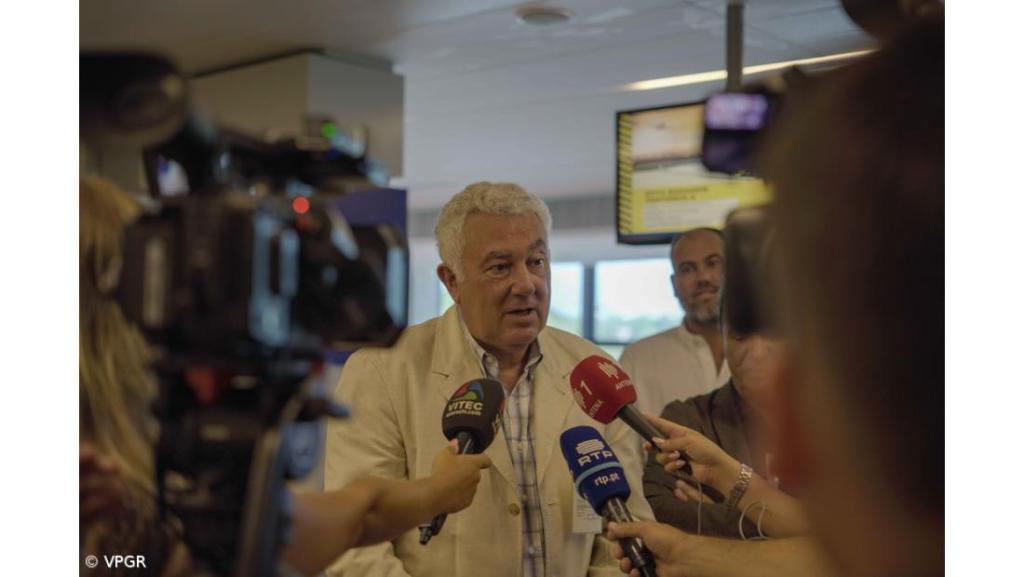
“The Government of the Azores is committed to supporting the most vulnerable, establishing lines of action that break the vicious cycle of poverty, school failure and social exclusion,” said vice-president Artur Lima, quoted in the statement.
According to the note published on the government’s website, the change to the Scholarship Award Program for needy higher education students, funded by the Recovery and Resilience Plan (PRR), “stems from the need to bring this policy into line with the recently approved Regional Strategy for People with Disabilities in the Azores 2023-2030”.
“A quota of 10% of the total number of scholarships to be awarded annually to disabled students, with a degree of disability equal to or greater than 60%, has been set,” he said.
According to the vice-president of the Government of the Azores, the decision “contributes to greater social justice and respect for the rights of people with disabilities,” promoting a “positive differentiation for students in this condition when it comes to accessing the scholarship” as long as they meet the income criteria already set.
The application period for the Scholarship Program will open “during the next week”, which “will allow more scholarships to be awarded for the 2023/2024 academic year”.

Also, according to the press release, a resolution was approved for the acquisition of services to implement study support points for a period of 36 months through public investment, with a base price of 2.2 million euros.
Artur Lima considered it “crucial” to continue implementing the measure that establishes the creation of study support points for children and young people whose families have low economic resources provided for in the PRR due to the social situation.
“This is a policy aimed at promoting school success and reducing the rate of early school leaving,” he said.
In conclusion, the vice-president said that “both IPSS [private social solidarity institutions] and companies will be able to apply, making a decisive contribution to the qualification and training of young Azoreans in need.”

from Lusa News Service, included in Açoriano Oriental newspaper, Paulo Simões-director
Translated to English as a community outreach program from the Portuguese Beyond Borders Institute (PBBI) and the Modern and Classical Languages and Cultures Department (MCLL) as part of Bruma Publication and ADMA (Azores-Diaspora Medial Alliance) at California State University, Fresno.
 Novidades - The Islands and the Diaspora