

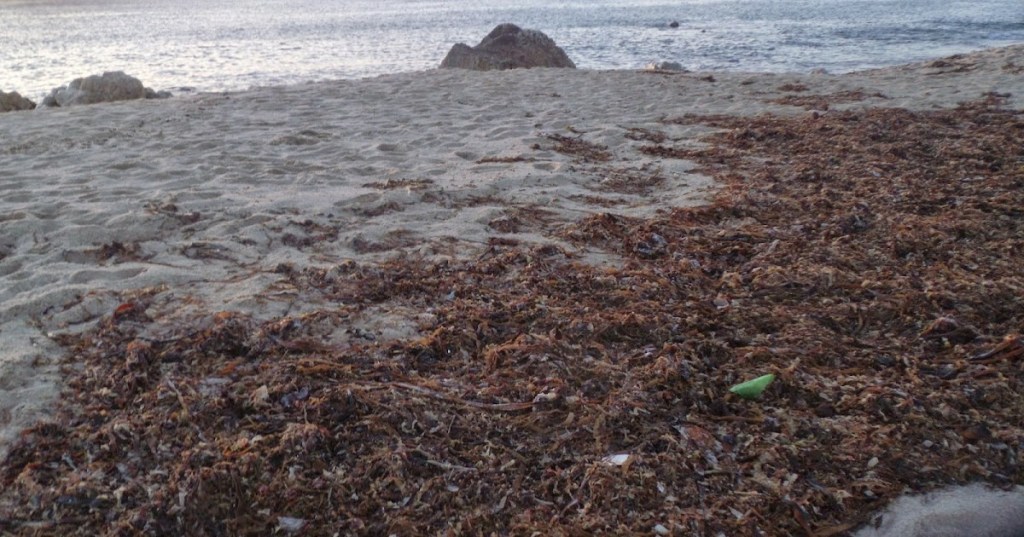
Seaweed harvesting on Graciosa Island, in the Azores, was resumed less than a decade ago and is considered a profitable activity with potential. Still, there are fewer and fewer professionals dedicated to the sector.
Fábio Silva and Adriano Benjamim are two of the five seaweed gatherers who still carry on the activity in Graciosa, a much smaller number than when their fathers did it.
“At the moment, there are only five pickers in Graciosa. We used to have more. When I started, we had almost 10; in the old days, in my father’s time, there were more than 100, quite freely,” Adriano Benjamim, 26, told Lusa News Agency.
He has been picking seaweed professionally since he was 18, but he spent many summers helping his father, from whom he learned a trade passed down “from generation to generation.”
“My grandfather used to do this, my father used to do this and he still helps me with the drying,” he says.
Harvesting seaweed is only possible between June and August – if you’re lucky, it lasts until September – but Adriano guarantees you can get enough yield for the whole year if the season is good.
Even so, there are fewer and fewer pickers on the island. The activity requires “a certain amount of diving practice”, because there are algae that can only be caught at greater depths.
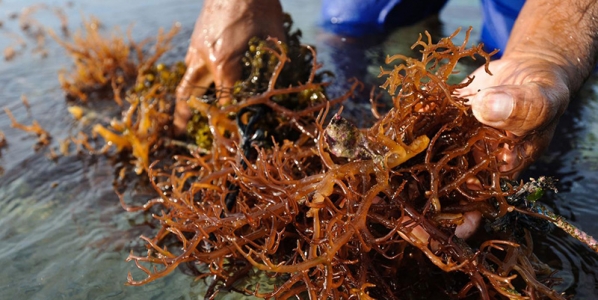
“It’s very difficult for someone who hasn’t been at it since they were little and hasn’t developed a taste for it to get into it,” he says.
Adriano dives when the tides allow and spends four to five hours a day at sea, but there is also work to do on land.
“We wrap a bag around our waist, when it’s full we bring it ashore, spread it out and dry the seaweed,” he describes.
Fábio Silva, 38, learned to collect seaweed as a child with his father at a time when hundreds of tons left the island for Japan.
“At that time, I remember there were a lot of people, but there was a lot. The pebbles were all full of seaweed, and people would tear them off until they wanted to,” he recalls.
“Back then we didn’t have the same rhythm as we do today. There are only a few of us, but we have a better rhythm, we’re in the water longer. Back then, we pulled a lot, but we touched everyone and there were a lot of people,” he adds.
He can’t explain what happened, but the algae practically disappeared. It wasn’t until 2014/2015, when a Portuguese company specializing in the production of agar-agar* looked for pickers in Graciosa, that the activity resumed.
The numbers were encouraging in the first few years, but invasive algae appeared four or five years ago and threatened to interrupt the activity again.
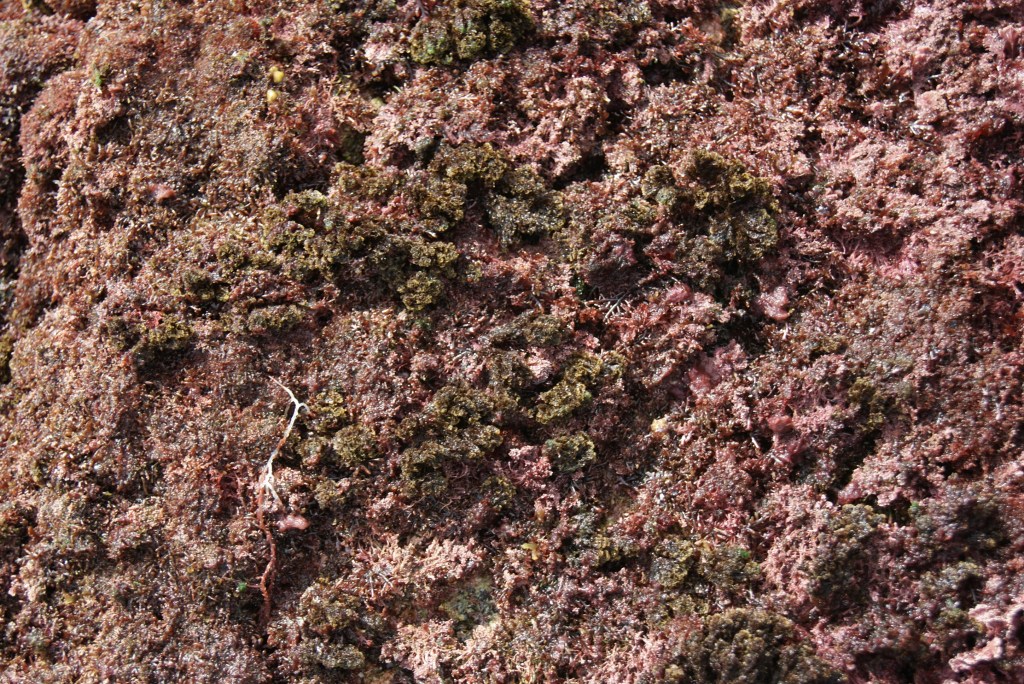
“When this algae came to Graciosa, I thought: this is the end. And then the following year there was always something. In winter the sea destroys it and it stops growing. The water gets colder, there’s less sun and it goes away,” says Fábio Silva.
A meat producer, he divides his time between farming and the sea in the summer months because he can get “a very high yield in a short time” but admits that the activity is difficult.
“It takes us half an hour or 40 minutes to get a result of 10 kilos of dried seaweed. We don’t go out to sea and bring back 20 or 30 kilos straight away. It needs to be in the sea for a few hours and then you have to dry it and when it rains it can’t get rained on,” he explains.
The company, which then sells the agar-agar to the food, cosmetics, and pharmaceutical industries, doesn’t limit the quantity of algae purchased and has even increased the price paid per kilo.
“We sell it straight away. The more we catch, the more they want and we get paid straight away,” says Fábio Silva.
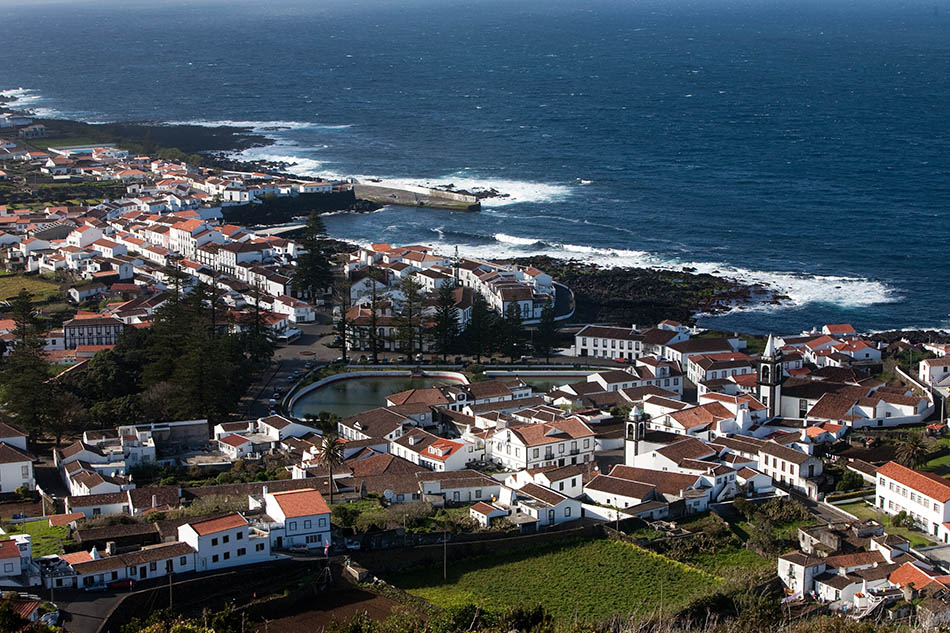
With around 61 square kilometers, Graciosa is the second smallest island in the Azores but one of the islands with the highest volume of seaweed harvested.
According to the regional director for fisheries, Alexandra Guerreiro, “the seaweed market has great potential.” However, in recent years, there has been a drop in the amount of seaweed delivered to auctions in the region.

“There may be some impact here from the new invasive species that is spreading to all the archipelago islands, but we have no confirmation of this data. There are studies underway at the University of the Azores on the impact or possible uses of this invasive algae, but there are no public results yet,” he admits.
Between 2016 and 2018, 450 tons of seaweed per year were sold at auction in the archipelago.
“Many of these algae sales are made under direct supply contracts, and we don’t have a record of the amounts. What we have seen is that the volume of catches has been decreasing somewhat over the last four years. There was a long period between 2016 and 2018 when the amount of catch of certain species in particular was high, but it has been decreasing,” says Alexandra Guerreiro.
Six to seven species of algae are harvested in the region, mainly on Graciosa and Terceira islands, the vast majority of which are exported and used in the cosmetics industry or animal feed production.

Lusa News Agency, in Açoriano Oriental, Paulo Simões-director
Translated to English as a community outreach program from the Portuguese Beyond Borders Institute (PBBI) and the Modern and Classical Languages and Cultures Department (MCLL) as part of Bruma Publication and ADMA (Azores-Diaspora Medial Alliance) at California State University, Fresno.
*What is the English name for agar-agar?
Also agar-agar. Also called Chinese gelatin, Chinese isinglass, Japanese gelatin, or Japanese isinglass. A gelatinlike product of certain seaweeds, used for solidifying certain culture media, as a thickening agent for ice cream and other foods, as a substitute for gelatin, in adhesives, as an emulsifier, etc.
The story in Portuguese…
 Novidades - The Islands and the Diaspora