

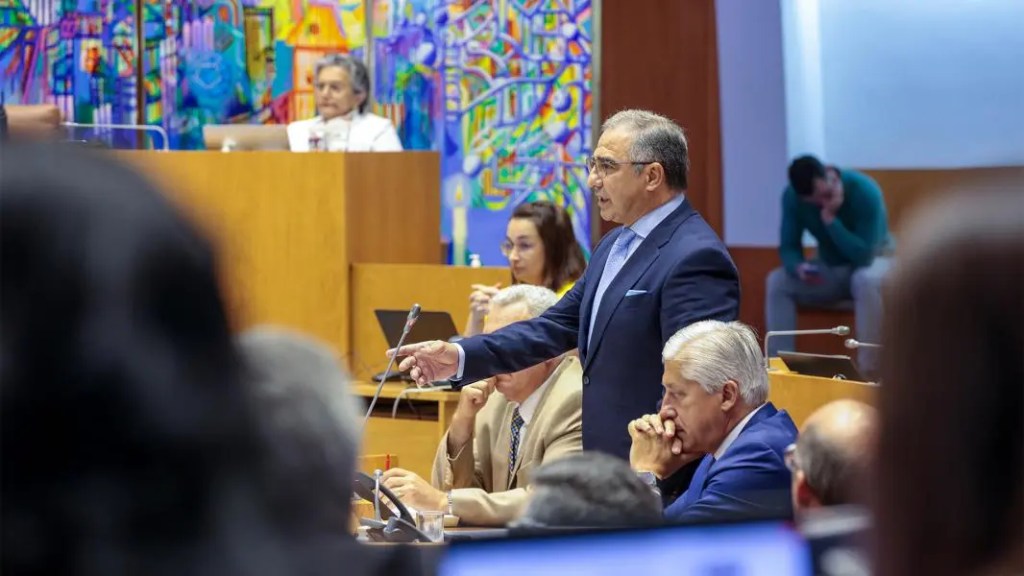
The President of the Government of the Azores says that the Government of the Republic “must comply with all of Portugal.”
José Manuel Bolieiro, pointed out yesterday in the Regional Legislative Assembly the “failures” of the Government of the Republic towards the Azores.
The head of the Azorean Executive was speaking as part of the urgent debate on the “Failure of the Government of the Republic to fulfill its responsibilities towards the Region” presented by the PPM Parliamentary Group. In his speech, Paulo Estêvão “denounced the failure of the Socialist Government of the Republic to fulfill its constitutional duties towards the Azores.” The PPM MP wanted to clarify: “I’m not looking for an external adversary. I’m looking for and want to find a decent government in the Republic that fulfills its constitutional obligations and shows solidarity with the people of the Azores.”
The President of the Government of the Azores, on the other hand, eschewed what he considered “the excesses of political dialectics, scorched earth politics and the exercises of those who look more at electioneering and campaigning dialectics”, José Manuel Bolieiro stuck to what he considered “fair demands, fair negotiations and warnings about cooperation with the Government of the Republic.”
The President of the Government began by referring to an “erroneous” claim by the Left Bloc deputy António Lima that he “didn’t have a relationship problem” with the Government of the Republic. He does have a “relationship with the Prime Minister, and the relationship, even with disagreements, must be cordial, urban and, above all, cooperative in solving the problems that we all have to solve on behalf of the Azores and on behalf of Portugal.”
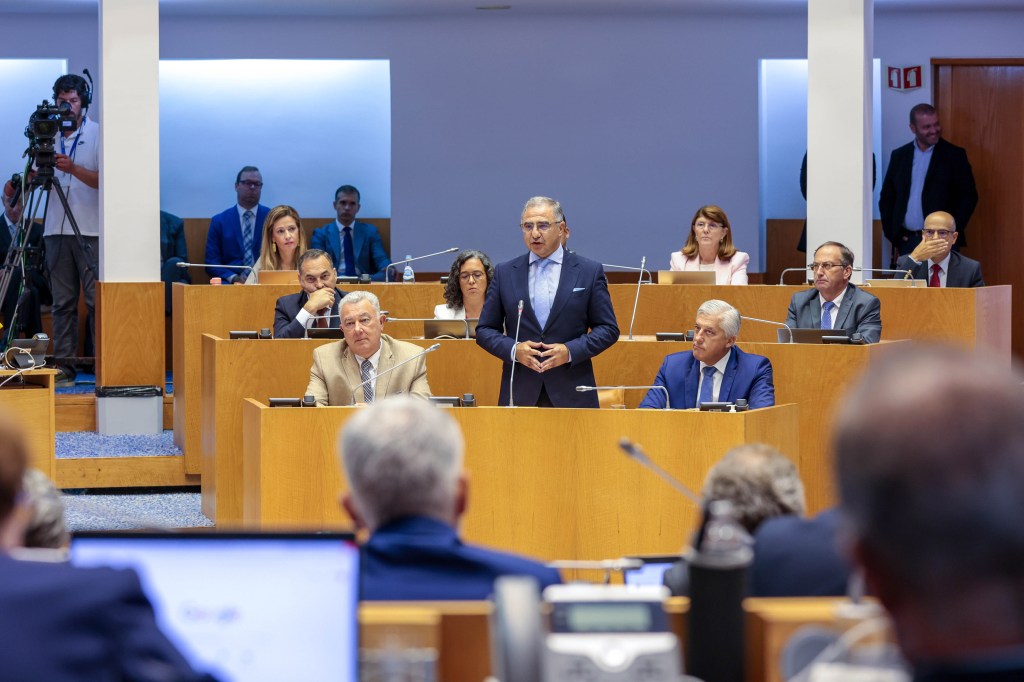
“Non-compliance The negligence and omissions”
“If there are non-compliances, if there are negligences and omissions on the part of the government, yes, Mr. António Lima, the Prime Minister is responsible,” said José Manuel Bolieiro, who continued: “What I said and what you misinterpreted, and therefore, since your assumptions are generally wrong, the conclusions have no other destination than error, is the problem of relations. No, it’s a problem of good relations. It’s the problem of objectively highlighting non-compliances that penalize the development of the Azores and, with that, the compliance of the whole of Portugal, yes, that’s true,” he added.
The President of the Government said that he had signaled “facts and objectives that are indisputable” and that “they have nothing to do with creating an external enemy. These are socialist tactics. They don’t belong to this coalition, they don’t belong to this government. It does have to do with accountability and the idea of an entire Portugal that fulfills Political Autonomy and Political Autonomy fulfills the country’s responsibility.”
“When I pointed out that the Government of the Republic had failed to comply with a commitment made between the Government and the University of the Azores,” said José Manuel Bolieiro, “I didn’t create an external enemy. I brought up an indisputable fact, one that everyone has called for. So, maximum objectivity”.
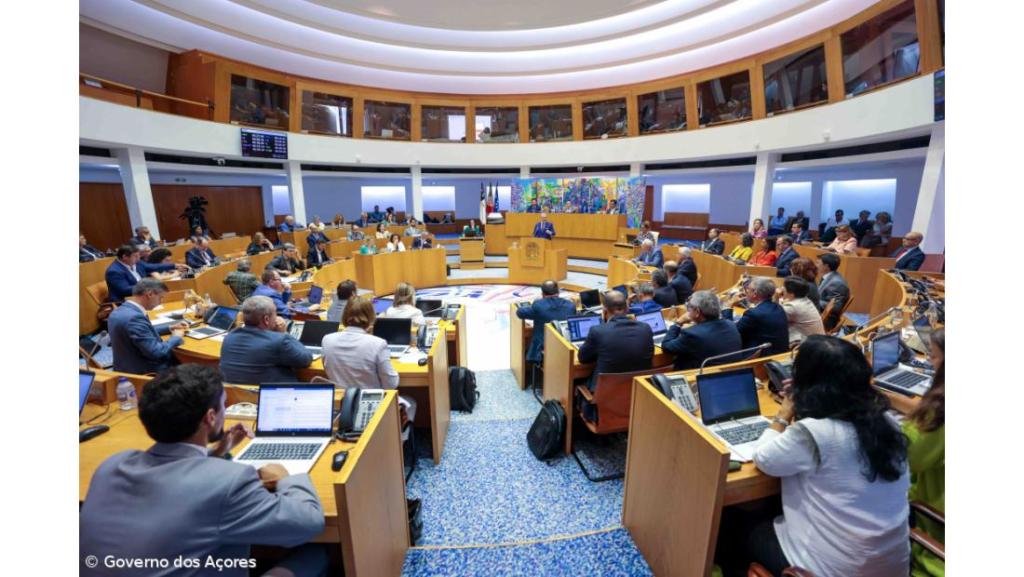
“National measures that have been limited to the continent”
“When I say in my understanding that the government is of the Republic, as José Pacheco says, of Portugal, because the measures are measures to reach, when they are national, the entire territory and all the Portuguese and not measures of the continent for a government that, after all, is no longer of the Republic, nor of the country, but only of the continent. This is not the constitutional framework in which a country’s government is guided and held accountable. It’s not a question of creating an external enemy. Still, of calling on the government to comply with the all of Portugal – the entire country,” said the President of the Azorean Executive.
Bolieiro also referred to the commitments of the Government of the Republic to collaborate in co-financing the recovery of the damage caused by Hurricane Lorenzo. In his opinion, “there was no payment because one of the clauses of this solidarity commitment had to do with payment. The Government of the Azores paid the suppliers and contractors who are carrying out the recovery work, with special emphasis on the dramatic situation of supplies to the island, such as the port of Lajes das Flores. This payment, despite the invoices having been sent, has not been made. The government of the Republic has failed to act. This demonstration, demand and warning was given. And the Ministry of Finance hasn’t resolved the matter,” he said.
José Manuel Bolieiro also spoke of the “urgency and importance of launching the respective tender at the end of the useful life of the submarine fiber optic cables. It should have already been launched. We are calling for this essential public procurement to be carried out in order to meet the deadlines for the useful life of the current cables and to replace them, as we would like, not only by ring, but also by their redundancy, and even by raising their quality, not only in terms of data transmission, but also to be what are known, in the jargon, as smatrs cables with sensors for other information. This is an objective fact. It’s not about creating an external enemy. It’s so objective that it’s unavoidable and, above all, indisputable,” he stressed.
The 9 million from the State Budget that doesn’t reach Azores Airlines
“But,” concluded the President of the Government, “another demand that the government and the coalition made early on in the approval of the State Budget for 2023 “is not only to launch the international tender for the inter-territorial public service obligations, but also to provide in the State Budget the necessary funds in the amount that we felt would be essential to fulfill exactly the fair compensation to the operator.”
“First, the Government of the Republic presented a budget proposal with 3 million euros. We demanded three times that amount, 10 million. The Socialist Party deputies in Parliament spoke of 9 million euros in the State Budget. What use will this amount have in the State Budget without taking into account the tendering and awarding of the service for the public service obligations that the operator, in this case SATA Internacional, has to fulfill?” he added.
“Well, we’re calling for the urgency of this public tender and the solution for 2023 of the compensation component of this public service component. Where is the creation of an external enemy if not to be fair with what is our objective, if not to defend the interests of the Azores, if not to claim what can be claimed by anyone, any Portuguese? Let the government of Portugal belong to the whole country and include the Azores and the Azoreans in the fulfillment of its obligations and its promised solidarity,” added José Manuel Bolieiro.
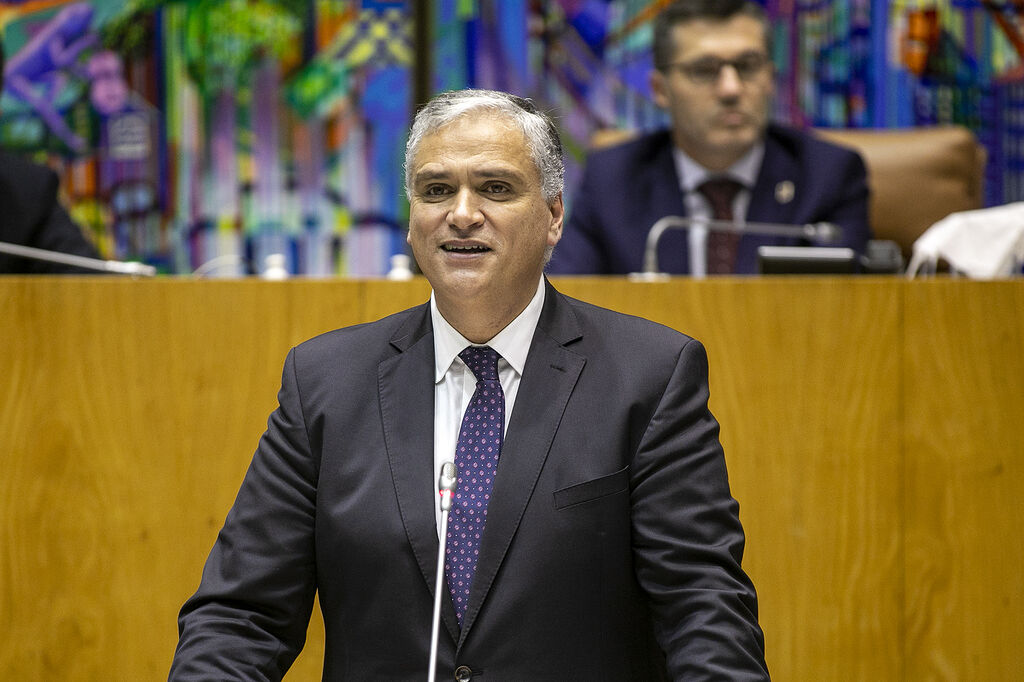
Vasco Cordeiro: “There is no spirit of revenge”
The leader of the PS/Azores and of the PS Parliamentary Group, Vasco Cordeiro, reacted to the intervention of the President of the Government, beginning by saying that he understood the logic of the intervention in the urgent debate on the initiative of MP Paulo Estêvão. “This idea that in political activity everyone moves in a spirit of revenge that, when they are not of the same political color, there is a dark atmosphere of penalizing, of revenge, I understand this, especially after having been in Corvo on Parliamentary Days,” he stressed.
But, he continued, “what I don’t understand is the fact that the President of the Government is so attached to this description of the relationship between the Government of the Republic and the Region”
He said he considered the President of the Government to be “a balanced man” and “someone reasonable. There are, of course, many different views of things”.
“But,” he said, “there is something that, over time, has been happening in regional politics that has stood out particularly clearly today. Which is, if I may say so and with all due respect, the inability of the President of the Government to draw a clear line between what is a demanding, uncompromising stance towards the Republic and what are the conspiratorial musings of Mr. Paulo Estêvão.”
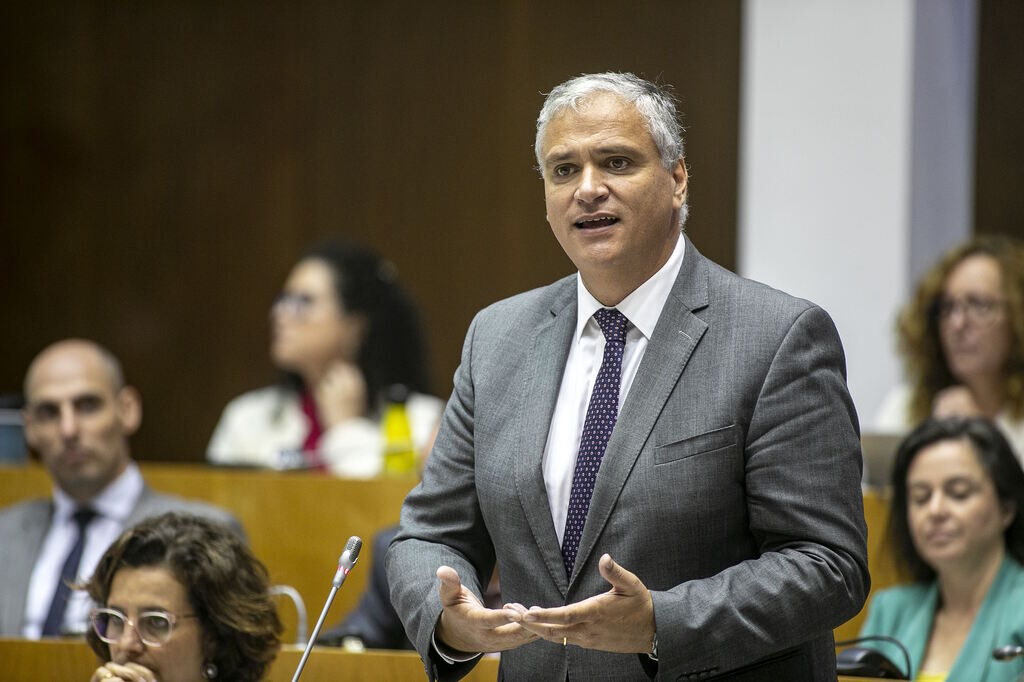
“A disservice to Autonomy”
Throughout his speech, Vasco Cordeiro also said that he “called on the President of the Regional Government to distance himself from this stance” and the Regional Executive because “in cases where he knows there is no fault on the part of the Government of the Republic, he nevertheless tries to blame it, to disguise his faults.” He gave an example: “The President of the Regional Government, on a recent visit to the port of Ponta Delgada, lamented what ‘would be delays on the part of the Government of the Republic in launching the work to rebuild the port of Lajes das Flores, destroyed by Hurricane Lorenzo. But what’s happening is that the Government of the Republic offered Portos dos Açores to bring forward the launch of the public notice for the use of EU funds for this purpose, and Portos dos Açores said it couldn’t go ahead with this application in July, putting it off until September.” He gave another example: “A few months ago, the Regional Secretary for Agriculture called the Minister for Agriculture a liar, but she came out to clarify that it was the Regional Government that asked not to pay the PRORURAL funds to Azorean farmers.”
Vasco Cordeiro recalled that “the Republic’s defaults towards the Azores go back and forth between all governments, from all parties, including the PS,” a phenomenon that “often has to do with forgetfulness, not paying enough attention or not being careful enough” and not with an “aversion to Autonomies.”
However, the President of the PS/Azores stressed that trying to turn the Government of the Republic into an excuse for “all the faults, omissions and, in some cases, incompetence of the Regional Government” is a “dangerous attempt, even from an institutional point of view.”
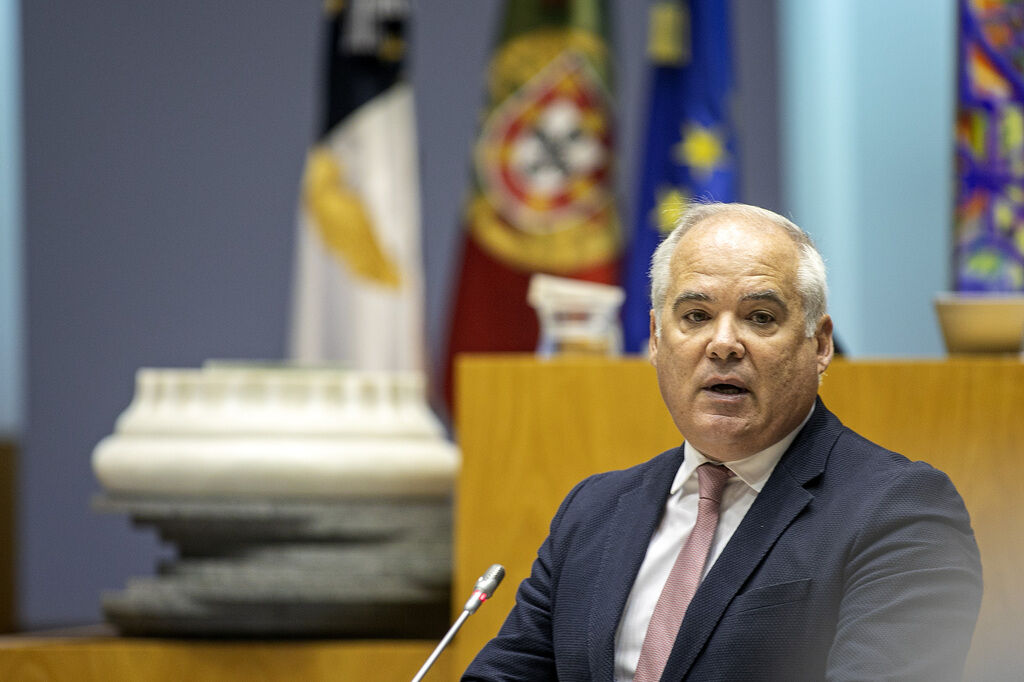
PS deputy José San-Bento had already stated that the Azores “have gained more from the governments of the Republic led by the PS than from governments of any other party configuration.”
The Socialist member of Parliament recalled “historic achievements,” such as the “approval of the Regional Finance Law, the enshrinement of the status of Outermost Region in the Treaty on European Union, the successive generous Community Support Frameworks or the revision of the Azores’ Political and Administrative Statute,” recognizing that this “doesn’t mean that there aren’t several problems that need to be resolved” or that “some mistakes aren’t made.”
The Parliamentarian from the PS considered that the Azorean authorities should fight “calmly and realistically” for an “Autonomy that is demanding and demanding, that demands what is fair, and that seeks compliance from the Government of the Republic with the commitments made to the Region,” considering that “there are many things that are going wrong in the governance of the Azores because there is a clear incapacity of the current Regional Government.”
During the urgent debate, José Pacheco, from Chega, accused the Socialists of “not having the courage to admit that the Government of the Republic has not actually fulfilled its obligations to the Azores.”
For Chega, the debate was centered on a “blame game” when, in fact, governance “is made up of dialogue, not silence or turning our backs.” “There is no government of the Republic here, but of Portugal. And the Azores are Portugal,” he said.
António Lima, from the Left Bloc, argued that “Parliament must decide the political path for the new Regional Finance Law.”
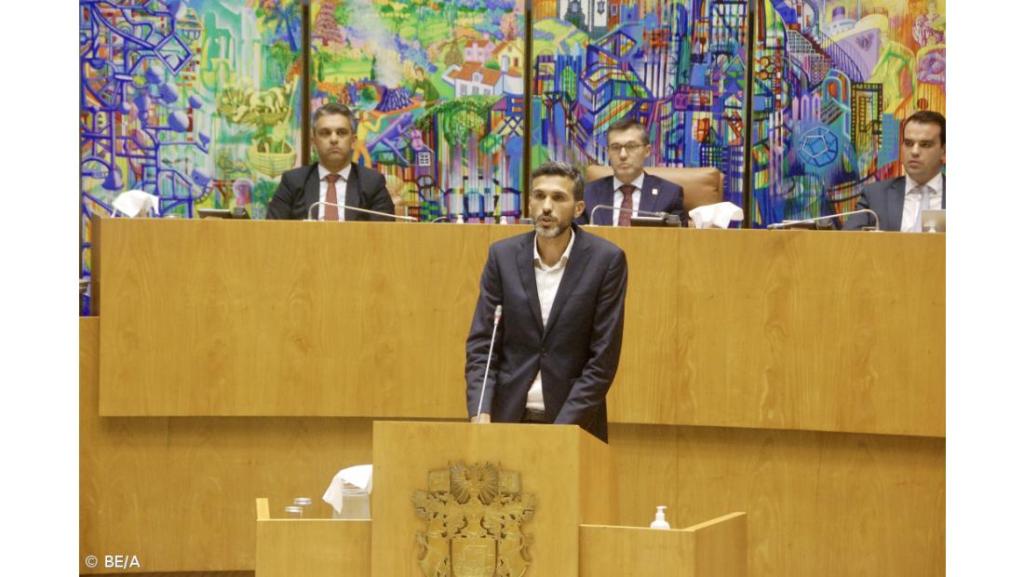
in Correio dos Açores – Natalino Viveiros, director
Translated to English as a community outreach program from the Portuguese Beyond Borders Institute (PBBI) and the Modern and Classical Languages and Cultures Department (MCLL) as part of Bruma Publication and ADMA (Azores-Diaspora Media Alliance) at California State University, Fresno.
 Novidades - The Islands and the Diaspora