

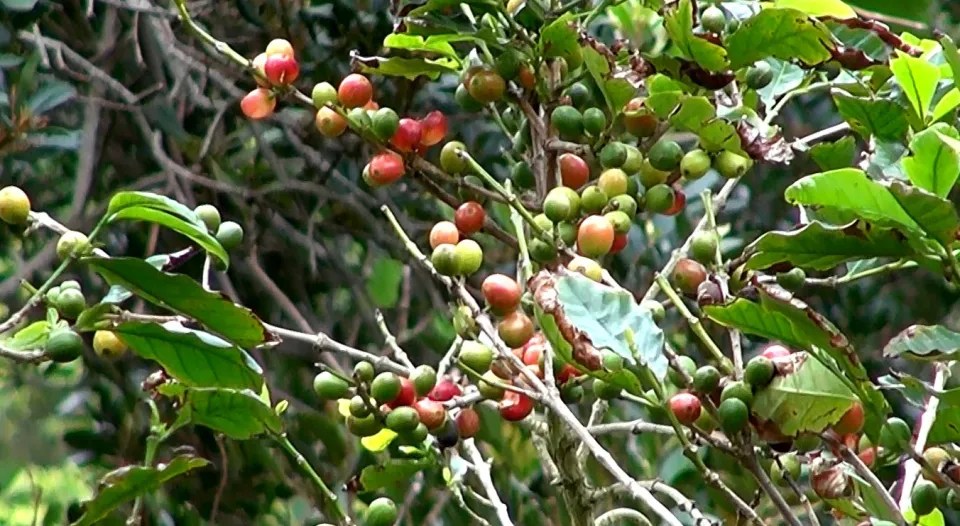
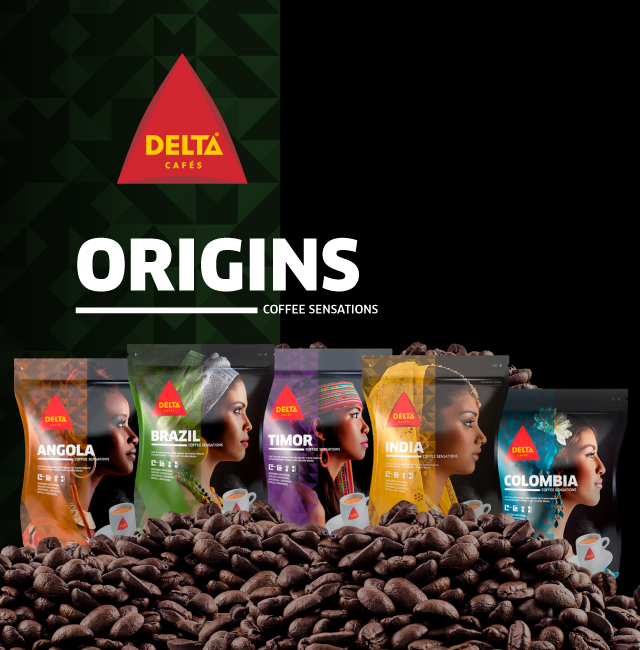
Delta, one of the leading national Portuguese coffee companies, will launch the first micro-batch of coffee from the Azores “by the end of this year”. The President of the Association of Coffee Producers of the Azores told the Correio dos Açores newspaper. In addition to Delta’s previously announced intention to market this product, Luís Espínola also highlights the signing of a protocol between the company and the Association, which currently has around 70 members.
“It has already managed to buy coffee in the region and, for the time being, the Association has signed a protocol with Delta. It’s a non-commercial protocol; they support us in developing knowledge of coffee growing, but there’s no commercial return. There are no market quotas, no fixed prices and the producers who set the prices, never the Association. This protocol will be signed very soon,” he said.
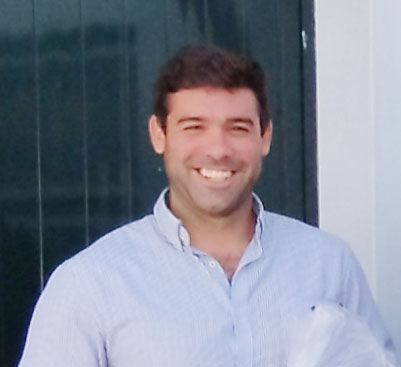
Stressing the importance of this collaboration with Delta, the President of the Association, which already has members “spread across eight of the nine Azorean islands” (except Santa Maria), makes a point of emphasizing that “it is the fact that there is already a unique, quality coffee that makes Delta come to the Azores. It’s our climate, our soil, and the fact that it’s handcrafted that makes us have a product that stands out from all the others”.
Luís Espínola also explains that many Association members have “own-brand batches that are sold, mainly to visitors, on the production islands”.
“This is the cheapest way to export our product, reaching Alaska. In addition to the interest of a national brand, such as Delta, our producers sell their coffee, many of them at the door,” he points out.
Currently carrying out a kind of “coffee census”, the Coffee Producers Association’s President predicts an area will be planted “in the region of 2 to 3 hectares”.
“We have a lot of new areas, and it takes an average of 4 or 5 years for them to start producing. I can venture that the figure is between 2 and 3 hectares,” he adds.
Luís Espínola says with certainty “that coffee planting has been increasing in recent years” and says that coffee “has been around for many days”.
“It’s not something new and coffee arrived in the region, as far as we can tell, around 1840 or 1850, by people from Brazil. There are records of cargo manifests with coffee leaving Terceira for Lisbon and Ponta Delgada,” he says.
Experimental fields to test new coffee varieties
On another front, the President of the Azores Coffee Producers’ Association reveals that introducing “six new varieties of coffee from Brazil” will start soon, following a “protocol we already have with Delta and the Regional Government of the Azores”.
“All of them have already been genetically selected to work best in the region and over the next eight years we are going to study which ones are best adapted to the region so that we can improve the production quality of the coffee fields we have installed and future fields.”
These new varieties, which are different from the two that already exist in the region (yellow bourbon and red caturra), will be studied in two experimental fields on the island of Terceira, in several others on São Miguel, and then in 20 observation fields “spread across the islands of Terceira, São Miguel, Pico and Faial.”
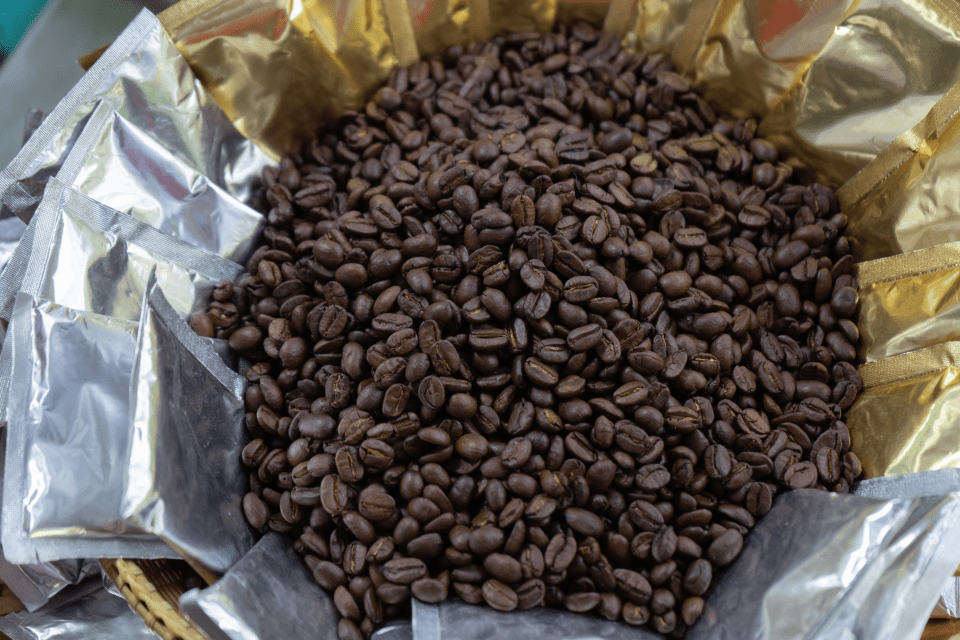
Luís Espínola also points out that, in addition to the growth in the area, the aim is always to achieve sustainable growth “both environmentally and economically”.
“This is not a sector that is being subsidized to grow. It’s about organic and sustained growth at an academic level so that we can move forward with knowledge,” he says.
In an area of activity where ‘bureaucracy’ hasn’t even adapted to the reality of this type of production, which is so rare in the northern hemisphere, “even at the tax office, when someone wants to sell coffee, they have to open a CAI for the production of beverages”, exemplifies the President of the Azores Coffee Producers Association, who reinforces the quality of this production in the region: “We’re not producing ordinary coffee. In the world of coffees, there is ordinary coffee, the so-called ‘bag’, which is what we consume in our daily lives, with cheap prices, and there is another world, that of specialty coffee. The latter, although it’s been around for a while, has become more fashionable,” he says.
Luís Lobão is a journalist for Correio dos Açores – Natalino Viveiros, director.
Translated to English as a community outreach program from the Portuguese Beyond Borders Institute (PBBI) and the Modern and Classical Languages and Cultures Department (MCLL) as part of Bruma Publication and ADMA (Azores-Diaspora Media Alliance) at California State University, Fresno.
 Novidades - The Islands and the Diaspora