

The United States Census, conducted every ten years, plays a vital role in understanding the nation’s demographic composition. It provides valuable insights into the various ethnic and cultural groups that comprise the American population, an ever-growing human mosaic, including the Portuguese community in our great state of California, most of whom are of Azorean ancestry. Examining the census data can shed light on Portuguese Americans’ historical trajectory and the contemporary status of this Diaspora in our state.
The Portuguese immigrant presence in California can be traced back to the 19th century when significant Portuguese immigrants, mainly from the Azores and some from Madeira, arrived seeking economic opportunities. The U.S. Census has consistently documented the growth of the Portuguese community in California over the years. In the early 20th century, census records indicate that Portuguese immigrants and their descendants primarily settled in agricultural regions, where they made significant contributions to the state’s agriculture and dairy industries.
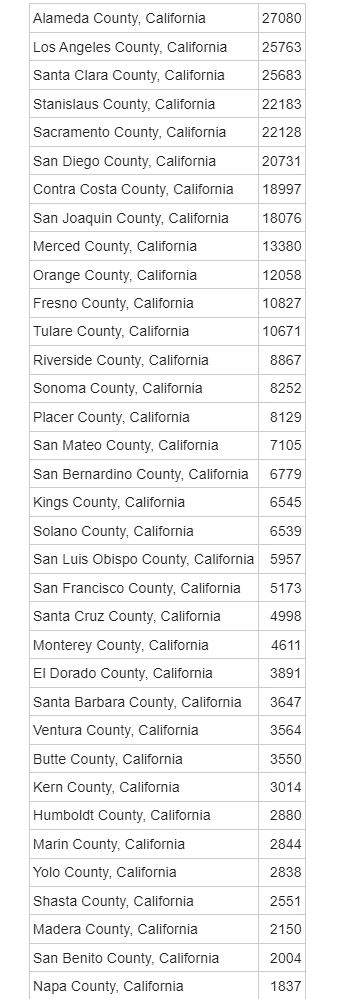
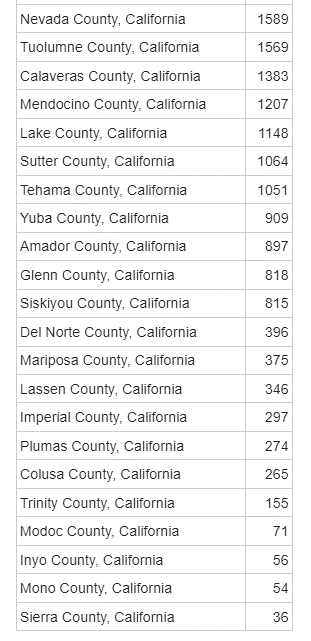
As the decades passed, the Portuguese community in California continued to grow, and the census data reflects this growth. Today, we can see how many California counties still have sizable Portuguese populations. The census provides essential information on socio-economic status, educational attainment, and cultural assimilation, offering valuable insights into the challenges and successes of Portuguese Americans in California. At PBBI-Fresno State, we are committed to partnering with scholars and organizations not only to look at the numbers now released from the 2020 Census but, more importantly, to lead a reflection on these numbers.
Even though we represent less than 1% of the population, the census is crucial in ensuring that the Portuguese community, especially in certain counties, receives proper representation in government and access to resources. As we all know, accurate population counts help determine legislative districts and allocate federal funding for various programs and services, including education, healthcare, and social assistance, which can directly impact the quality of life for Portuguese Americans in California.
Albeit one of the various tools we have today, the U.S. Census is indispensable for understanding the dynamics of the Portuguese community in California. It allows us to reflect on our historical presence and on the many contributions that we have made to this state. The census data is instrumental in promoting Portuguese Americans’ well-being and cultural preservation in the Golden State. Let us all look at these numbers in the coming months and have a collective and inclusive discussion.
At PBBI-Fresno State, we want to congratulate the Portuguese-American Leadership Council of the United States (PALCUS) for all of the work that was done with the campaign Make Portuguese Count.
Numbers for California Counties—information from PALCUS
The following is a press release from PALCUS
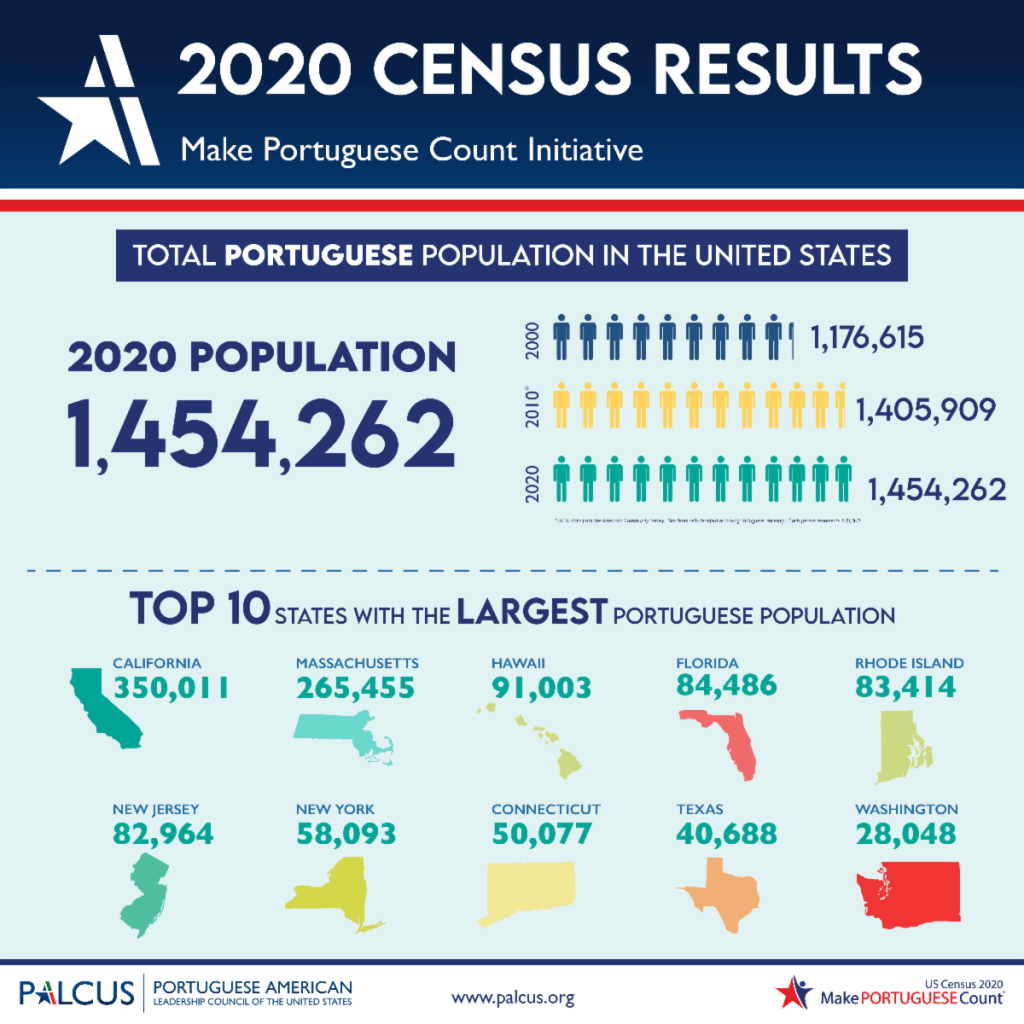
2020 US Decennial Census Reveals Increase in Population of Portuguese in the United States
Census Results Demonstrate Success of the PALCUS Make Portuguese Count Campaign
Washington, DC – September 21, 2023 – PALCUS, the Portuguese-American Leadership Council of the United States, the singular national organization representing and serving the national Portuguese community, today announces that the data from the 2020 US Decennial Census shows an increase in the population of Americans who claim Portuguese ancestry with a total population of 1,454,262. When compared with the previous decennial census in 2000 and the American Community Survey in 2010, the total from the 2020 Census shows an increase of Portuguese-Americans over the past 30 years. (see figure 1).
The 2020 Census was the first time Portuguese was assigned an identification code and two sub-identification codes for Azorean and Madeiran. PALCUS has been working with the Census Bureau for the past 15 years to ensure that the 2020 Census would be the first time the Portuguese community experienced an accurate count and launched a national two-year campaign entitled Make Portuguese Count. All previous population data, including data from the American Community Survey, were estimates based on algorithms designed to project the population counts based on sampling and, in all likelihood, resulted in undercounts.
“During the 2020 Census, there was a unique opportunity for our community to finally prove that there is strength in numbers,” said PALCUS Chair Katherine Soares. “We are thrilled that these numbers show that our community is growing and that the Portuguese population in the United States is no longer just an estimate or approximation. We now have official numbers that tell us how many we are and where we are. The increase in the Portuguese population revealed in the 2020 Census Data demonstrates that our nationwide campaign, Make Portuguese Count, led by former PALCUS Director Marie Fraley, effectively informed the Portuguese-American community about the importance of self-identifying as Portuguese. We thank Marie and the dozens of MPC captains who worked across the country for over two years to really get the word out that we are Portuguese and we count.”
The Make Portuguese Count campaign aimed to ensure that as many Portuguese-Americans as possible knew why the Census is vital to our community, how to answer Question #7: Race/Origin on the 2020 questionnaire, and encourage Portuguese Americans to complete the Census. On the proposed question, respondents first check the race with which they identify and, under that selection, write in “Portuguese” in the space provided to be counted as Portuguese. Thirteen years ago, in the 2010 American Community Survey, 1,405,909 million residents self-identified as having Portuguese ancestry; however, PALCUS and other research experts speculate that number may have underestimated the Portuguese-American population. The data for 2010 was based on a survey rather than a total population count, and the Census Bureau (before Census 2020) used a different methodology to collect data on ancestral origin.
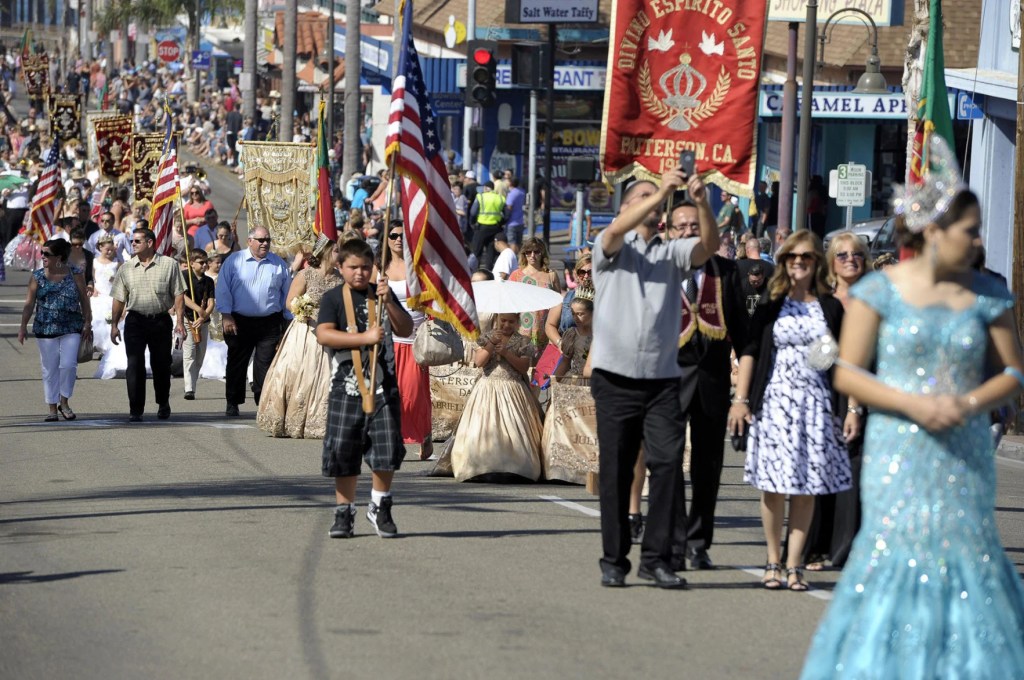
Picture from the St. Anthony Pismo Festa, from Santa Maria Times.
 Novidades - The Islands and the Diaspora