

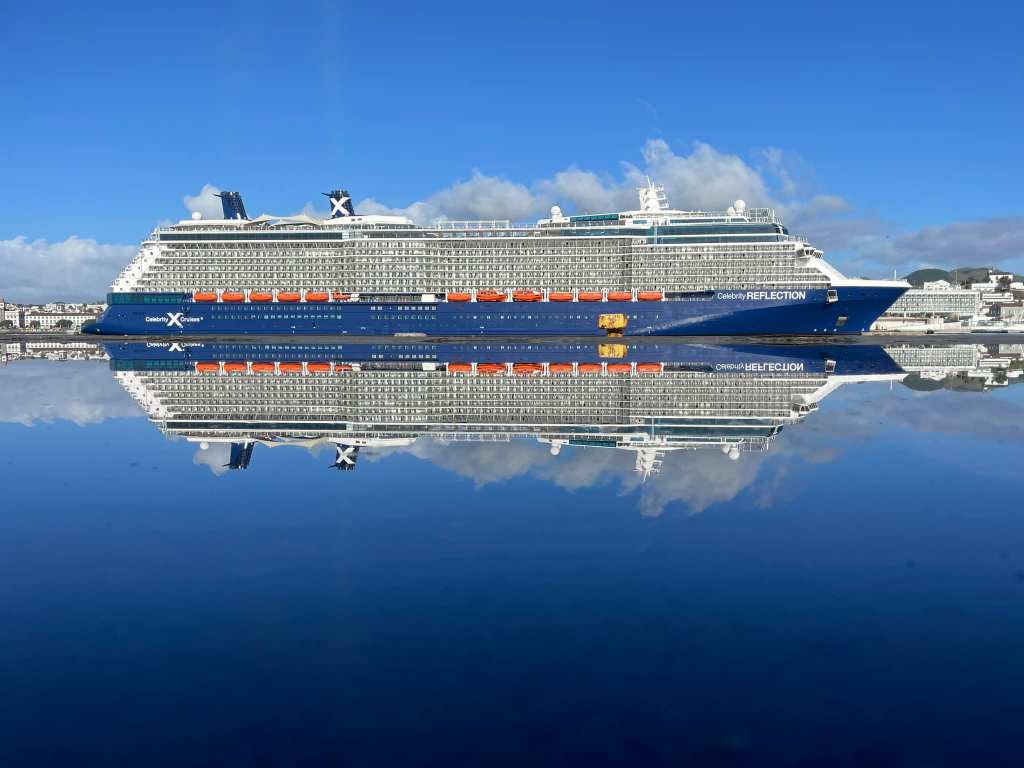
For the last quarter of 2023, Azorean ports expect to receive 58 cruise ship calls, bringing around 57,000 passengers and more than 20,000 crew members to the region. October and November are expected to be the busiest months, with 28 and 19 calls, respectively.
The influx of cruise ships to the archipelago begins following Monday, September 25, when the ultra-luxurious “Silver Moon” visits Praia da Vitória. The following day, it heads to Ponta Delgada on a double stopover resulting from a 14-day cruise, particularly on the Atlantic islands. Also, during the last week of September, the innovative expedition cruise ship “Hanseatic Spirit” returns to the Azores, where it is scheduled to make two more trips with stops on all the islands.
Ten ships visited the Azores for the first time in the period under review. In this regard, the debuts of the super luxurious “Scenic Eclipse II”, the innovative “Norwegian Viva”, “Norwegian Prima” and the “Odyssey of the Seas”, one of Royal Caribbean’s newest ships, will focus attention on the ports where they are expected. However, it is essential to note the inaugural call of the “Silver Nova,” scheduled for November 10, starring the latest ship in the fleet of the ultra-luxurious Silversea Cruises, considered the first 100% sustainable cruise ship.
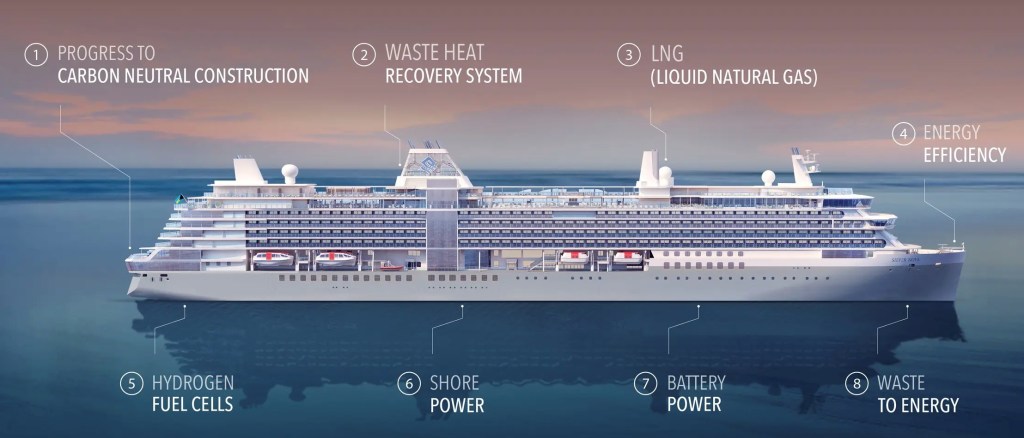
The company announced that the “Silver Nova” results from its latest innovative construction project. Thanks to the cutting-edge technologies introduced, it is the most sustainable cruise ship built to date, a true reflection of its commitment to the oceans, the environment, and the ports it sails through.
Among the effective measures in favor of sustainability, we highlight the fact that the “Silver Nova” has a waste heat recovery system, which allows the ship to use this energy in absorption chillers and improve overall energy efficiency on board.
In terms of the fuel used, in this case, Liquefied Natural Gas (LNG) is a cleaner-burning fuel, as LNG-powered propulsion systems emit less CO₂ and 97% fewer particles than the standard fuel oil used in older ships.

In terms of energy efficiency, the optimized hydrodynamic design of the hull and propulsion allows for more efficient performance in the overall operation of the ship. The hydrogen fuel cells complement the main power supply – up to four megawatts – and are the first large-scale marine fuel cell installation for the cruise industry. It should be noted that the ship is prepared to use what is known as shore power, a technology that makes it possible to switch off the main generators, connect to the shore power supply, and reduce emissions to zero while in port.
This ship also has a battery bank that optimizes the ship’s overall energy system, saving a lot of fuel and avoiding the emission of polluting gases. The newly developed micro-automatic gasification system (MAGS) reduces the volume of waste on board, resulting in lower incineration emissions.
If these estimates are realized, 2023 could be another benchmark year for the Azores, with the possibility of reaching new highs, which will further consolidate the region’s importance on the major international cruise ship routes.
From a press release by Portos dos Açores.
Translated to English as a community outreach program from the Portuguese Beyond Borders Institute (PBBI) and the Modern and Classical Languages and Cultures Department (MCLL) as part of Bruma Publication and ADMA (Azores-Diaspora Media Alliance) at California State University, Fresno.
 Novidades - The Islands and the Diaspora