

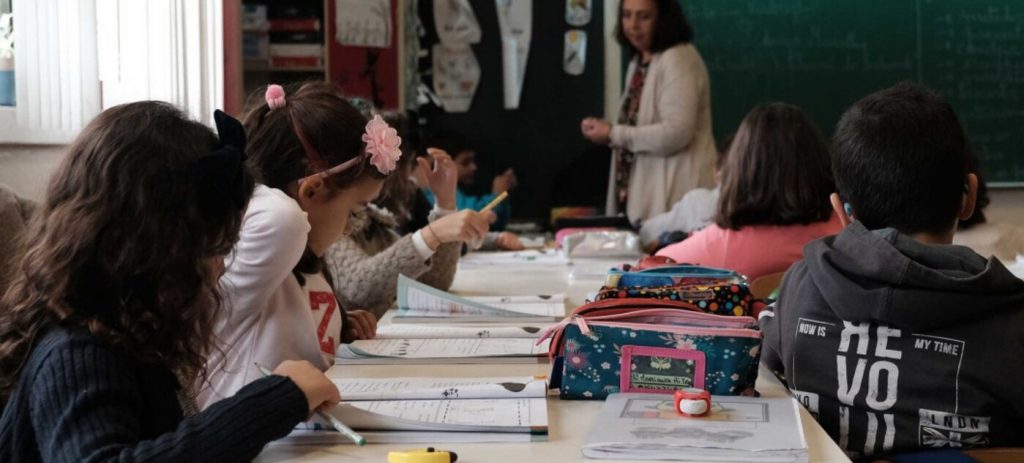
The Azores Regional Teachers’ Union (SPRA) said today that the shortage of teachers is “transversal” to all the islands and reiterated the urgency of incentives to retain teaching staff.
In a statement resulting from a press conference held in Ponta Delgada, Azores, the Azorean teachers union believes that “the current school year will be marked by improved working hours and conditions, particularly for pre-school and elementary school teachers.”
In addition, “the process of recomposition of the career, the fight against precariousness and the deepening of the democratic management of schools.”
According to SPRA, there is concern that “at the start of the current school year in the Azores, there is a shortage of teachers on all the islands, with a special focus on the outlying islands.”
“We therefore reaffirm the urgency of incentives to retain teaching staff on islands or organic units with teaching mobility of 30% or more,” says the union.

According to the union, the “shortage of teachers became even more evident when schools were confronted, belatedly, in mid-August, with the need to redistribute students, reducing the number of classes, to mitigate the lack of human resources.”
SPRA states that the “practical result has been the creation of larger classes, with several years of schooling in the same class, and non-compliance, in some cases, with the RGAPA or its limiting compliance in a generalized way.”
The “lack of educational workers is also a persistent problem in the region, due to non-compliance with ratios and sick leave that is not filled by the respective replacements.”
The union believes that the start of this school year “is also marked by a cyclical situation, which is the result of an education budget that is clearly out of step with the current reality.”
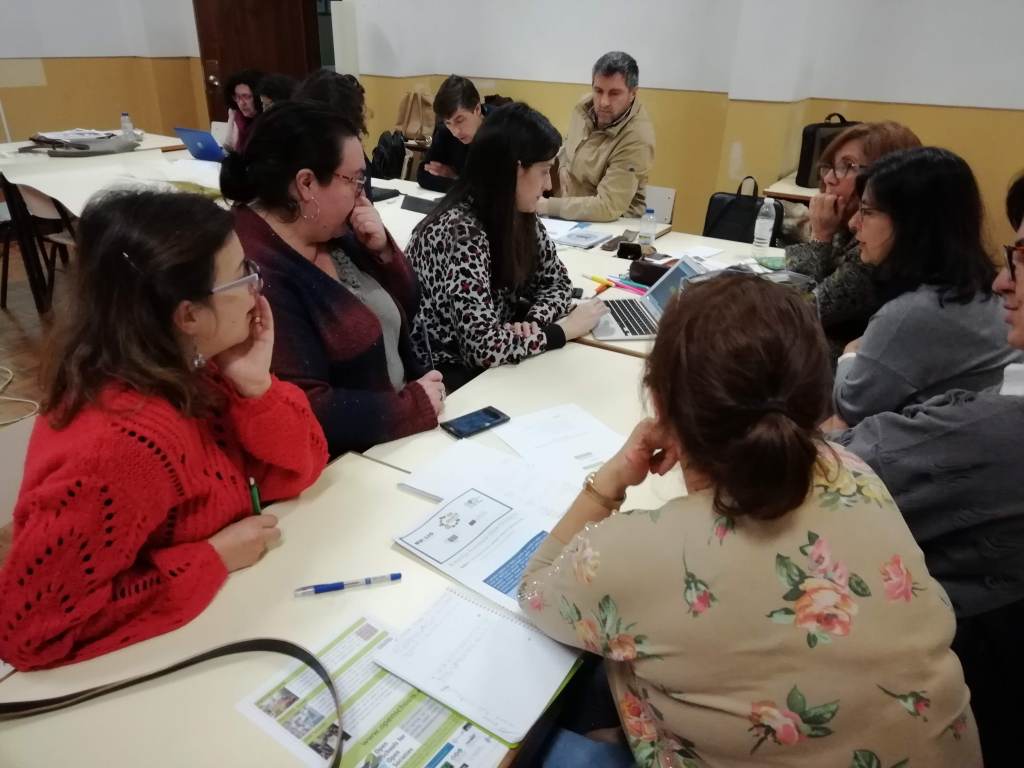
Meanwhile, the extension of digital textbooks to 6th and 9th-grade students has “doubled the number of users,” and “despite this increase, the network capacity problems, unlike last year, seem to be one-off, probably because they are not yet being used to the full, due to a lack of human resources in the IT area and the set of administrative procedures that are linked to the delivery of the equipment.”
From a LUSA news story in Açoriano Oriental newspaper- Paulo Simões, director
Translated to English as a community outreach program from the Portuguese Beyond Borders Institute (PBBI) and the Modern and Classical Languages and Cultures Department (MCLL) as part of Bruma Publication and ADMA (Azores-Diaspora Media Alliance) at California State University, Fresno.
 Novidades - The Islands and the Diaspora