

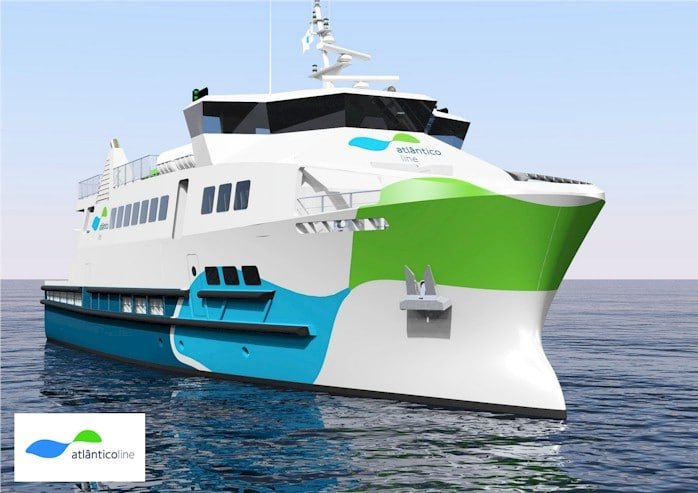
The competition for constructing two electric ships to operate on the islands of the Triangle should be launched in October. The connection between São Miguel and Santa Maria should be resumed with the Mestre Feijó, the ferry with the largest capacity.
The international public bidding for constructing the two new electric ships for Atlânticoline, the public company that transports passengers and vehicles by sea in the Azores, is expected to be launched in October.
Atlânticoline estimates that the contract for the two new ships, worth a total of 25 million euros, could be awarded by the end of this year so that, within a construction period of between a year and a half and two years, the ships could arrive in the Azores by the end of 2025.
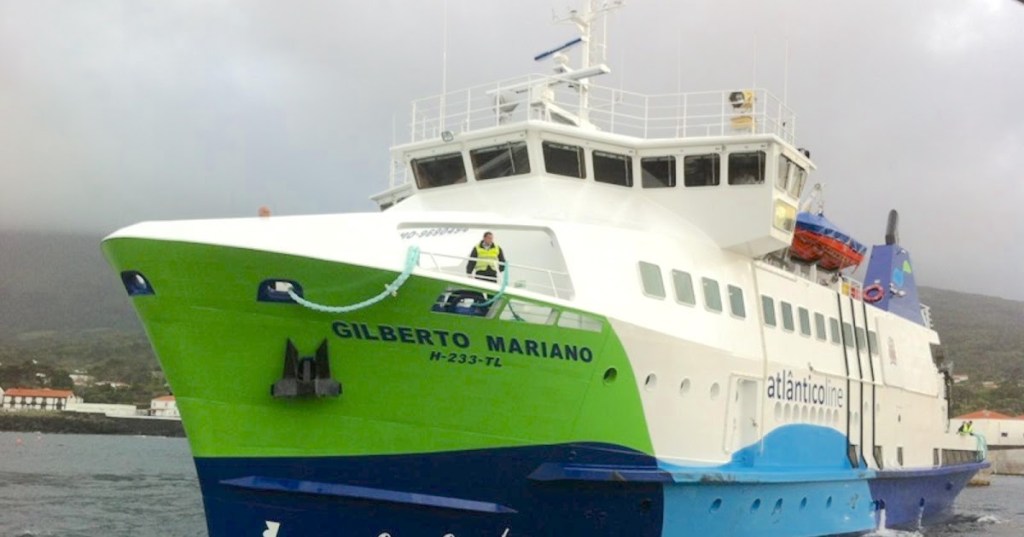
As the president of Atlânticoline, Francisco Bettencourt, explained to Açoriano Oriental, the tender specifications are in the final stages of being drawn up. The general characteristics of the new ships will be very similar to the current ferries – the Gilberto Mariano and Mestre Feijó – “which have characteristics that are very well suited to the operation and sea conditions in the Azores,” particularly in terms of hull design.
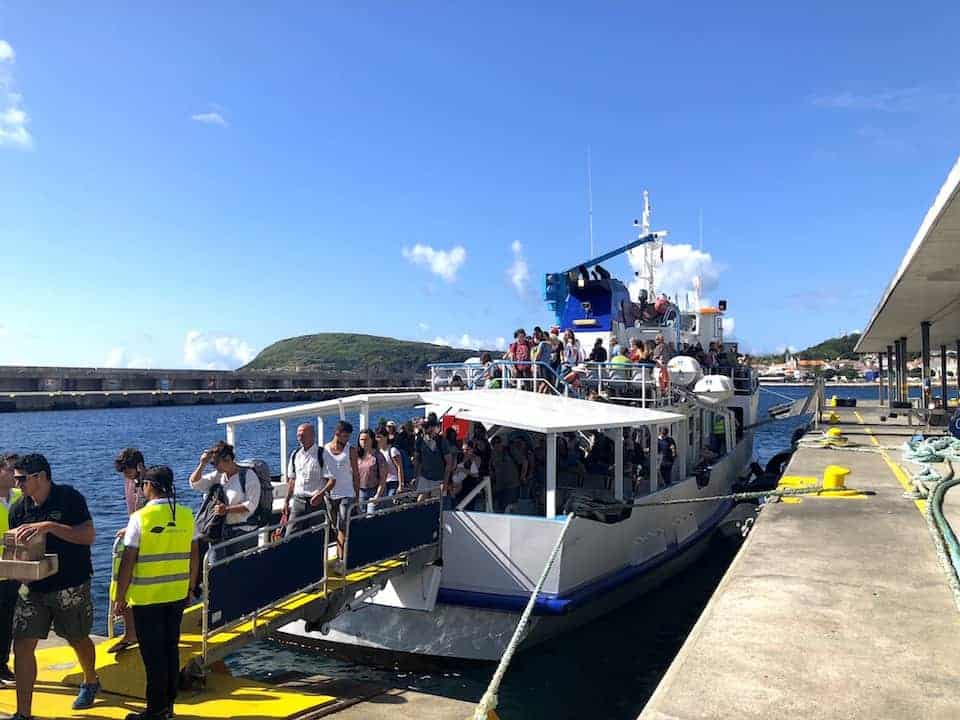
With a battery-powered engine, Atlânticoline’s two new ships will operate exclusively on the Horta/Madalena and Velas/São Roque do Pico routes, the shortest and most adapted to the autonomy of current technology for electric motorization of ships, as well as being the routes with the most annual passengers in the Azores.
And the question still open in the specifications is whether the ships will have the same size and capacity or different sizes and capacities. In other words, initially and according to the volume of passengers, a 35-meter-long ship with a capacity of 250 passengers and 10 cars was planned for the Horta/Madalena route, and a second ship, 30 meters long with a capacity of 150 passengers and six cars, for the Velas/São Roque do Pico route. Allocated exclusively to these routes, the ships are expected to make more trips than the current ferries.
However, during the development of the specifications, the experts consulted by Atlânticoline raised the possibility of the ships being the same size – in this case, 35 meters long for 250 passengers and 10 cars – which would allow “economies of scale” in the event of a breakdown, with one ship being able to replace the other without limiting the operation.
For this reason, explains Francisco Bettencourt, “if the budget allows it and within the specifications, there is the possibility that eventually the two ships will be identical, but we are still working on information to that effect.”
Asked if the deadline for launching the tender and awarding the ships by the end of this year is not too tight, the president of Atlânticoline replied that “there is always a risk, but the essential thing from our point of view is the tender specifications: if they are done well, then the whole tender and the construction of the ships will take place quickly.”
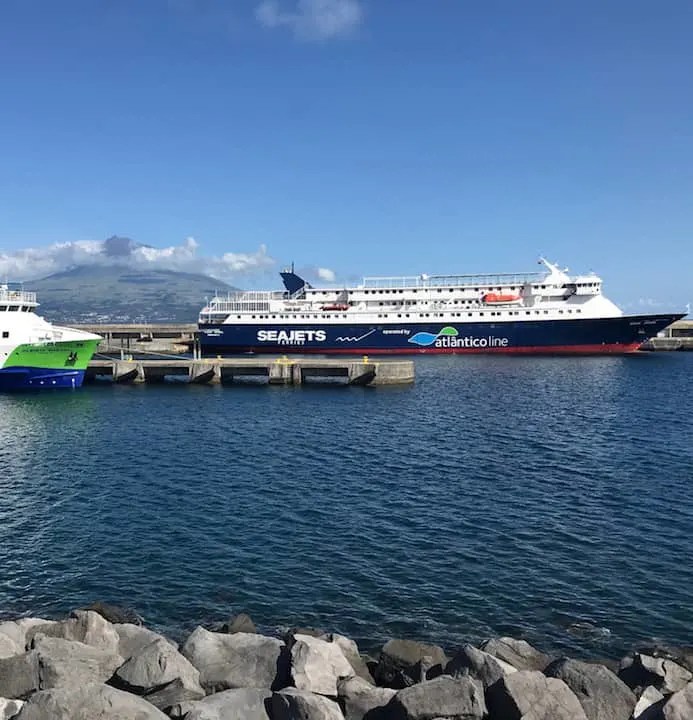
The arrival of Atlânticoline’s two new electric ships will, according to what the Regional Government has already said, allow the resumption of the maritime passenger and vehicle transportation link between São Miguel and Santa Maria, which should take place during the summer and using the ship Mestre Feijó, which has the largest capacity of Atlânticoline’s current ferries, namely around 330 passengers and 15 vehicles. However, it will be up to the Regional Government to decide when the connections between São Miguel and Santa Maria will resume.
It should be noted that Atlânticoline is already working with Portos dos Açores and EDA to prepare the installation of the necessary infrastructure for charging the electric ships, namely in terms of the power installed at the future charging points, which should be fast charging at the ports of Madalena and São Roque do Pico, where the ships only call and provide for regular and fast charging at the ports of Horta and Velas, where the ships are parked and, at the end of the daily operation, can make a longer charge.
By Rui Jorge Cabral, journalist for Açoriano Oriental – Paulo Simões, director
Translated to English as a community outreach program from the Portuguese Beyond Borders Institute (PBBI) and the Modern and Classical Languages and Cultures Department (MCLL) as part of Bruma Publication and ADMA (Azores-Diaspora Media Alliance) at California State University, Fresno.
 Novidades - The Islands and the Diaspora