

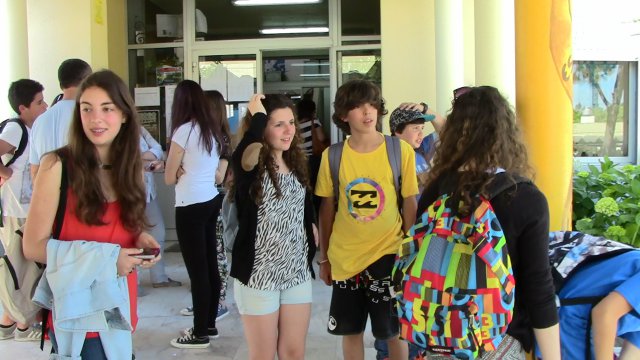
The Federation of Parents’ Associations of the Azores (FAPA) has written to the regional government to express its concern about the start of the school year, warning of the lack of staff.
In the letter, the parents are “concerned about the lack of human resources in the different areas,” their training, and the maintenance of the buildings so that “educational projects can be implemented with a view to inclusive education, keeping pace with the digitalization era.”
FAPA also praises the work done to “dignify the careers” of teachers and assistants, as well as the “change in models for inclusive education,” but warns that there is still a “long way to go” due to the lack of human resources.
“Another school year is starting and, once again, we are faced with constraints in all the organic units spread across our Azorean islands, which, if some could not have been foreseen, there are others that could have been avoided with advance management,” they warn in the letter addressed to the Regional Secretariat for Education and Cultural Affairs, to which the Lusa agency has had access.
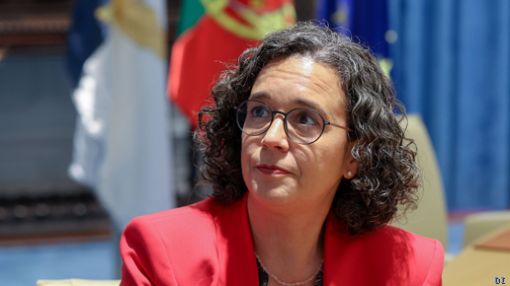
The guardians express “great concern” about the lack of teachers in “various areas of training,” considering that the support provided by the Regional Government (PSD/CDS-PP/PPM), such as master’s scholarships for teacher training, “will not make up for the difficulties that have arisen or those that will arise in the future.”
FAPA also states that “the teaching staff, in addition to the weaknesses of the lack of human resources, has worrying indicators such as advanced age, which greatly increases an already serious problem.”
In the letter, the guardians also stress the “increased concern” due to the impact of COVID-19 on students’ learning and ask the Regional Government to intervene with the Ministry of Education with a view to “changing the criteria for professionalization” and to finding “joint measures to mitigate the shortage of teachers.”
“Fundamental subjects, such as Portuguese, Mathematics, Physics and Chemistry, or ICT are lacking teachers, in addition to the 1st cycle of Basic Education and Special Education, which are already some of the areas in need. We wonder how these gaps will be filled,” the federation asks.
Parents and guardians in the archipelago also warn of schools’ lack of teaching assistants despite the “reinforcement in the opening of competitions.”
“We mustn’t lose sight of the fact that a large proportion of school staff in the Azores (around 450) are over 60 years old and that they can’t be required to have the same motor skills and ability to respond to certain security and surveillance services,” they point out.
The parents also warn the Azorean government that there is a “great need to adapt school spaces to welcoming and safe environments” since ” schools are without comfortable or safe conditions, with a lack of decent sanitary facilities.”
in Açoriano Oriental, Paulo Simões, director
Translated to English as a community outreach program from the Portuguese Beyond Borders Institute (PBBI) and the Modern and Classical Languages and Cultures Department (MCLL) as part of Bruma Publication and ADMA (Azores-Diaspora Media Alliance) at California State University, Fresno.
 Novidades - The Islands and the Diaspora