

The Angra do Heroísmo Education Charter, approved last week by the Municipal Assembly, estimates that there could be a total drop of 26.65% in the municipality’s school population by 2041.
The document points to a loss of 1317 pupils, from the current 4942 to 3625.
The probable evolution of the resident population of school age in the municipality between 2021 and 2041 was calculated based on data provided by the organic units, the heads of the establishments in the solidarity and profit network, the National Statistics Institute (INE), and our own calculations.
This evolution reflects a general trend. The educational charter calculates that by 2041, considering a “normal” scenario, the population in the municipality will fall from 33,771 people to 30,516. The decrease is 3255 individuals from 2021 to that year, corresponding to 9.6% less. In a “desirable” scenario, the drop in population would still be 1.4%.
For the mayor of Angra do Heroísmo, Álamo Meneses, it’s clear that “the municipality doesn’t need to worry” about investing in expanding schools.
“What we can conclude is that Angra has a school network that is in a position to receive the pupils that are likely to be there over the next 30 years. There’s no need to plan new schools, because the island is perfectly served. We just need to keep what we have,” he says.
The document points out that schools are already operating with fewer students than would be recommended, possibly affecting educational quality.
Álamo Meneses stresses that this sphere of action goes beyond the competence of the municipality. “It’s a matter for the regional government. When I was Regional Secretary for Education, I looked into this and, at the time, measures were taken, based on a study similar to this one, which was carried out for the entire region. We did what we thought we should do, but that’s a government issue,” he replied.
Angra do Heroísmo’s Educational Charter also points to a lack of crèches, which the mayor confirms is already necessary. Once again, the solution will lie mainly with the Regional Government and the Private Social Solidarity Institutions (IPSS).
“In the urban area of Angra do Heroísmo, we need crèches. In fact, we could, with some advantages, turn some schools into crèches. We have enough installed capacity in school buildings to allow this,” he points out.
Álamo Meneses stresses that the educational charter, from the point of view of education, doesn’t bring any notable innovations, but it does leave clues for other action areas.
“What it brings is a much better analysis of demographics, parish by parish, which allows us to study issues to do with health, employment, nurseries and other services. In fact, in terms of education, this charter absolutely confirms the previous one (from 2015),” he sums up.
The Angra do Heroísmo Education Charter was developed by the company Primelayer in conjunction with the municipality and the sector’s stakeholders. The document characterizes the current and future scenarios and outlines lines of action for political decision-makers. “Structural problems” affecting the municipality were identified.
“The sharp decline in the school population observed in recent school years at all levels of education and teaching and the tendency for this reality to worsen are particularly noteworthy,” they warn.
It is understood that “the fact that the educational offer is already out of step with current demand makes this impact even more evident.”
The educational charter points to the low occupancy rate of some educational facilities, especially in pre-school education and the first cycle of primary education, but also in the second and third cycles of primary education.
In pre-school education, EB1/JI do Raminho stands out with an occupancy rate of less than 25%, with 15% (3 children) belonging to the organic unit of EBI dos Biscoitos. This is joined by the EBI/JI do Posto Santo, with 22.5% (9 children), in the Tomás de Borba sphere.
With occupancy rates of less than 50% are the São João de Deus EBI/JI (27.5%/11 children) and the Porto Judeu EBI/JI, with 32.5% (13 children).
In the first cycle of primary education, Raminho once again comes out on top with an occupancy rate of 9.3%, but the list of schools with averages below 50% is long.
“In the case of the 2nd and 3rd cycles of basic education, reference should be made to the low occupancy rate of EBI 1,2,3/JI de Angra do Heroísmo, with 60.80% (681 pupils) and EBI 1,2,3/JI São Sebastião, with 62.83% (262 pupils),” the study states.
The Angra do Heroísmo Education Charter stresses that the scenario for preschool education and the first cycle of primary education “makes it necessary to discuss the minimum limit for operation” and that “at the moment, there are already educational facilities operating with a lower number of pupils than recommended”.
The paper points out that cases must be analyzed “individually,” considering factors such as the value of proximity in preschool education or territorial specificities.
Other shortcomings are “the imbalance in the constitution of the organic units and the mismatch in the distribution of vocational and professional education in the different educational facilities of the public and for-profit network.”
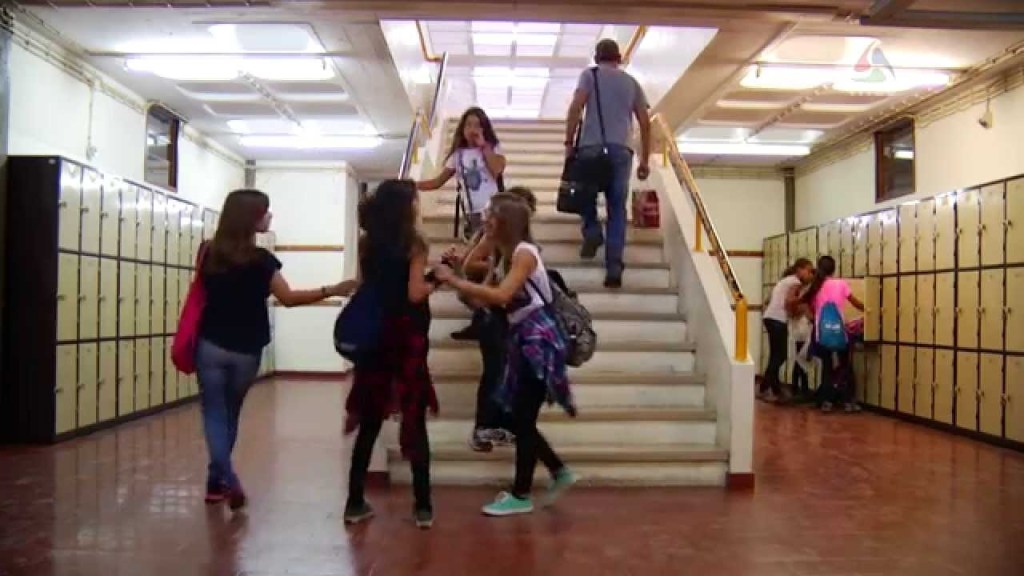
The drop in pupils is rooted in the demographic downturn. Still, in this area, the study states that “the first conclusion to be drawn from the analysis of the resident population figures by age group in the municipality of Angra do Heroísmo between 2001, and 2021 seems to be the continuous decline of the younger age groups, followed by a successive increase in the older age groups, which clearly reflects a growing trend towards an aging population, an aspect common to most Portuguese territories”.
It is stressed that “the downward population trend observed since 2011 is likely to continue in the coming decades, due to the progressive fall in the birth rate and the increase in the elderly population in the demographic structure”.
Between 1950 and 2021, Angra do Heroísmo lost almost 9,000 inhabitants, a drop of around 22%.
In the coming decades, the population loss will not be felt in the same way in all the localities of the municipality.
How the parishes will lose population
The Angra do Heroísmo Education Charter provides a demographic analysis of the municipality, including projections of the population’s evolution in the various localities.
The “overall trend” is for a decrease, but there are parishes that should evolve oppositely by 2031, such as São Mateus da Calheta (+2.96%), Altares (1.96%), São Bartolomeu de Regatos (1.95%), Terra Chã (1.34%) and Feteira (1.12%), which “may register a population increase in this period.”
The remaining parishes lost inhabitants at a rate of between 1% and 10.6%. The study estimates that the most significant losses will be in the parishes of Nossa Senhora da Conceição (-10.6%), Raminho (-9.7%) and Sé (-8.6%), also by 2031.
When the time frame up to 2041 is considered, “the general downward trend may be more pronounced.”
According to the document, “the overwhelming majority of parishes will have population decreases, in some cases exceeding 20%”. Only São Mateus should see an increase in residents during this period of 1.8%, as well as Altares, with 0.9%. In the latter case, the percentage is no more than eight people. The continued migratory balance could mean that the drop in population will be even more pronounced over the next two decades, the educational charter points out.
in Diário Insular, José Lourenço-Director
Translated to English as a community outreach program from the Portuguese Beyond Borders Institute (PBBI) and the Modern and Classical Languages and Cultures Department (MCLL) as part of Bruma Publication and ADMA (Azores-Diaspora Media Alliance) at California State University, Fresno.
A gentle reminder that October is our annual Crowdfunding event. We have a goal of 22 thousand dollars to assist with the multitude of projects we have going on, from Oral history collection to producing documentation on the Portuguese-American experience in Central California, from our speaker and conference series to Bruma Publications, from the Cagarro Colloquium to the Alfred Lewis Bilingual Reading Series, from this NOVIDADES news platform to FILAMENTOS, arts, and letters in the Azorean Diaspora, from ADAM (Azores Diaspora Media Alliance) to the implementation of a Diaspora Forum. Please donate. With your help, this community-based grassroots fundraiser can reach our goal of 22 thousand dollars by October 31. Thanks so much. Here is the link. If you prefer to donate with a check, please make the checks to Fresno State Foundation and mail them to Diniz Borges, 1418 Clarete Avenue, Tulare-CA 93274.

 Novidades - The Islands and the Diaspora