

by Armando Mendes, Ph.D. (*)
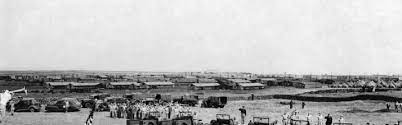
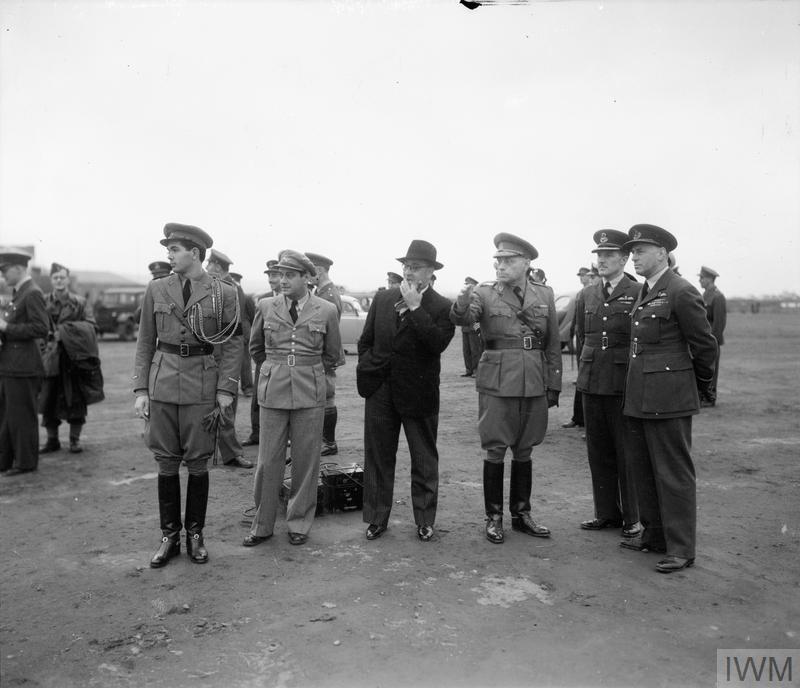
A British force of 3,000 men carrying 20,000 tons of equipment arrived in the bay of Angra do Heroísmo, Terceira Island, Azores, at dawn on October 8, 1943 – eighty years ago – followed by a peaceful landing a few hours later, after formalities had been taken care of with the local authorities and a waiting period had been set aside to allow the then rough seas to calm down. The landing resulted from a British request presented to Portugal on June 18 of that year, under the old alliance of the 14th century (1373), and accepted a few days later by Salazar. The British forces waited on the outskirts of Angra do Heroísmo before the conditions were created to set up camp at Lajes (Lajes Base) shortly afterward, where they remained until the end of the Second World War (their presence lasted until 1946).
The reasons for the British settling on Terceira Island are being questioned as academic research collects new documents and establishes possible interpretations. In the current state of knowledge, it seems possible to interpret that the British were pushed to the Azores by the desire of the Americans to gain access to bases on the islands and by poor quality information transmitted at the Allied conference in Trident (May 1943), which was delayed with the course of the Battle of the Atlantic. At the time of the conference, the defeat of Germany’s U-boats in the Atlantic was already apparent, but for some reason that has yet to be understood, this information had not reached the high command. With the information available, it was decided that the occupation of the Azores was decisive for the Battle of the Atlantic and that the islands would be at the disposal of the United Nations, in other words, in practice, at the disposal of both the British and the Americans.
The US desire to occupy positions in the Azores, whether by force or goodwill, can be traced back to May 1941, when Britain lost the Battle of the Atlantic. The US prepared Operation Gray to take the islands by assault if necessary. However, the US realized a few days before the scheduled date for the operation that it was urgent to protect bases in Brazil and the Caribbean. This need and commitment with Britain to deploy forces in other areas made the Azores a second priority. In the meantime, US intelligence had realized in advance that Germany would turn towards the USSR (Operation Barbarossa, June 1941) and not to the West, which once again relieved the pressure on the Azores, which returned to the top of US priorities with the consolidation of positions in North Africa and the need for resupply. Similarly, the projection of US power to Europe also requires a presence in the Azores to avoid transportation costs, with long routes becoming unbearable. It was in this context, with intense US pressure – and new threats of an invasion, possibly only through a show of force, i.e., without the need for combat – that England undertook to open the doors of the Azores to the United Nations, negotiating with Salazar under the ancient understanding between the two countries. After intense pressure from the British Foreign Office, however, Churchill could not keep his promise of joint occupation of the Azores, proposing to Lisbon that only the British occupy the bases. The US felt betrayed, immediately moved in on Lajes – even threatening to use force once again – and negotiated Santa Maria, which meant that the doors to the Azores were now opened on the direct initiative of the US.
The other reason for Britain to settle in the Azores, the Battle of the Atlantic, was no longer justified in May 1943, when the Trident meeting took place. That May saw a veritable massacre of German submarines in the Atlantic. The Nazis lost the equivalent of a quarter of their fleet and drastically lost effectiveness in attacking convoys of ships. New submarine charges, new radars, the decoding of German communication codes, and, above all, a significant number of highly effective US aircraft carriers are the weapons that led to the defeat of the U-boats. By September 1943, most of Germany’s U-boat fleet had been destroyed, and the remaining submersibles withdrew from the Azores and the Central Atlantic. Thus, when the British arrived on Terceira Island, the Battle of the Atlantic was won, with only residual U-boats left in the area controlled by naval means and without the need for support on land.
Everything, therefore, leads to the conclusion that the British are being used by the Americans as an instrument to open the doors of the Azores to US bases, not only with war efforts in mind – above all projection of power by efficient routes, without the added costs of other longer routes – but also with the post-World War II world in mind, which was already foreseen by US strategic thinking even before the US entered the war and especially during the conflict, pointing to an ideological rivalry with the USSR that could lead to war, not “cold,” but “hot,” and the analysis is exceptionally clear-sighted on the part of the US Navy. Feeling betrayed by the British, who didn’t comply with the Trident Conference’s decision to propose that Portugal set up a joint base in the Azores, the Americans – who are known to have arrived in Terceira with the British, although not identified as Americans – ended up setting up in Lajes without any Portuguese authorization, which only came at the end of 1943, with US aircraft already in operation through a British-US agreement without Lisbon’s apparent knowledge, and moved on to direct negotiations with Portugal for the creation of the Santa Maria Base (1944-1946). With the end of World War II, the British returned home, and the Americans have remained at Lajes Base until today, abandoning Santa Maria. The British were, thus, one might conclude, merely a pretext for opening the doors of the Azores to the new dominant power, the USA. We can also conclude with reasonable certainty that without the British, the US would have taken the Azores by storm, possibly only through a show of deterrent force, without the need to open fire, as President Roosevelt had predicted. The other option would be for Portugal to give in to US interests with England out of the game, with Lisbon’s diplomacy realizing that it would have no other way, although it could not soften its position towards the Axis by claiming that giving up positions to England within the old alliance would mean maintaining neutrality, albeit in a collaborative model.
(*) article originally published in DN (Diário de Notícias) in Portuguese (2023.09.08)
Translated to English as a community outreach program from the Portuguese Beyond Borders Institute (PBBI) and the Modern and Classical Languages and Cultures Department (MCLL) as part of Bruma Publication and ADMA (Azores-Diaspora Media Alliance) at California State University, Fresno.
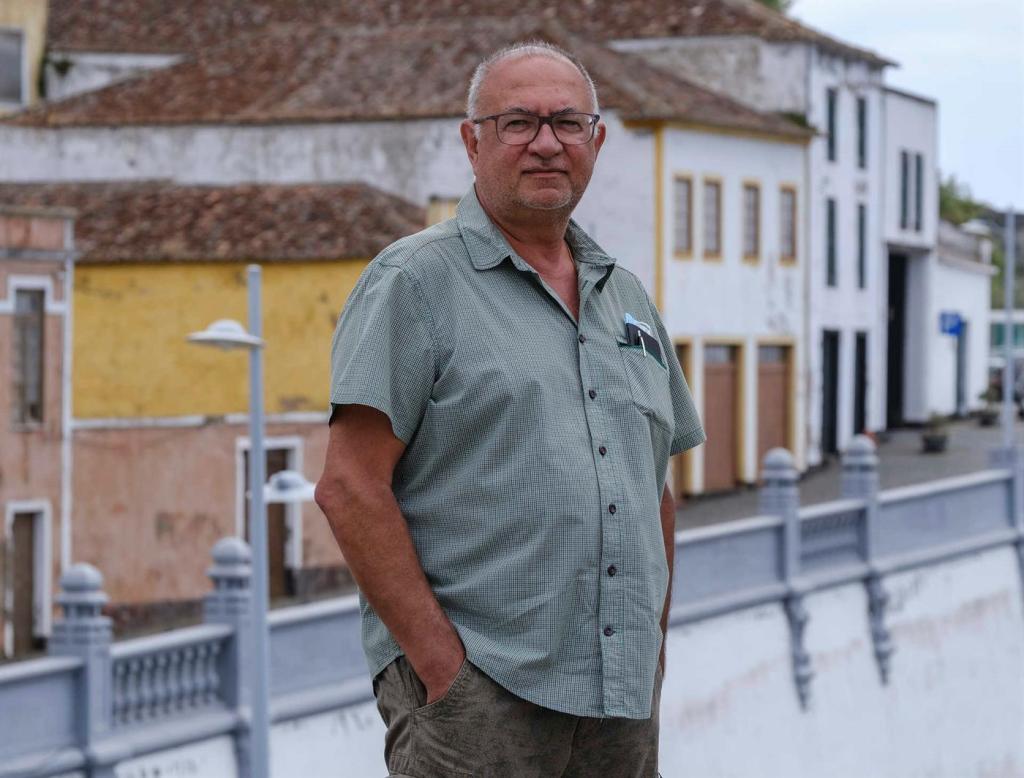
Dr. Amando Mendes holds a Ph.D. in History, Defense, and International Relations and is a well-known and respected journalist in the Azores.
 Novidades - The Islands and the Diaspora