

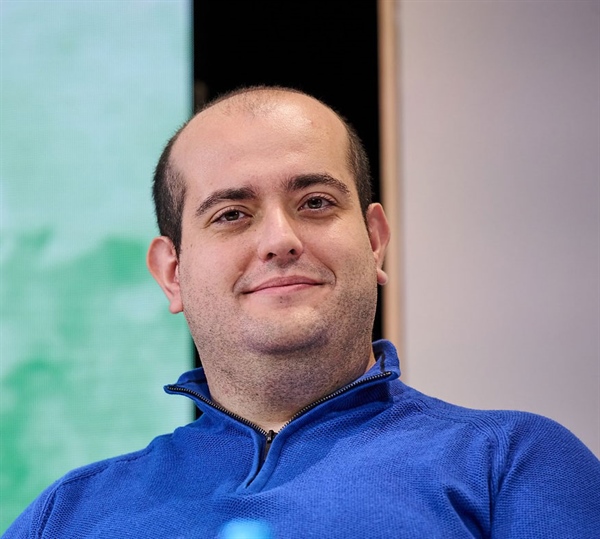
Look at this fascinating interview by journalist Mariana Rovoredo in Correio dos Açores newspaper, directed by the veteran journalist Natalino Viveiros.
Correio dos Açores – You participated in this year’s European Week of Regions and Cities in Brussels. What topics were covered this year?
Cláudio Gomes (physicist and award-winning researcher) – It was fascinating. Several events took place on cohesion policies on the importance of regions and cities as mobilizing agents for a European plan of social and economic leverage. It was also linked to green digital transitions in the economy. It was a very enriching event with several sessions on various topics, some of which were essentially linked to retaining and attracting qualified human resources to develop the localities themselves.
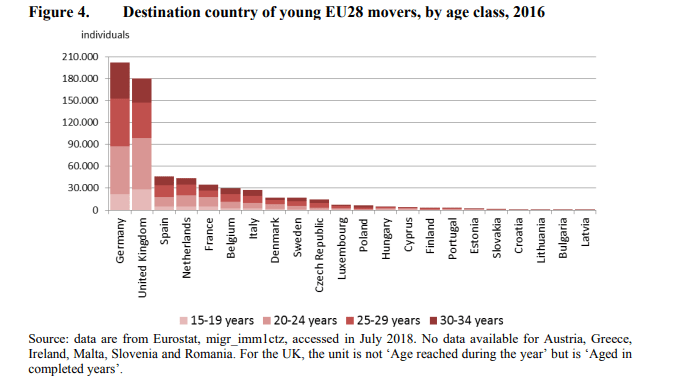
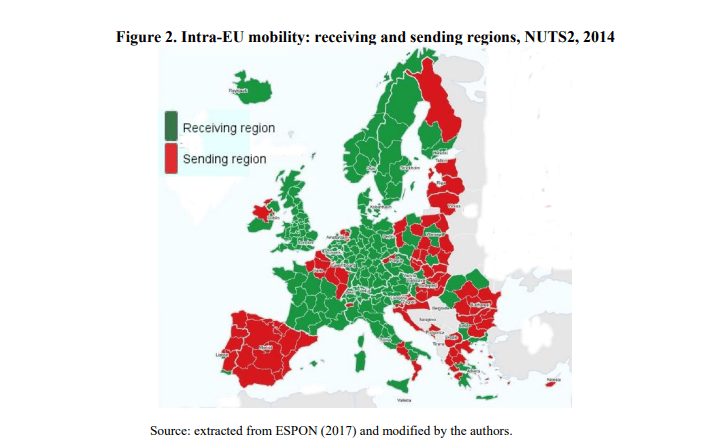
In fact, one of the glaring problems identified by the European Commission has to do with regions currently facing a loss of talent and are basically in so-called “trap” areas, making economic development very difficult. For example, in some regions, we have the well-known problems of an aging population and the concomitant departure of younger, well-educated people who go to find better living conditions elsewhere, even though it is a very natural process for people to be able and have the right to decide where they want to make their lives, where they feel most fulfilled. It’s very natural. It would be good if there was a balance of inward migration, in the sense that people didn’t just leave, but others were interested in moving to those regions.
What the European Commission has identified is that it is precisely in these regions that there is a brain drain, or “talent drain.” Europe, and the European Union in particular, has many regions with severe levels of talent drain.
What is the state of play regarding this “talent drain” in the Azores?
The Azores, despite not being identified as one of the most problematic regions – because, unfortunately, there are much worse regions – our region has also seen a loss of population and progressive aging. The balance between the population coming to live in the Azores and the population leaving is not balanced. There could be an imbalance in the sense that there is more demand to come and live in the Azores than to leave, but it is precisely the opposite situation that we have been witnessing, especially on the smaller islands and those with the most significant demographic problems.
This was one of the themes I brought up in one of the high-level sessions I attended, the “Dialogue with Citizens.”
I was one of eight European citizens selected for the high-level session entitled “Dialogue with Citizens” with the European Commissioner for Cohesion and Reform, Elisa Ferreira, where the brain drain problem in various regions of Europe was discussed…
Eight European citizens from different regions debated with the European Commissioner for Cohesion and Reform, Elisa Ferreira, about these very problems and what these regions have been witnessing. The panel was exciting because it showed four people who have decided to live in their regions and four who have decided to emigrate in search of better conditions elsewhere, including in other countries.
From this overall assessment, it emerged that there are problems common to the Azores and other outermost regions or not, which are witnessing this loss of talent. We’ve had several examples of regions that can’t retain this talent because they either don’t have a strong enough economic profile and strategic vision to retain talent or we have regions that can’t retain or attract talent. In the “Dialogue with Citizens,” I pointed out these internal problems that exist in the Azores and that there is also a flight of talent abroad, with no counterbalance in the sense of attracting talent from outside the region.
What proposals have you put forward to combat the brain drain we also witness in the Azores?
I proposed two possible solutions that could mitigate or even resolve these situations. The first is an idea that I’ve been pushing for some time, for example, in the participatory budgets in the region, which has to do with an “Azorean Science Fair.” Despite the great efforts we’ve seen over the years to attract young people to the areas of Science, Technology, Engineering, and Mathematics, these have essentially been science festivals, which are very interesting and captivating for the public, but I think that a complementary structure, such as a science fair, in a North American style, in which young people from all schools can compete with ideas for a contest, create prototypes. They can explain a phenomenon or create a new idea. This would be an exciting way of fostering creativity, innovation, and a taste for areas that still have minimal expression in the region. This would be an opportunity to stimulate and stimulate interest in these areas so that in the future, the region can also develop technologically so that we don’t just have a few economic pillars, which, although very important, we need more of. We must find a balance and other sectors that can complement, flourish, and create added value. These technological areas have added value. Even if it’s not just for domestic consumption but at an export level.
The second solution I presented has to do with science. We know that in the Azores, we haven’t had enough scientific policies regarding hiring researchers. So far, we haven’t had this kind of policy, which would be very important to boost these areas. We need qualified human resources who want to do research in various areas. We have areas of excellence at the national and international level, such as Oceanography or Ecology, for example, but other areas are still lacking in the Azores, such as Physics, Astronomy, Engineering, Mathematics, and Chemistry, for example, which are not very important in the region, but which are fundamental.
In addition to the regional governments’ own initiatives, the solution could also be a joint funding mechanism between the outermost regions. In essence, a specific line of action and European funding to which the governments of each region can add budget so that there is a fundamental policy for hiring human resources. Here, the hiring of human resources is not necessarily to be confused with employment because we are talking about at least giving stability to the research staff and ensuring that people are hired so that they can develop a project and not be looking for new funding, in lengthy processes, for their own salary. They can’t just be isolated bets.
In these outermost regions, which usually have structural problems because they are very isolated, creating additional dynamism would be essential for revitalizing these regions. In short, synergistic work. Although the Azores have a mechanism with a Community portion and another allocated by the Regional Government, it would have to work in synergy with other regions because we can’t expect gigantic teams to be created overnight. That’s not what happens. We need to work towards good human resource management. That’s how we can aim for success in these regions.
Obviously, this is my own reading, and there will be complementary readings for the successful development of the regions.
Can the Azores retain and attract talent with policies for hiring researchers?
Yes. It’s essential that this happens because although there are national hiring policies, they are still tiny. We’re talking about project approval rates of around 8%. These are meager rates, and in more isolated regions, such as the Azores and Madeira, it is even more challenging to get this type of funding approved. This type of funding has maximum amounts, but as they are in consortia, it is basically a ‘cake’ to be divided between several institutions. As there are few human resources in the Azores, this slice of the ‘cake’ is the smallest in general, except in areas where the region already has a critical mass of researchers. In other areas, it is challenging. It seems natural for the regional government to invest in public scientific policies. There seems to me to be a lack of scientific strategy. In any case, the regional government could increase the amount of money dedicated to science, which has been very small over the years. A little more budget for science would allow much more to be done.
We must have the mechanisms for cutting-edge research, scientific production, and international visibility because this helps attract more talent. With these mechanisms, people can apply to be able to give training grants, for example, to students doing master’s degrees and doctorates, and also to attract people from outside. The aim is to have a team, even if it’s limited in time, but it’s a team working towards a scientific question or set of questions we have to answer. Then there’s the whole role of scientists in society, whether in terms of knowledge transfer, which is very important, so these areas of Astronomy, Physics, Engineering, and Mathematics, as well as having their own research, are fundamental to the technological development of our business economic fabric, which we still have to develop. A good example is the science and technology parks that have invested in developing start-ups. We need to have this link between the fundamental science that enables significant advances in society and the applied research that tries to solve immediate problems in the regions.
This investment in these areas of science would bring many benefits to the region…
We need to increase scientific production in the Azores in various areas because it gives the Azores a considerable profile. It’s creating a ‘scientific’ Azores Brand if you like. This scientific projection is fundamental for attracting additional funding and bringing people with exciting higher education back to the region to have additional ideas. It’s also about meeting the United Nations’ sustainable development goals.
The work of scientists is vital because they are on top of events in terms of paradigm shifts, new knowledge, new answers, and current theories and models. In this synergy between the various authors, we manage to develop and captivate. By creating a scientific brand, more students want to go into higher education. We need to increase the number of people with higher education qualifications so that they can bring a set of skills, not just knowledge, that they acquire with higher education and that they can bring to the region to enable it to develop much more.
We can’t have a region with only foreign companies coming here. Foreign investment is fundamental, but it would be exciting to also have the possibility of regional start-ups. We need people with critical thinking skills so that we have new generations who are increasingly capable and who are aware and critical of the decisions they make.
Always taking sustainability into account?
We can’t neglect it in any way. We have a severe problem with climate change. From moving from the Holocene to the Anthropocene, we have distorted the entire ecosystem and the earth system. We have to take care of it. Not just for our own generations. We can’t keep pushing the problems into the future. We are key players in the paradigm shift. This paradigm shift has to be about maintaining the environment with the minimum conditions for human survival. The Earth will survive, even if it changes and the human species becomes extinct. It will be reconfigured just as there have been other reconfigurations, such as during the time of the dinosaurs and before. We have to ask ourselves: do we want to continue to exist as a human species or not? Whether it’s space exploration or the exploitation of the oceans, land, forests, and mineral resources, sustainability must be considered to maintain our survival. We must have this ethical and cosmic responsibility.
Translated to English as a community outreach program from the Portuguese Beyond Borders Institute (PBBI) and the Modern and Classical Languages and Cultures Department (MCLL) as part of Bruma Publication and ADMA (Azores-Diaspora Media Alliance) at California State University, Fresno.
 Novidades - The Islands and the Diaspora