

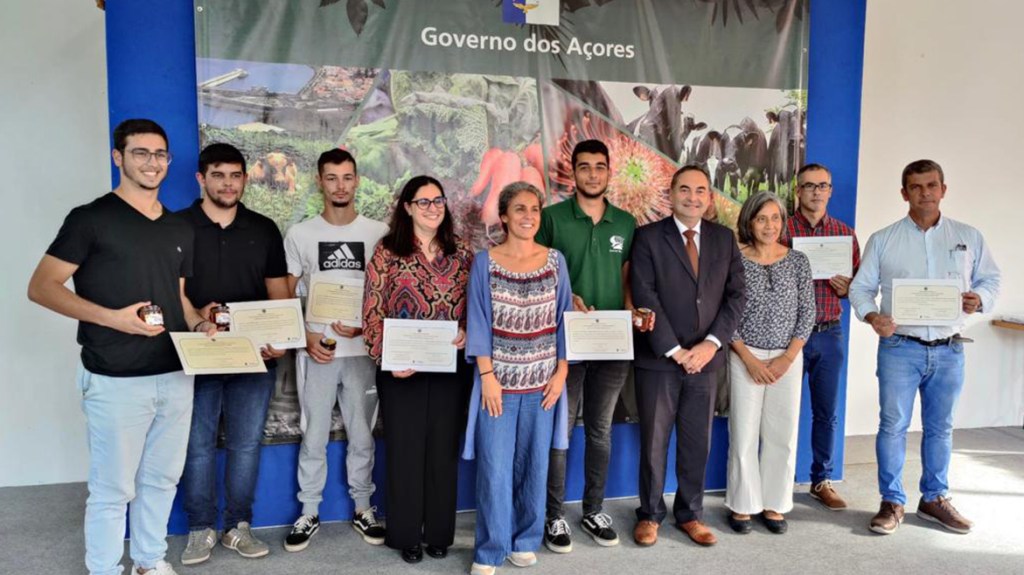
The Regional Secretary for Agriculture and Rural Development of the Azores said today, in Horta, that on World Food Day, “it is urgent to highlight the importance of agri-food produced in the Azores, its quality and its example of sustainable production.”
“Azorean agri-food contains unique characteristics and is an example of sustainable production, so on this World Food Day, it makes perfect sense to highlight what is ours and to encourage local consumption and reduce dependence on imports,” he stressed.
“The enormous environmental and climate challenges facing the rural world and the agriculture of the future have made safeguarding food security, as well as strengthening the resilience and sustainability of food systems, central and unavoidable objectives of public policies at European, national and regional level, in particular agricultural and rural development policy,” stressed António Ventura.
“This is what the Regional Government has been working towards, promoting agricultural development in the region, better nutrition and food safety, with the primary aim of making Azoreans feel that their food is safe, credible and reliable,” he added.
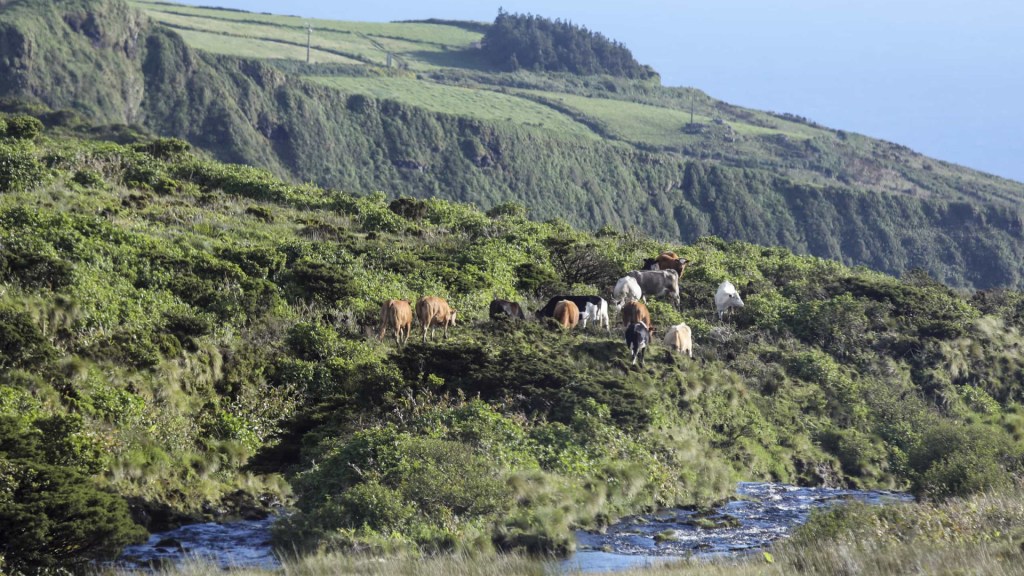
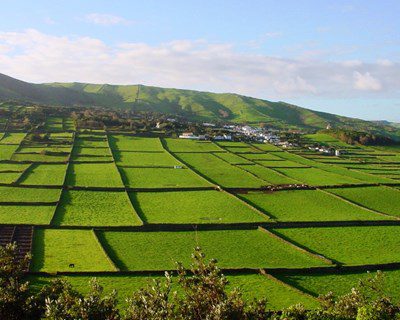
The Regional Secretary recalled that, in 2023, “the area of corn sown once again reached a new record in the Azores, at 13,641.44 hectares, which, compared to 2018, was an increase of 1,623.95 hectares, i.e. an increase of 13.5%. There are also 278 hectares of sorghum production and ten hectares for grain maize production.”
The minister also highlighted the Azorean products recognized as PDO or PGI, such as São Jorge PDO Cheese, PGI Meat or PDO Pineapple, among other products with Community legal title, recognized as qualified agri-food and an example of “the good that is produced in the Azores”.
World Food Day has been celebrated since 1981 on October 16, a date that also corresponds to the founding of the FAO – Food and Agriculture Organization of the United Nations, whose mission is to increase levels of nutrition and quality of life, improve productivity in agriculture and the living conditions of rural populations.
António Ventura was speaking when he handed out vocational training diplomas to several young people in regular and vocational education at the Faial Agricultural Development Service, where he once again reinforced the Farmers’ Training Program for the Sustainable Performance of Farms under the Recovery and Resilience Plan (PRR).
“These actions focus on the specific nature of agricultural production on each island, within the scope of the efficient and sustainable management of farms in economic, social, environmental, climatic, animal welfare, public health and resource efficiency terms,” he said.
According to António Ventura, the measure “envisages a broad and diverse set of actions aimed at training and advising producers and agricultural workers in the main regional agricultural sectors and should reach 2,000 farms by 2025”.
in Press release from Governo dos Açores | Fotos: SRADR
Translated to English as a community outreach program from the Portuguese Beyond Borders Institute (PBBI) and the Modern and Classical Languages and Cultures Department (MCLL) as part of Bruma Publication and ADMA (Azores-Diaspora Media Alliance) at California State University, Fresno.
 Novidades - The Islands and the Diaspora