

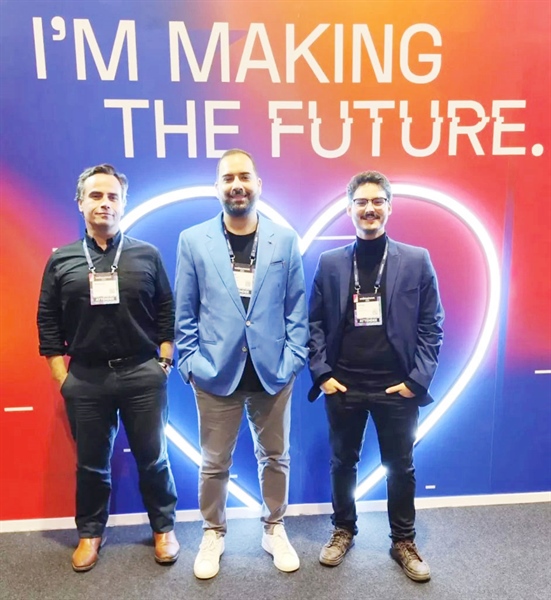
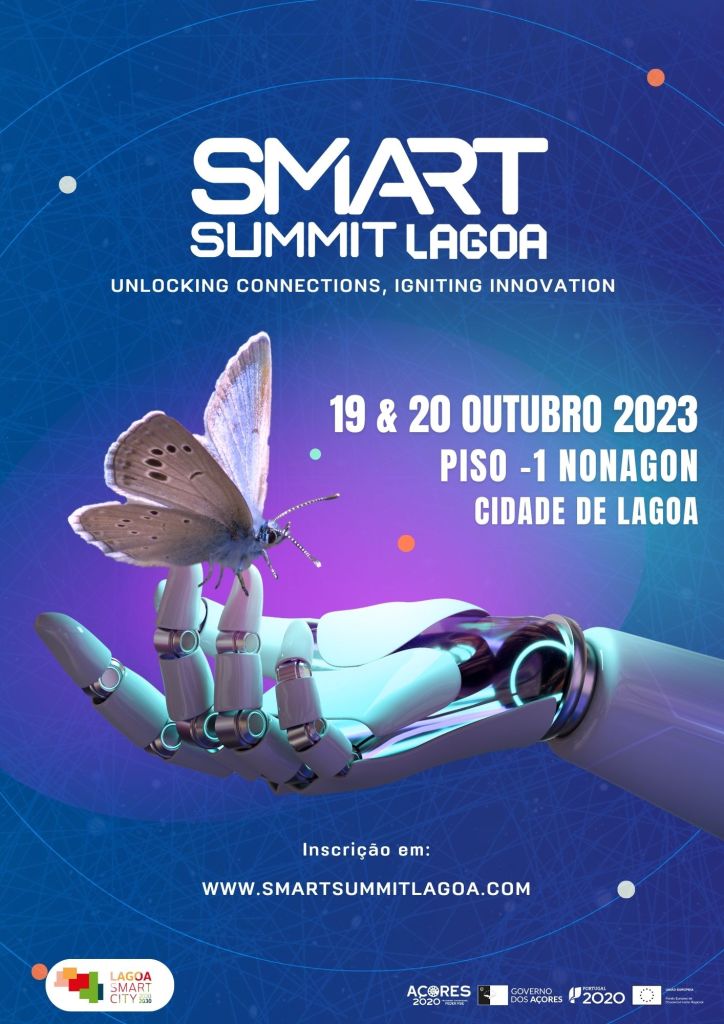
Interview with Vasco Ponte one of the organizers of the Lagoa Summit, an innovative technological event in the Azores
Correio dos Açores – What project proposals have you received to be presented at the Smart Summit?
Venício Ponte – We’ve received an exciting range from Smart Cities. It ranges from optimizing water resources to better traffic control to Mega Cities, presented by Ida Rush, on how we can get there, what the concept of a bright Mega City is, and what happens there. The smart city starts with people. Only after the social part has been resolved can we think about fitting in the technological part. Many European towns believe the other way around, first technology and then forgetting how to get the technology to the people.
People also need to be able to function with technology…
So first, we need to educate people, create digital literacy programs for society, and then understand what the community needs. Not what people sometimes think society needs. We will analyze it, see what it needs and how it needs to grow, and then apply the technology to the population’s needs.
Does the fact that Lagoa is known as a Smart City help the event to be held here?
Mainly because of that. We’ve always had great support from Lagoa Town Hall when we came up with our concept, which is not in competition with Lagoa Smart City but rather complementary to it. The council contacted us to join in and create something that made sense. We’ve always said from the start: this is the first technology park in the Azores, Smart City Lagoa. We’re going to bring together everything that is technology and we’re going to put down roots here and create an event that can bring out the best in it. We’re even going to have a cyber-security expert from Jolera, one of the entities hosted here, and one of our sponsors, who is coming directly from Canada just to talk about the evolution of cyber-security and what will happen from now on.
We have to stress an important point: our aim is for companies to come here and talk about their products, innovation, and what’s happening. We didn’t want to be just another event where companies talk about what they do.
We’re going to have someone directly from Google to talk about Gen AI and explain what will happen at Google, what they’re doing in the area of artificial intelligence, and how it will grow and help companies and people. A lot of people think that AI is going to steal jobs, but it’s not. Artificial intelligence will make some things more accessible and free people up for other tasks to be more efficient daily.
That’s what we want them to say, and we want people to understand it.
Does the change of venue have anything to do with the more significant influx of people this year?
It has to do with a more significant influx of people; it also has to do with a greater influx of companies. Fortunately, we had some companies who came to us when they saw that we were building this event and said they wanted to be there. This is a perfect sign that they liked what they saw last year and want to be part of it. We’re going to value everyone who wants to be with us.
In terms of workshops, what can visitors expect at the Smart Summit?
In terms of workshops, we’re talking about digital marketing. Google will be giving one in the Google Work Space. Another workshop will be given by LOBA, a company that will be talking about a tool called ZOHO. They will talk about how efficient the device is and how the market still doesn’t use it very much. The market in the region will understand what it is, the dynamics it can create, and the efficiency it can bring to companies. It’s a tool very much aimed at improving the user experience.
In all this, we always talk about simplifying people’s day-to-day lives to be more efficient. It’s not about people working less; it’s about them working better. It’s always in this direction.
Is there still room for growth for this event?
Absolutely. We already have some desired lines for 2024, although this is the focus. The Smart Summit can hopefully be exciting.
Do you still find it difficult for people, especially older people, to deal with technology?
Yes, there still is. Once again, let’s talk about digital literacy. It’s a mistake that many people make. I’ve done it myself, designing and developing applications that are “what would I like to see on the market?” instead of thinking first, “What is the market prepared to accept.”
Progressively start introducing things, bringing people together, finding ways of collecting information from them, and understanding how comfortable they are with certain situations and certain technology. Then we always talk about user experience, user interface, and customer experience, and all of this has to be very well thought out, studied, and analyzed by people to create something that makes sense daily. Otherwise, it’s just another application, another website that nobody uses. They don’t use it because they don’t know how to use it. After all, no one has explained it to them, and they haven’t been approached to find out if they could use it.

Do you think this issue of developing apps is a problem for many start-ups in general?
Yes. When I created my start-up, one of the first products we thought would be fantastic and what we had envisioned behind closed doors didn’t make sense for the market.
Many start-ups fail because they don’t conduct market research or analysis. That’s why it’s perfect for start-ups to be prepared to go and get Adventure Capitals or Angels. These people have experience. They’re going to join the company’s capital, and sometimes start-ups think they’ll lose control, but that’s not the case; they’ll gain knowledge. They will look at the product; if they believe in it, it will help them get on the right track.
Once again, we’ll have Portugal Venture here, with an excellent team helping to do this. They’ve supported many companies in the region and on the continent, one or two with less success, but generally, things go well because there are people behind them with the knowledge and connections to open the right doors so that the products can grow and gain market share.
How will the secondary stage be used, since the main stage is for the speakers?
It will be for companies and anyone with ideas to have their own space to present them. It’s called an elevator pitch, where people present their ideas to the community, and then who knows what might happen. Of course, the ideas must be submitted in advance and explained to make sense of the event.
Would you like to highlight any of the start-ups here at Nonagon that have been successful?
Of the various start-ups I’ve been following, there’s one that got a good investment from Portugal Venture and has been growing interestingly: Cereal Games. Being friends with Lázaro Raposo allows me to keep a close eye on what’s happening. As it grew, other market areas that they didn’t initially see emerged. Once again, this is due to the support they get from those with connections and knowledge. As far as I know, things are going quite well, and I have everything to improve.
What message do you want to leave with those who might visit the Smart Summit?
The message I can give is don’t stop coming. Don’t leave your ideas in the drawer. They may be good or bad, but before we can show them, we’ll spend our whole lives thinking, “What if?”
Interviewed by journalist Frederico Figueiredo for the Correio dos A”cores newspaper, Natlaino Viveiros, director.
Translated to English as a community outreach program from the Portuguese Beyond Borders Institute (PBBI) and the Modern and Classical Languages and Cultures Department (MCLL) as part of Bruma Publication and ADMA (Azores-Diaspora Media Alliance) at California State University, Fresno.
 Novidades - The Islands and the Diaspora