

The appearance of homeless people in Fajã de Cima is a new reality and a concern for the parish; take a look at this enlightening interview with the Presidente da Junta de Frequesia, Pedro Almeida done by journalist Carlota Pimentel for the newspaper Correio dos Açores.

Correio dos Açores – What picture can you give us of the parish of Fajã de Cima at this time of year?
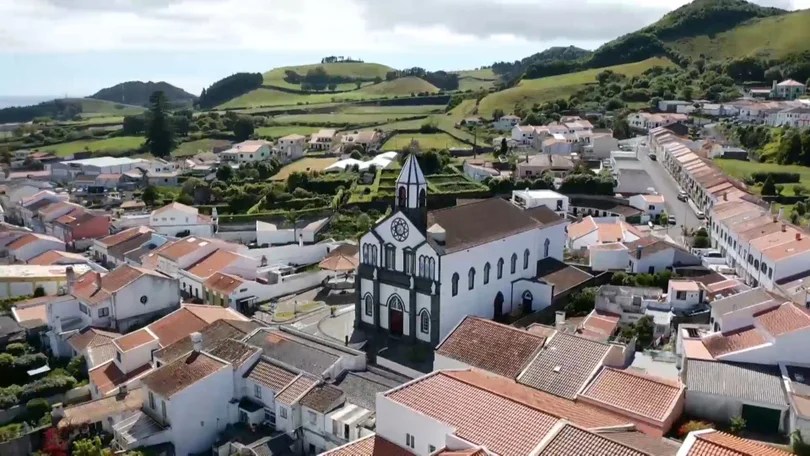
Pedro Almeida (President of Fajã de Cima Parish Council) – Fajã de Cima is a parish very close to Ponta Delgada’s center and faces parishes from several municipalities. We like to say that Fajã de Cima is a viewpoint over Ponta Delgada because it has breathtaking views over the city. It’s a parish with a mixture of urban and rural life. The northern part of Fajã de Cima is characterized by various pastures and agricultural fields, which gives our parish a certain uniqueness. It is also a parish of very hard-working, enterprising, dedicated people who love their parish. I often jokingly say that Fajã de Cima is a unique case in our region because it is a parish with an extensive range of entities and institutions that are still active. We have the Os Oliveirenses Sports Club and the São Miguel Tennis Club in sports. In the cultural area, we have a folkloric group, a philharmonic, a Casa de Povo, Scouts, Guides, the São Miguel Columbophile Club, a social and parish center that responds to our needs in the parish, and a parish with its characteristic movements. In fact, it’s hard to find a similar case in our archipelago. In short, Fajã de Cima is a parish with a lot of history, a lot of present, and, of course, a lot of future.
What are the main difficulties facing Fajã de Cima?
Fajã de Cima is a parish with several deficiencies at various levels. First of all, the one we encountered most quickly has to do with support for families and businesses, which, in an everyday context, was already very special and which now requires extra attention with the effects of the pandemic, the inflation crisis, the wars in Europe, among others. In fact, the shortages have increased. We have a parish that urgently needs to rehabilitate its infrastructure. First and foremost, in the area of learning, with a century-old school that needs urgent intervention. I’m pleased to highlight our agreement with Ponta Delgada City Council, which has publicly stated that it will do the necessary work. The car situation and parking in the parish also concern us.
The lack of housing, although a cross-cutting issue, in Fajã de Cima in particular, is still a need and a difficulty. Young people and families find it extremely difficult to afford affordable housing or comfortable rents.
Another issue is the response to families regarding crèches (daycare) and kindergartens and improving the response of daycare centers for the elderly. This is a susceptible issue that is increasingly in demand, and the lack of response has made families rethink their lives. People want to go to work with the certainty that their relatives are well looked after. Given the entities we have in the parish, we have enormous potential to grow. (…)
In your opinion, what could be done to solve these problems?
Concerning the lack of housing, I think a lot can be done. We have to make serious and determined use of the funds from the PRR for new construction and reconstruction. The cases in the parish have been identified. I believe that in the context of the municipality of Ponta Delgada and the parishes bordering the urban center, Fajã de Cima is the one that may have the best conditions for expansion. The parishes in the historic center of Ponta Delgada are already clearly overcrowded and have little capacity for expansion. Fajã de Cima, because it is so close to the urban center, could have an opportunity here and be seen as a parish to be developed. I would also like to remind you that we are reviewing the municipality’s PDM. I believe that increased attention to Fajã de Cima, in particular, could be vital if this parish is seen as a solution for expansion, creating the conditions for housing we don’t have today.
Has the parking problem in the parish been appropriately identified?
This is a problem that has been identified and recognized by everyone. Anyone with the slightest knowledge knows that Fajã de Cima is a parish that needs rapid, urgent, and incisive intervention at this level.
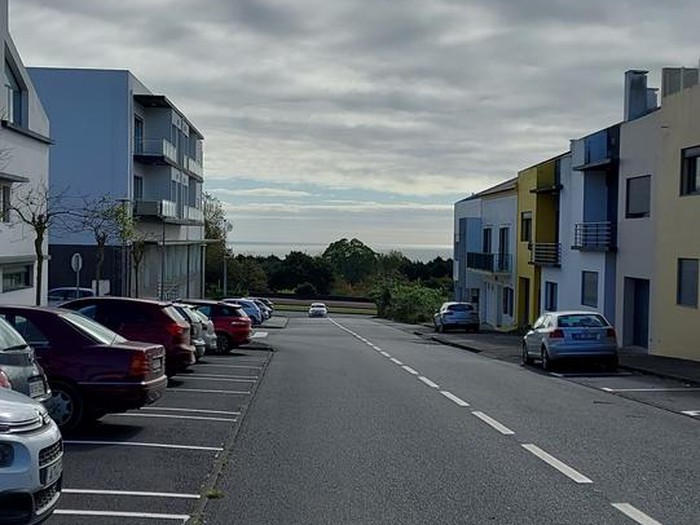
I will use a proverb: “Rome and Pavia weren’t built in a day.” I remember that Fajã de Cima has suffered from these problems for decades. It’s a parish that wasn’t designed, when it was set up, to be used by cars, nor did it have the size of public transport that we have to deal with today. It’s a parish with very narrow streets, most of which don’t have sidewalks. It is still a parish that serves as a link from the south coast of Ponta Delgada to the north coast of the municipality, although there are already other alternatives. The parish’s inhabitants continue to have these problems in their daily lives.
Solving a decades-old problem in just two years in office is neither easy nor demanding. However, I can assure you that in these two years in office, we have done an excellent job of identifying all the problems and, above all, identifying possible solutions, which have been sent to the competent authorities. (…) We believe car traffic and parking are mobility problems and should be seen in this light. We have faith in the mobility project in the municipality that Ponta Delgada City Council is carrying out, in which Fajã de Cima has been identified as one of the priorities.
We’ve already surveyed houses and ruins that could fit into this parking lot perspective to make some roads easier. But we need to seriously study whether transport should continue this way. (…)

Vehicles are driving at high speed in the parish. Do you think the PSP (police) should take stricter action regarding the circulation of these vehicles?
In certain areas of the parish, there is some speeding. (…) Fajã de Cima is a very high parish; the streets are downhill, and there is a natural tendency to speed a little. These cases have also been reported to the authorities that deal with these areas. What is certain is that the solution cannot be seen in isolation; it must always be placed in the context of the mobility of the whole municipality.
Some solutions could be implemented immediately, but they are not to the liking of most of the population. For example, speed bumps, one of the first measures to mitigate speeding, generate complaints after a week or two. People don’t like them because they generate noise late at night and people can’t rest. Rather than being an identified problem, it’s a problem that’s difficult to solve. I’m in favor of investing heavily in speed controllers, for example. This system exists in São Roque and has solved the problem. I think there are three-speed limiters between the traffic circle by the highway and Praia do Pópulo. This way, people comply, whether they like it or not. Our actions have to have consequences.
However, I’m not an advocate of consequences without alternatives. It’s essential to think about alternatives before thinking about consequences. For example, there could be a 200-meter street without a parking space, and then I understand why people park on the street. However, if parking is created and people continue to park on the street, they want the consequences.
Concerning drug addiction, where does Fajã de Cima stand?
Drug addiction is general and worrying; unfortunately, Fajã de Cima is no exception. We view this issue with great concern, not least because the growth and emergence of these addictions directly impact the parish’s day-to-day life.
We have been trying to carry out a mix of actions within the scope of our powers and diligence. We have established a protocol with ARRISCA, a fundamental organization deeply knowledgeable about this issue. This protocol was drawn up to list the problems that Fajã de Cima has in this regard and, together, to understand how to deal with the issue of prevention, raising awareness and educating the younger age groups, and how we can contribute so that in the future, these cases begin to disappear. And also in terms of control. We can’t just look at raising awareness. We must figure out how to help those already suffering from these problems.
One part that isn’t really our responsibility but is part of our remit is to constantly alert the competent authorities to these situations, in this case, the Public Security Police, and to use our seat on the municipality’s Municipal Security Council, where these issues are debated.
Has crime increased in the parish as a result of drug addiction?
Petty crime has evolved. Thefts have been happening more frequently, and we have no doubt that this phenomenon is related to increased drug use and addiction.
What is the extent of poverty in the parish? Does the parish council support many families?
Our perception is that the poverty rate in the parish is high. We measure this because we are very close to the community. This Executive has developed a very close relationship with the support provided by the Centro Social e Paroquial de Nossa Senhora de Oliveira, which provides this type of assistance. This partnership allows us to follow the families who are, in turn, accompanied by the social and parish center.
However, the problem of poverty is not just about the families that are monitored. These are identified. A dimension of shameful poverty comes to the council daily or weekly. Here, we have played a very incisive and leading role through a regulation we created for social support. We have supported dozens of families in their most basic needs, from housing to support for medicines, support for the month’s running costs, and food, which is really starting to worry us.
Another primary concern is the appearance of homeless people in the parish. There have never been any cases in Fajã de Cima, and, at the moment, we have three identified instances.
On the other hand, we are aware of two things: the rate, despite being high, tends to decrease due to this support and monitoring, and there is always an expectation of understanding how this national and international panorama directly affects or will affect our families.
How many requests for support did the Junta have last year compared to this year?
The first year was very challenging and atypical. As a new Executive, we had the clear perception that people would come to us because they wanted to talk to different and new interlocutors. The three members of the executive as a whole attended to around 150 people in our first year in office. At the time, the parish council didn’t yet have social support regulations. But I can assure you that 50% of the people we saw were families who received support at various levels.
At Christmas, we have a particular action: to distribute food baskets to the neediest families and the number exceeds 100. This year, we have increased the amount of money available for this budget to support families because we realized this would be a worrying issue.

What is the parish council’s approach to tourism?
We have several fronts when it comes to tourism. First, because we are very close to our community, we are monitoring all the investments made and will be made in the parish at this level. For example, companies are already organizing themselves so that tourists can visit their headquarters and see what products they have, with visits to factories and industries. Several private individuals are making acquisitions to transform some houses regarding local accommodation.
Since we took office, we’ve started a protocol with AGITA – the Association of Tourist Information Guides of the Azores, which is based in Fajã de Cima, in an annex we have at Moinho da Tia Faleira, one of the parish’s tourist attractions. Along with this protocol, AGITA will make the whole area more dynamic, prioritizing the place and the parish.
We also have the Pinhal da Paz, a fantastic nature reserve, which could attract people to our parish who are more oriented towards environmental tourism, trails, and nature walks. As it’s not a parish with a coastline and points of interest like other parishes in the municipality, we want Fajã de Cima to have enormous potential, and we’ve been taking steps to make this happen. We are relatively short of points of interest geared explicitly towards tourism, but the ones we do have need to be significantly enhanced.
In your opinion, does Fajã de Cima have the potential for further development? In what areas?
Fajã de Cima has always been an enterprising parish, and I believe that, with the commitment of all the entities, public and private, we have many growth opportunities.
Through our social and parish center, we are already a reference in the social area. We have had fantastic experiences with the Regional Government of the Azores. The social and parish center has usually partnered in all the bold projects that must be piloted.
As far as the whole area of business and industry is concerned, there is a lot of ground and room for development. We’ve been pleasantly surprised by some companies that have looked at Fajã de Cima as a parish where they can establish themselves. For example, the Pérola da Ilha snack factory is an international brand that exports its products and is based in Fajã de Cima. Quinta do Além is another benchmark in beekeeping.
Fajã de Cima has the conditions for progress; there are infrastructures and accessibility, so investors are enthusiastic about investing in the parish.
What are your main priorities and ambitions for development in the coming years?
Our ambition is to make Fajã de Cima more and more attractive for families and businesses to set up. The issue of accessibility and infrastructure is fundamental for us. Among these infrastructures, some stand out almost naturally; one is the school. One of the pillars for the excellent development of communities is education. A parish with a school in the deplorable conditions that Fajã de Cima has is not beneficial for the students. In fact, the school has seen incredible desertification in the last 20 years. Anyone who can afford to have their children study at another school should do so without hesitation.
If you’re talking about the school, you can’t forget the catechism center, which hasn’t been renovated since I was a student there. The parish council completed a significant refurbishment project this year, giving it decent conditions.
The priorities must be education and creating conditions for children, teachers, and communities to develop.
The issue of mobility is crucial for the development of the parish. We cannot, under any circumstances, continue to have this suffocation of car and pedestrian traffic in Fajã de Cima. Solving these problems is more than a priority. It is an extreme necessity.

in Correio dos Açores, Natalino Viveiros, director

Translated to English as a community outreach program from the Portuguese Beyond Borders Institute (PBBI) and the Modern and Classical Languages and Cultures Department (MCLL) as part of Bruma Publication and ADMA (Azores-Diaspora Media Alliance) at California State University, Fresno.
 Novidades - The Islands and the Diaspora