

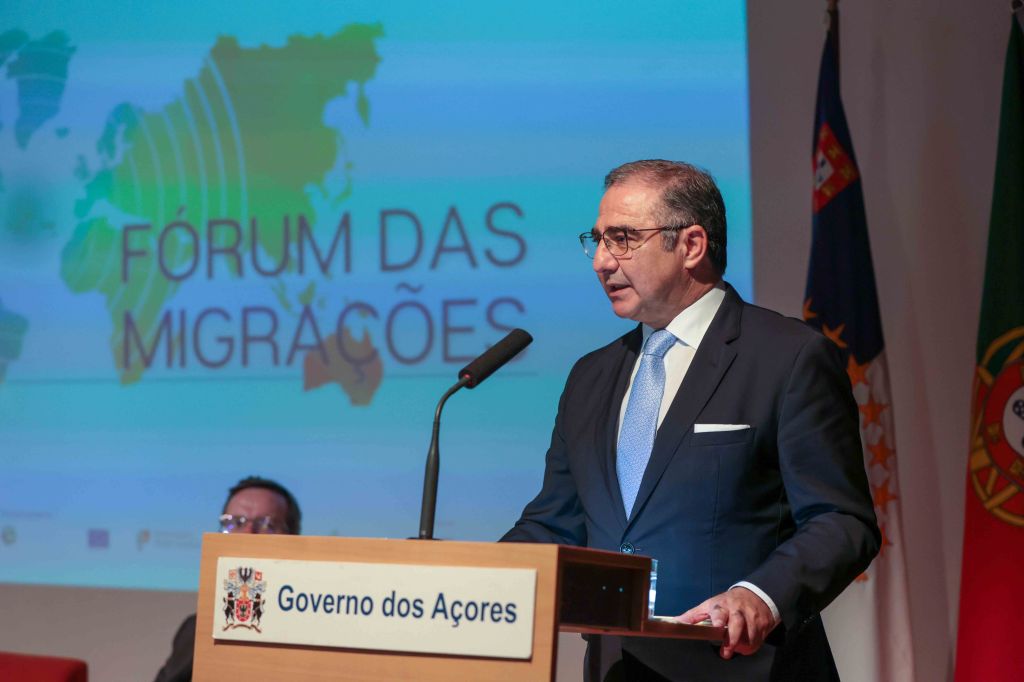
The President of the Regional Government of the Azores, José Manuel Bolieiro, recalled on Friday that the region welcomes immigrants, adding that borders cannot be a barrier to “understanding interculturality.”
“I congratulate and express my satisfaction at the participation of each and every one of you. We are building an ecosystem that is not only legislative, but above all regulatory and organizational, which helps, fosters and facilitates the integration of those who arrive and the literacy on each of our islands to welcome them and help them integrate fully,” he stressed.
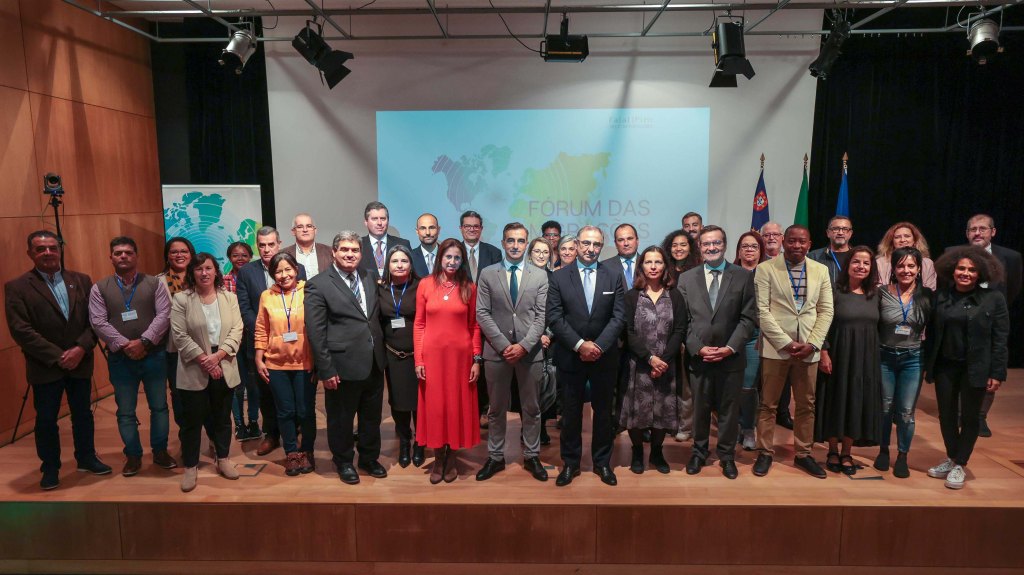
In Horta, José Manuel Bolieiro addressed a few dozen attendees at the Azores Migration Forum’s closing session.
During this event, the President of the Government acknowledged that there is a sizeable current trend of “migratory movements” caused by adverse effects, such as war or poverty, but pointed out that there are also many people who change geography “in search of happiness,” with the Azores being a privileged place to welcome them.
Leaving words of encouragement for Portuguese people who are or have been in top world positions focused on migration, such as António Guterres (at the UN) or António Vitorino (at the International Organization for Migration), José Manuel Bolieiro recalled that schools, for example, also play a key role in “promoting literacy” by welcoming citizens from other countries.
“Welcome. I know that I interpret the overwhelmingly general feeling of all the islands and municipalities of the Azores. You can count on the Government of the Azores to welcome you well and to monitor how your are received with dignity,” he said, to applause from those present at the event on the island of Faial.
According to the latest report from the Aliens and Borders Service, for 2022, 5,123 foreign citizens from 97 countries officially reside in the Autonomous Region of the Azores, corresponding to 2.1% of the total population.
From a Press release from the Government of the Azores
Translated to English as a community outreach program from the Portuguese Beyond Borders Institute (PBBI) and the Modern and Classical Languages and Cultures Department (MCLL) as part of Bruma Publication and ADMA (Azores-Diaspora Media Alliance) at California State University, Fresno.
 Novidades - The Islands and the Diaspora