

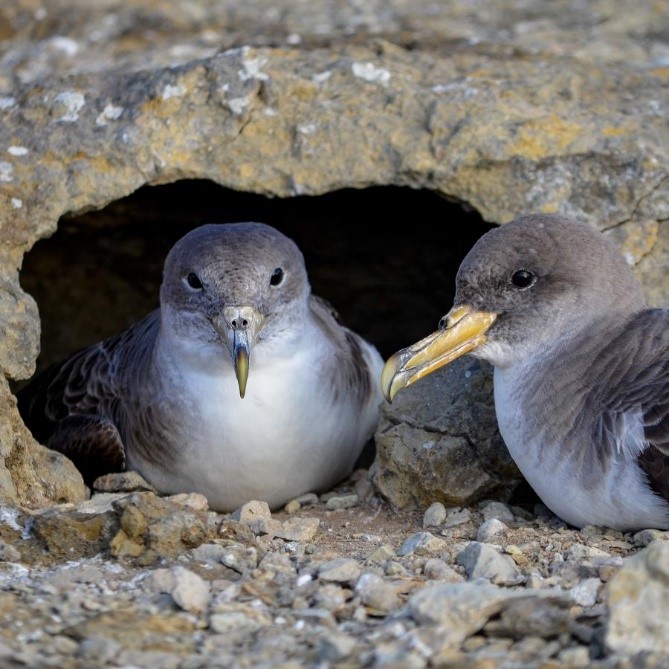
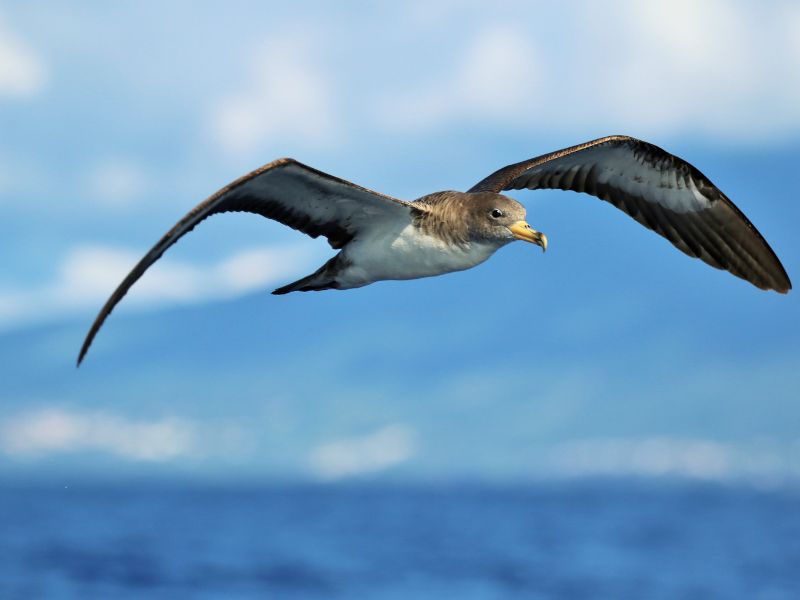
For the fifth consecutive year, the Azores are at the forefront of mitigating light pollution on seabirds worldwide. Several municipalities and others are setting an example: the island of Corvo, which is carrying out a general blackout of public lighting to save Cory’s shearwaters (Calonectris borealis–in Portuguese Cagarro) until November 2, Lotaçor, the municipalities of Vila Franca do Campo and Povoação, Faial da Terra, among others, which are switching off and reducing the lighting on their coastlines and ports during the SOS CAGARRO (Cory’s shearwater) campaign.
These actions are carried out during the juvenile Cory’s-Cagarro’s- emancipation period, from 9 p.m. onwards, to minimize the impact of light pollution on these birds’ first flights. This measure aims to protect the world’s most endangered group of birds, reduce the impact of light pollution, raise awareness of the problem, and increase knowledge of this threat to the breeding population of Macaronesia’s most abundant seabird.
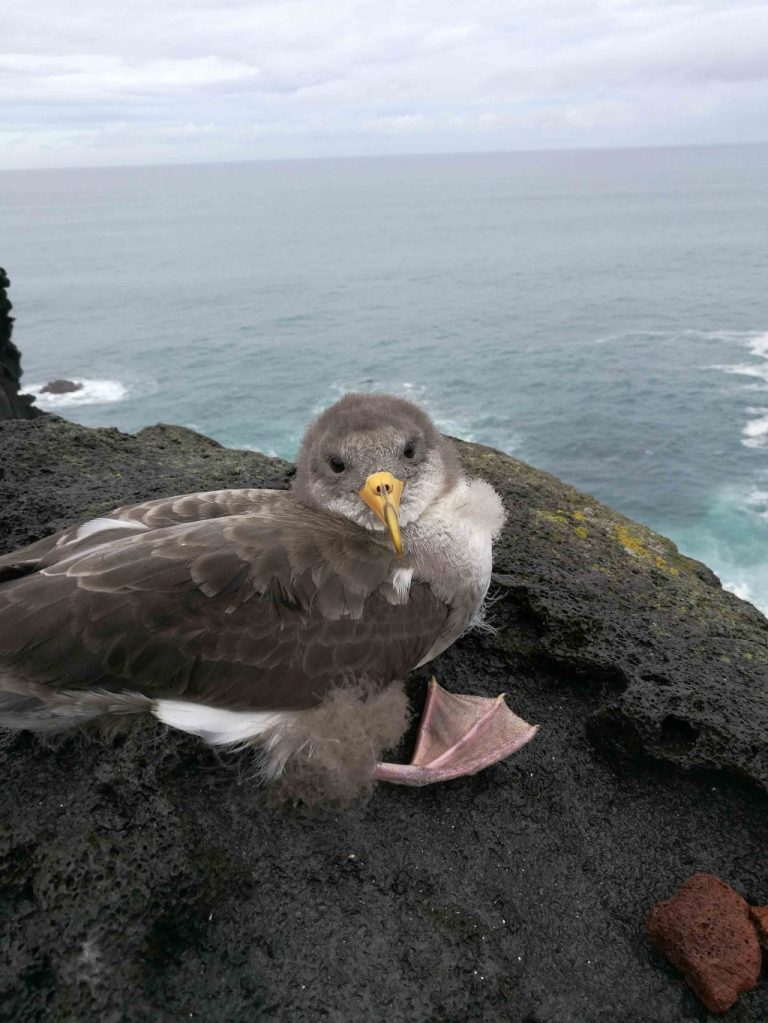
This initiative by the Portuguese Society for the Study of Birds (SPEA), in partnership with the Municipality of Corvo, the Municipality of Vila Franca do Campo, Lotaçor, the Municipality of Povoação and the Parish of Faial da Terra, focuses on the period when the young Cory’s shearwater leave the nest, to minimize the impact of light pollution and increase the knowledge available on the effect of this threat on the juvenile Cory’s shearwater (Cagarro) when it leaves the nest and in the first days of its life, a period about which there is little information. When juveniles leave the nest in October-November, they tend to be attracted to light, become disoriented by the glow of our towns and cities, and end up falling to the ground and can be preyed upon by dogs and cats, perish through collision, dehydration and even decrease their chances of reaching adulthood, not only in the Azores but also in Madeira and the Canary Islands.
These actions are part of the Light Pollution Laboratory set up on the island of Corvo and are an example worldwide as they minimize the impact of this threat and increase knowledge, contributing to the implementation of the Macaronesian Strategy for mitigating one of the priority threats to seabirds in the region. They are also particularly relevant to integrated conservation, where local authorities and their citizens act in prevention and actively contribute to the implementation of the most emblematic conservation and environmental awareness campaign, the SOS CAGARRO (Cory’s Shearwater) Campaign, coordinated by the Regional Directorate for Maritime Policies, as well as increasing the implementation of the various seabird conservation projects underway in the Azores, namely LIFE Natura@night, LIFE IP Azores Natura, EELABs.
SPEA and its partners hope to contribute to the implementation of conservation measures and the mitigation of light pollution, as well as to increase the knowledge available, thus enhancing the long-term survival of these birds.
in Diário Insular, José Lourenço, director
Translated to English as a community outreach program from the Portuguese Beyond Borders Institute (PBBI) and the Modern and Classical Languages and Cultures Department (MCLL) as part of Bruma Publication and ADMA (Azores-Diaspora Media Alliance) at California State University, Fresno.
 Novidades - The Islands and the Diaspora