


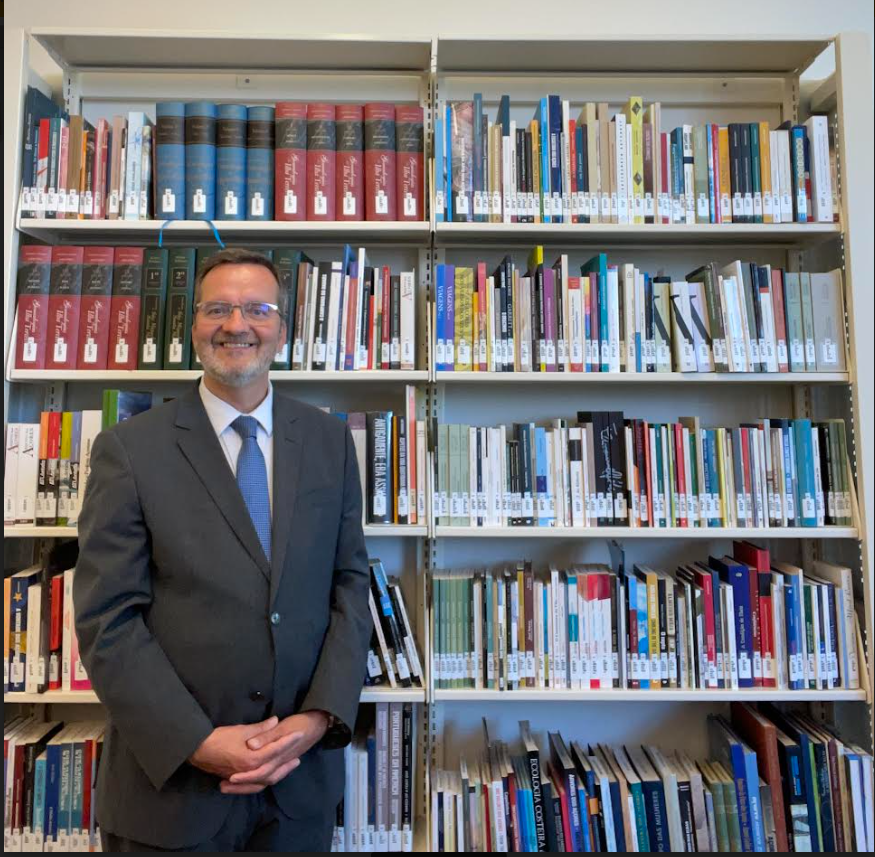
JOSÉ ANDRADE: “…we are all working to make Azorean society aware of the advantages of interculturality.”
José Andrade, head of the Migration Forum, argues that immigrants should be welcomed in the Azores for economic and cultural reasons. Hostilizing those who come to us, he says, doesn’t make sense. Here is an interview published in Diário Indular from Angra, Terceira island.
Are there conditions in the Azores to welcome more immigrants?
Yes. We currently have 5,123 foreign citizens from 97 nationalities officially residing in the Azores. They are present on all 9 islands, in all 19 councils, and in many of the 155 parishes. I’m only talking about citizens who are still foreigners. Many immigrants have since acquired Portuguese nationality, others born outside of current Portuguese territory and who, while residing here, have Portuguese status. This means that the number of people born outside the region is much higher than the number officially registered in the annual report from the Aliens and Borders Service for 2022, to which I referred. From what we can see, it has been advantageous for the Azores, and, in my personal opinion, we are still far from exhausting the capacity to welcome and integrate foreign citizens into the Azorean islands. As you know, the Azores have unfortunately been losing a lot of population. Every census shows a growing and dangerous trend towards so-called demographic erosion, and the only natural way we can compensate for the fall in the birth rate in good time is to welcome the foreign citizens who choose our islands to develop their life project with us and to help us develop this land that will become theirs too.
Many of them come of working age, many of them are employed in sectors such as catering, hotels, and construction, and so they come to fill local labor shortages so that we can meet the development challenges. We have always been a port of departure and are now also a port of refuge. The Azores still have plenty of capacity to continue receiving many foreign citizens. We have made an effort, not only the Regional Government of the Azores but also our partner organizations, such as the Association of Azorean Immigrants (AIPA) and the migrant support office CRESAÇOR, to develop initiatives that facilitate the full integration of these foreign citizens. For example, Portuguese courses for speakers of other languages. We have made this effort, and we are all working to raise awareness in Azorean society of the advantages of interculturality.

“Any Azorean who has gone to live in the United States or Canada has been welcomed, integrated and received with open arms. We have an obligation to welcome and integrate with open arms in our own country too. We want to build the Azores as a society that is not only multicultural, but intercultural, cosmopolitan and without borders…”
The lack of housing is something that Azoreans complain about. Is this a problem when it comes to immigration?
Naturally, immigrants, those who come to the Azores from other countries, as well as those who have gone from the Azores to other countries, are primarily concerned with mastering the language, finding housing, and finding work. All of them certainly have this concern. I believe that, in almost all cases, they come with this situation already being resolved. So, we have no information about foreign citizens having particular housing difficulties. They deal with it themselves, or the employer who takes them in because they need them to provide accommodation. In general, foreign citizens who come to the Azores have already taken care of their essential needs in terms of housing and employment. That’s the feeling we get.
In your opinion, is the mentality of Azoreans towards immigrants changing?
I hope so. We work towards this every day. And the big argument is the one I’ve already mentioned. Any Azorean who has gone to live in the United States or Canada has been welcomed, integrated, and received with open arms. We must welcome and integrate with open arms in our land, too. We want to build the Azores as a society that is not only multicultural but intercultural, cosmopolitan, and without borders, respecting and valuing the cultural differences that are legitimate to each individual, not least because Azorean society is enriched by this interculturality in social, cultural and economic terms. We have been working to raise public awareness of interculturality with sessions organized by the Regional Directorate for Communities in partnership with AIPA as part of the ‘9 islands, 9 actions’ program. These initiatives are taking place these days on all nine islands of the Azores. In the morning, there will be awareness-raising sessions for the school community; in the afternoon, there will be awareness-raising sessions for employees of both regional and local public services; and in the evening, there will be an awareness-raising session for the general population so that they can understand the advantages of interculturality. This first Azorean Migration Forum is also part of this broader effort that we are all making, fulfilling a collective goal of making Azorean society aware of the advantages of interculturality.
So, would you say that this was the aim of the Forum that took place on the islands of Faial and Pico?
Yes. The Migration Forum is a space for reflection and debate, for sharing experiences with the various immigrants who live in the Azores and, above all, with the different public and private entities that deal directly or indirectly with the problem of migration on the different islands of the Azores. It is a space to take stock of where we are, how we got here, and how we want, can, and should go from here.
In practical terms, are these forums useful for positively raising people’s awareness?
Yes, and that’s why we have to keep insisting, persisting, never giving up, and always continuing to develop initiatives that can reach an increasingly large number of Azoreans and residents in the Azores, regardless of their cultural background, so that everyone understands that the world has changed. Today, we live in a cosmopolitan society, not just in the Azores, but in Portugal, Europe, and the world, so the Azores do not have to be. Fortunately, they are not an exception in this sense. We live in an increasingly intercultural world, and our islands cannot and must not be immune to this global trend because it is advantageous for all territories. We must continue to be a region that is open and welcoming and values cultural differences, which, when they are valued in an intercultural environment, are advantageous for all parties. These sessions we are organizing on all the islands are one of the many contributions we are making to continue raising awareness in this direction. If we had to resort to a famous adage, I’d say that ”. água mole em predra dura tanto bate até que fura–water dripping day by day wears the most challenging rock away -sort of never giving up. CA/DI
in Diário Insular, José Lourenço director
José Andrade, author and public servant, is currently the Regional Director of Communities, in charge of relations with the Azoreans abroad, the Azorean Diaspora, and recent immigrants to the Azores.
For total transparency, PBBI-Fresno State has a working memorandum of understanding with the DRC-Azores.

 Novidades - The Islands and the Diaspora