

Rui Faria has finished his term as the head of the Association of Azorean Emigrants (AEA). He did not run again by choice, and after a vote, the leadership was taken over by Andreia Moniz-De Souza, who took office last Friday. The former president gives a positive assessment of her work and that of her team. “I’ve been involved with the association since its first day, that is, 13 years ago, and since January 2018, I took over the presidency, together with the Ribeira Grande City Council, with the task of getting the Emigrant Square up and running, which I obviously highlight because it has given it a new impetus.” He also highlights the importance of the AEA having a headquarters, inaugurated at the end of his term, but also praises the publication of works that relate Azoreans to the USA and Canada.
Six years on, Rui Faria has finished his term as the head of the Association of Emigrants from the Azores (AEA). He didn’t run again by choice, and after a vote, the leadership was taken over by Andreia Moniz-De Souza, who took office last Friday.
Speaking to our newspaper (Atlântico Expresso), he explained that he didn’t run again because “being in the Association is extremely easy, but providing continuity is extremely difficult. And I was thrilled that this year the President-elect, Andreia Moniz-De Souza, wanted to move on”. And so she did because “I believe that institutions are more important than people. I had outlined my work for two terms, and I’ve done almost everything I set out to do, with the only thing left to do is to complete the project on Bermuda, which will be done with the new Board.”
Finishing his term at the Association leaves Rui Faria with mixed emotions. “I’m leaving with my heart open, happy for the work done because things will continue, and sad because the Association is like a child of ours that we want to see thrive, which is certainly what will happen.”
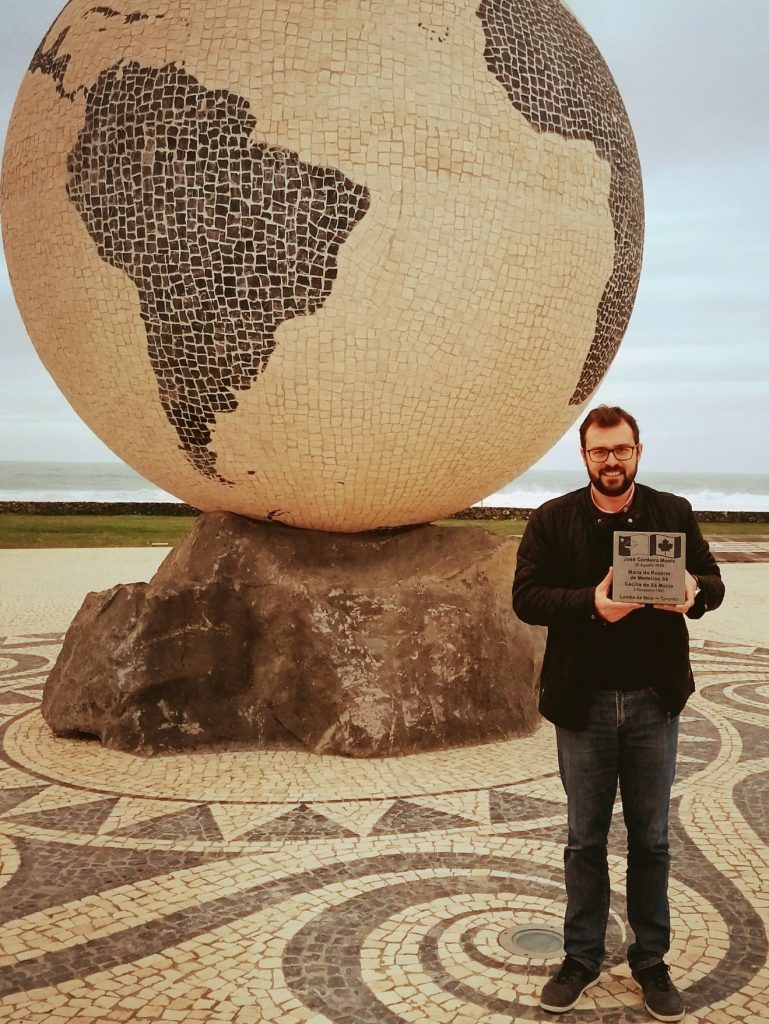
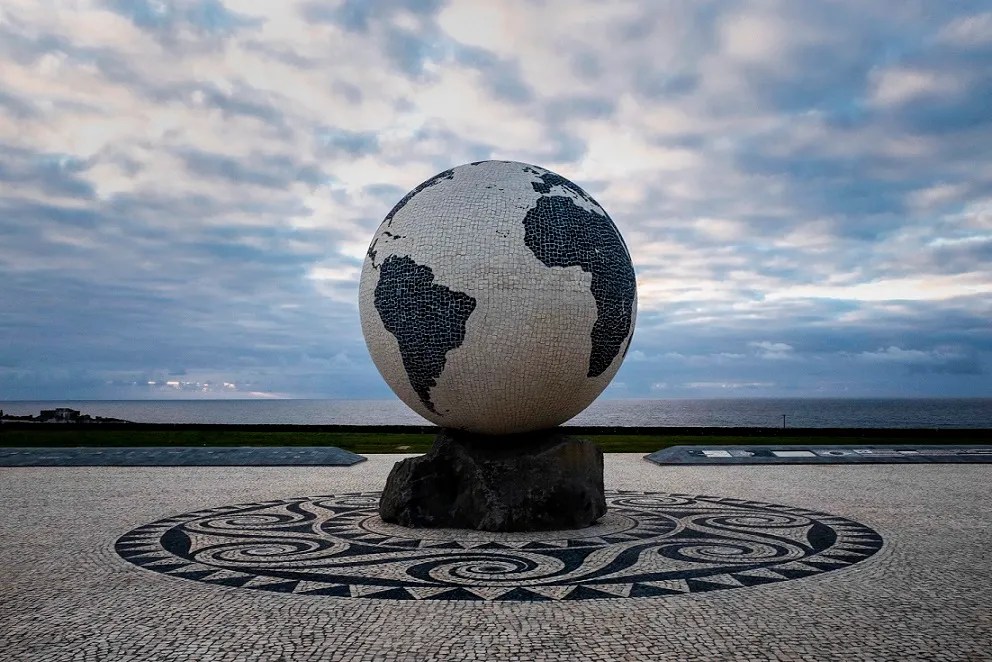
The interviewee makes a positive assessment of his time as President of the AEA. “I’ve been involved with the Association since its first day, 13 years ago, and since January 2018, I’ve been President, together with the Ribeira Grande City Council, with the task of getting the Emigrant Square up and running, which I obviously highlight because it’s given a new impetus. There is a mural where people can place their plaques and pay homage to their family, from parents to children, and vice versa. With the Praça–Emigrant’s Square, the AEA is bridging the gap between the new emigrants and, above all, the new generations. There’s a closer connection, which is also helped by the new technologies”.
Rui Faria has been at the helm of the AEA for six years.
“We’re now preparing the first work, because nothing exists, on the relationship between the Azores and Bermuda, which will be published next year, the 175th anniversary of the first ship that took the first Portuguese to that island to live and work. But there is no history of these years and thousands of Azoreans on those islands. At the moment, Azoreans make up a quarter of Bermuda’s population. They dominate various areas of the economy, including construction, not only as workers, but also as entrepreneurs, along with the treatment of gardens, swimming pools and plumbing. We were in Bermuda preparing all this and there will certainly be other events with the new President. But when she was there, the Association gathered all the cultural and sports associations around the same table for the first time to start preparing for the 175th anniversary, so that first we could mark the past so that everyone would know how we arrived in Bermuda and how the Azorean presence is seen, not only with people speaking Portuguese, but also in schools, in culture, in the Holy Spirit, in Santo Cristo, and now with a book explaining it all. Obviously, the relationship with Bermuda is going to be much stronger and even though I won’t be the President in 2024, the Association will certainly do so, just as it did with Canada this year. The Association was a pioneer in starting the celebrations for the 70th anniversary of emigration to Canada, we launched a book that tells the story of the Azores’ relationship with Canada, in bilingual form, and the same will certainly happen with Bermuda, in a more significant way because we’ll be the first to tell this great story of the Azores and Bermuda in book form.” The book will be written by Eduardo Medeiros, the same author of the books promoted by the AEA in the Azores.

He reinforces the idea that in these years, “together with my team, we have climbed another notch. I was unlucky because half of my term we were in the Covid-19 phase and, like everyone else, we had to adapt to a new reality. But even so, we’ve done a lot and done it well, and whoever follows us will certainly do even more and better.”
Looking back on his career, Rui Fariais believes that “anyone who volunteers their time for the benefit of others always does a great job. I consider everything we do for our Azoreans, for our thousand Azorean islands” spread around the world to be positive.
Last October 28th was an extraordinary day for the EEA because it marked 13 years of existence.
AEA because it marked 13 years of life and inaugurated its headquarters, provided by the municipality, in one of the rooms of the Casa da Associações, located in Rua do Alcaide, in a space that functioned as a school until 2017.
Rui Faria highlights the importance of the AEA having a headquarters, inaugurated at the end of his term, but also highlights the publication of works that relate Azoreans to the USA and to Canada.
USA and Azores-Canada.

Of the work he has done, he also highlights the opportunity he has had over the years “to help a lot of people who come to us to try to speed up possible investments, issues related to social security and information on how their children can study in the Azores. The Association has played this role of close contact, of doing its best and as quickly as possible” to respond to requests.
For many years, the Association’s members had free membership, and only three years ago did they start paying membership. “At the moment, we have around two hundred members and a lot of staff who are always ready to help.” But what is the connection with emigrants around the world? The former President recalls that in the Azores, there are 250,000 people, and in the USA and Canada alone, there are more than a million Azoreans and their descendants. “It’s a huge community. That’s why our relationship was always open, whether they were members or not, and also because the governing bodies were representative of each region of our Azores, whether in the Azores of our archipelago or in the Azores of America, Canada, Brazil, and Bermuda. Obviously, as an association with various financial restrictions, we can’t be in all the places where there are Azoreans. Still, the truth is that on the East Coast of the USA, we have quite a presence whenever we need it. They need us through the Casa dos Açores and other institutions, and in California, we also have an excellent connection, both through the university and the associations. Now, we have to keep our doors open and fight for our emigration and essentially make the connection, which we have started to do and which the new Board will certainly continue. We don’t just have to worry about the nostalgia market, but also about our children and grandchildren so that this bridge remains very much alive.”
The EEA’s relationship with also exists, but more to gather information about “the bureaucracy they’re not used to. They come to us mainly to help them share documents and land (…). Fortunately, they have seen the Azores as a tourist destination and have seen many of their properties, which were almost derelict, appreciate in value and be given a new lease of life. We’ve been helping to liaise with the local councils and regional authorities.” In addition, “fortunately, our connection with returned emigrants has more to do with our festivities, both here and in Terceira and Faial. They’re here to enjoy their retirement; they’re very well off in the Azores, and what they need is for us to organize things that remind them that they’re from here because their friends are already old, their relatives have left, and it’s important to build this bridge of fraternization, both with the events in the Praça and in other spaces.”

Asked what other projects he has to develop, he says: “Apart from my work at Ribeira Grande City Hall, nameely at the Azorean Emigration Museum – where I’ll be connected in some way to our diaspora – I’m going to do what I’ve always done, and not stop,” as well as developing other initiatives.
Nélia Câmara, journalist for Atlântico Expresso.
Translated to English as a community outreach program from the Portuguese Beyond Borders Institute (PBBI) and the Modern and Classical Languages and Cultures Department (MCLL) as part of Bruma Publication and ADMA (Azores-Diaspora Media Alliance) at California State University, Fresno.
 Novidades - The Islands and the Diaspora