

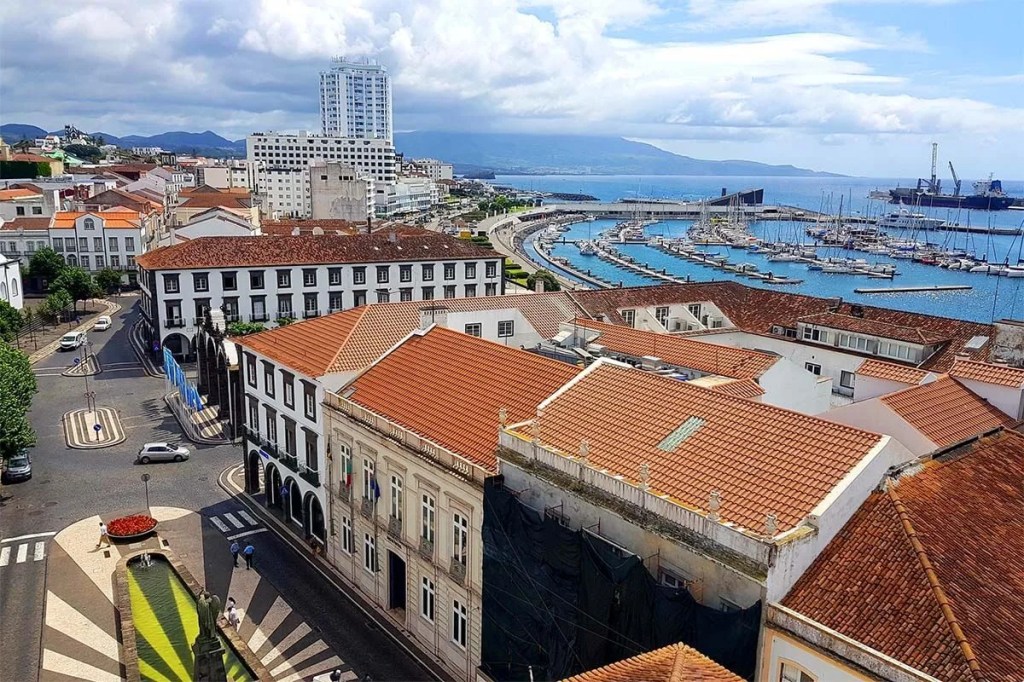
During October, house prices rose in the Autonomous Region of the Azores (9.8%), Northern Portugal (2.7%), and the Alentejo (2.7%), according to the idealista platform’s price index.
On the other hand, house rents fell in the Algarve (-2.5%), the Center (-1.8%), and the Autonomous Region of Madeira (-1.8%).
Prices remained stable in the Lisbon Metropolitan Area (-0.1%).
The Lisbon Metropolitan Area, at 18.3 euros/m2, continues to be the most expensive region in which to rent a home, followed by the North (13.4 euros/m2), the Algarve (13.2 euros/m2) and the Autonomous Region of Madeira (12.9 euros/m2).
On the opposite side of the table, the Center (8.6 euros/m2), the Autonomous Region of the Azores (9.6 euros/m2) and the Alentejo (9.8 euros/m2) are the cheapest regions to rent a home.
The rental market is more expensive.
The rental market in Portugal is still buoyant when buying a house with a mortgage is more expensive and challenging due to rising interest rates and the cost of living.
And as demand continues to outstrip supply, rental house prices remain high, having risen in five district capitals between October and the previous month, with Setúbal leading the increases (+4.4%).
In Porto, too, rents rose by 2.1%. But in Lisbon, they remained stable, similar to the national situation. This is because the median prices of houses for rent in Portugal remained steady at 15.3 euros per square meter (euros/m2) at the end of October, showing a monthly variation of -0.4%, according to the idealista price index.
Regarding quarterly variation, rents rose by 2.2% and 26.3% year-on-year.
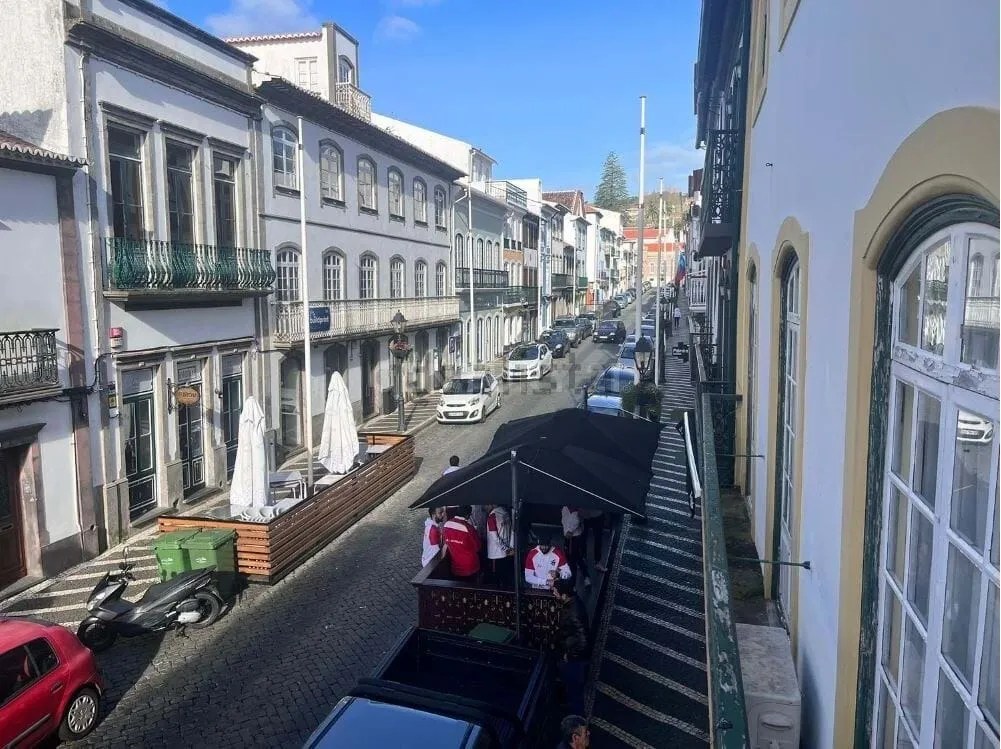
House prices have more than doubled since 2010
House prices have more than doubled since 2010 in Portugal and eight other European Union (EU) member states and should continue to grow in Portugal despite the “cooling” in European real estate, the European Commission revealed yesterday.
“House prices have grown enormously across the EU over the past decade, especially during the pandemic.
House prices started to increase during the economic recovery of the 2010s, albeit with marked differences between member states” and since then, “prices have doubled in Germany and the Netherlands. At the same time, Portugal, Ireland, the Czech Republic, Austria, Luxembourg, Latvia, and Lithuania have seen even stronger price growth,” the European Commission portrays.
In a chapter dedicated to the housing crisis in the autumn economic forecasts released yesterday, Brussels points out that “European real estate markets have been cooling since mid-2022, along with a significant slowdown in credit levels”, given the tight monetary policy of the European Central Bank (ECB).
Even so, although house prices have already peaked in several member states as early as the second quarter of 2022, “steady price growth continues in Bulgaria, Croatia, Greece, Portugal and Slovenia,” says Brussels.
The EU executive concludes that, at the EU level, “going forward, constraints on households’ borrowing capacity suggest that house prices will remain under pressure in the coming quarters before resuming growth.”
in Diário dos Açores, Osvaldo Cabral, director
Translated to English as a community outreach program from the Portuguese Beyond Borders Institute (PBBI) and the Modern and Classical Languages and Cultures Department (MCLL) as part of Bruma Publication and ADMA (Azores-Diaspora Media Alliance) at California State University, Fresno.
 Novidades - The Islands and the Diaspora