

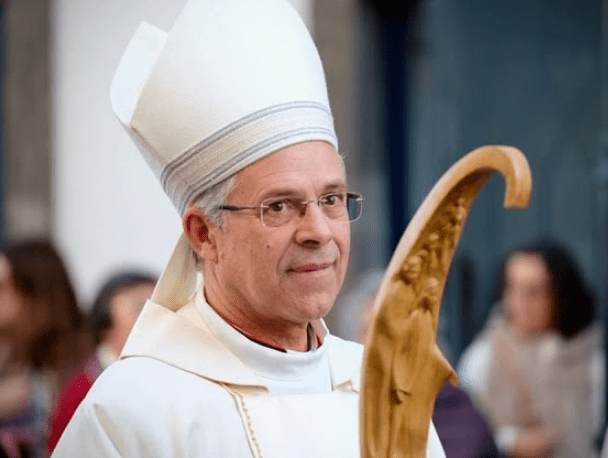
In 2011, the Emigration Observatory pointed out that of the 4.5 million Portuguese living abroad, around 1.5 million were Azorean emigrants and their descendants.
This influence can be seen in the life of the Catholic Church itself, with Azoreans taking their religious traditions to their host countries.
“The Azorean is fantastic. I went to Turlock, in the San Joaquin Valley, to one of the festivals there. I was amazed. I was in the Azores. The way they lived the festivals, the processions, the animal parades, the cars made by them, all squealing, as it used to be in the Azores…”, said the Bishop of Angra in a joint interview with the Lusa news agency and the Ecclesia news agency.
According to the prelate, “the Azoreans bring their customs, their traditions, especially their festivals and popular religiosity to the communities where they live.”
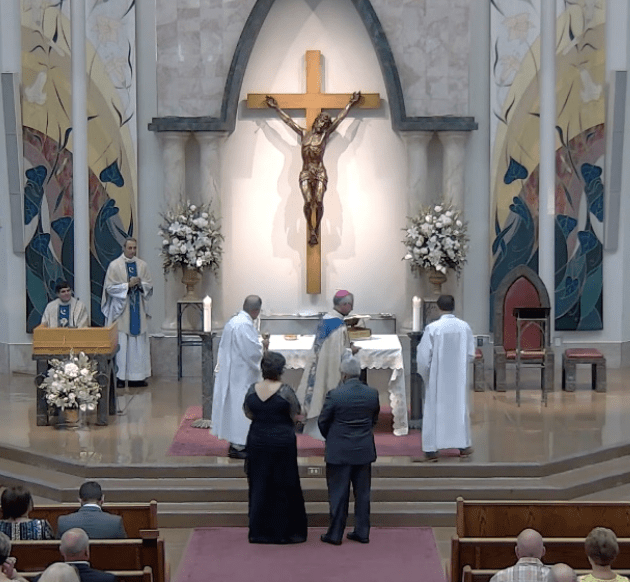
And does the diaspora consider the Bishop of Angra to be their bishop?
“That’s very interesting, because I already have four or five more invitations to go to these dioceses in the diaspora. They are very proud to take their priests from the Azores, to take their culture to the places where they are,” says Bishop Armando Esteves Domingues, adding that “the priests from the Azores, many of them, every year go to one of the festivals, or to Bermuda, to Canada, or to various places in the United States. And they go there to preach, to take part in the feasts”.
The Azorean emigrants “are overjoyed and everyone tries to bring someone from the Azores. And the bishop is the same way. We also go as a sign of this unity”.
On the other hand, Igreja Açores, a portal that functions as the diocese’s own communications agency, sees a lot of the content it produces being consumed by Azoreans abroad. “There is a great connection; what is written on Igreja Açores has more readers abroad, but by far (…) than it does in the Azores,” the bishop acknowledged, stressing that “the Azores have a unique characteristic in Portugal, how religiosity has been inculcated, perhaps because [they are] isolated islands, lost in the middle of the ocean, with little, almost no connection even to the mainland.”
“Being an island, being small, being isolated, made it easier for things to become enculturated and, perceived in one way or another, they became almost the same everywhere,” explains the prelate, adding that “the first of all is the Holy Spirit, which is transversal to all the islands.”
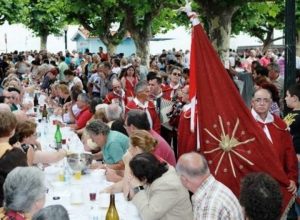
“The feasts of the Divine Holy Spirit are an amazing thing, as in every corner there are parishes, parishes that have, perhaps, ten empires, which are brotherhoods that develop activities around the Holy Spirit, which is not only the crowning but which are works of charity, distribution of goods,” he adds, not forgetting “the pilgrimages [which] have a force, an impact,” which “everyone feels (…) is a heritage that identifies, that is part of the identity of the Azorean people.”
With the diocese on the verge of its 500th anniversary, which will be celebrated in 2034, Armando Esteves Domingues warns of the risk arising from the strength of this popular religiosity.
“Of course, this can also create some difficulties, because when religiosity is merely popular, it leads one to understand that everything is summed up there and that everything is exhausted, that there is no need for any formation, any reading (…). There is a pastoral path here that can be taken forward and this can lead to the great objectives of the Church, which is evangelization, which is this diaconia, service to the poor, overcoming and overcoming these situations of social injustice,” becoming a reality.
In this context, the diocese presented a pastoral itinerary for the next two years until the Jubilee of Hope to prepare the multi-year plans for the 500th anniversary of the diocese.
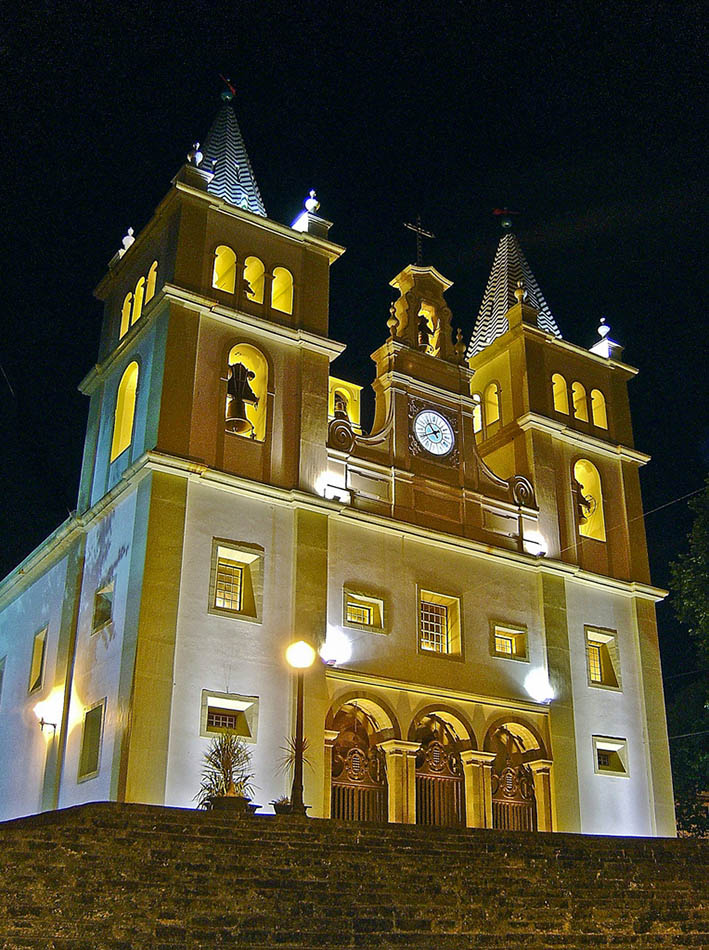
“We want it to be like a time of listening, but it’s not listening for the sake of listening. We’ve already made all the diagnoses. There has also been a very deep journey in the diocese, which almost began even before the Pope asked for this synodal journey in light of the universal synod,” the bishop of Angra told Lusa and Ecclesia, explaining that these two years until the jubilee will be lived “in laboratories – of synodality, fraternity and hope.”
The synodal environment experienced by the Catholic Church on a universal level will be well-marked soon by the Azorean Church.
In fact, the bishop is quite convinced that this movement will not stop in the Church. “And I don’t just mean the universal Church, but the Church in its local expressions.”
“And why not? Because what is being created are not answers. We’re creating a style of being Church,” says Armando Esteves Domingues, stressing that when “cardinals of the curia and others like them, bishops from all over the world, with girls from Africa and Asia and America, women and men religious, men and women religious and lay people sit at the same table and where everyone has the same time to speak and the same right to express themselves and the same right to vote, this creates a style that will never stop the Church.”
“It’s clear that there is resistance, there are people who are not very sympathetic to the synodal method. It’s much easier to have a fixed liturgy, very vertical guidelines that everyone obeys, but which don’t train people to be, to act, to develop, where everyone seems to be very united, but indifferent and just trying to forget what the other person is saying,” he concludes.
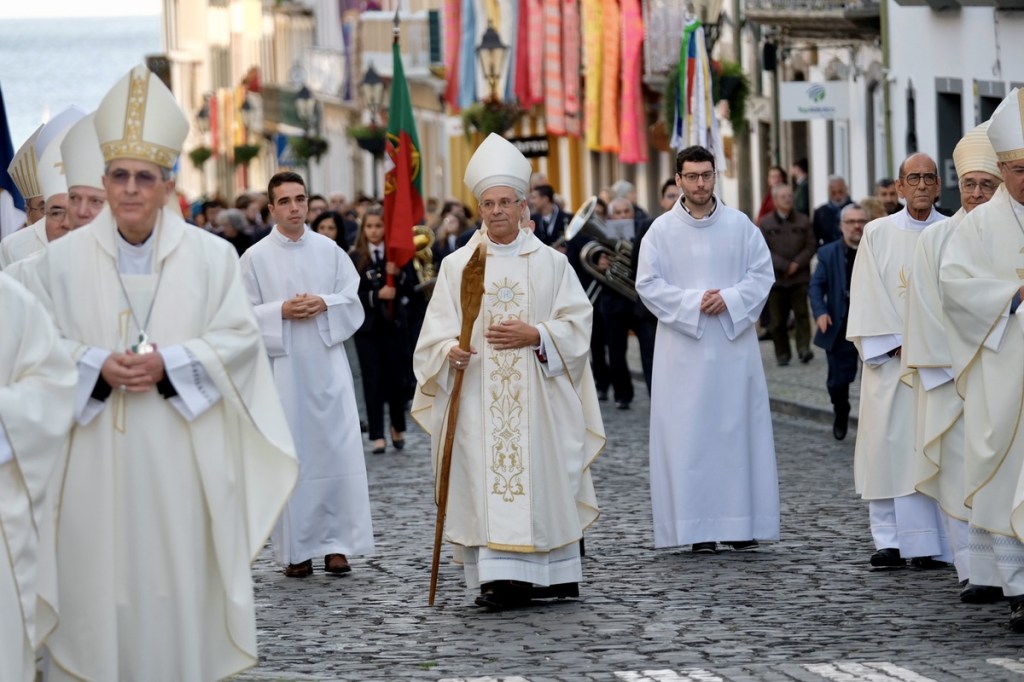
in Açoriano Oriental, from a LUSA News Service Story–Pictures from archive
Translated to English as a community outreach program from the Portuguese Beyond Borders Institute (PBBI) and the Modern and Classical Languages and Cultures Department (MCLL) as part of Bruma Publication and ADMA (Azores-Diaspora Media Alliance) at California State University, Fresno
 Novidades - The Islands and the Diaspora