


The President of the Economic and Social Council of the Azores, Gualter Furtado, said at a meeting of the São Miguel Senior Association that the region “has been losing population, which is increasingly elderly, and that this is a reality for the
nine islands” of the archipelago. Gualter Furtado was speaking at the seminar Citizenship and Civic Participation of the Elderly”, promoted by INWAVE – Ribeira Grande Business Incubator.
The President of the Economic and Social Social Council cited the 2021 Census, which showed that there were 39,109 people aged 65 and over out of a total of 236,65 years old out of a total of 236,657 residents, which is equivalent to 16.5% of the total resident population. He went on to point out that in 2011, the elderly in the Azores accounted for 13.1%, i.e., an increase in elderly people by 3.4% in 10 years.
According to Gualter Furtado, it can be concluded that in the region, the weight of the elderly in the population is lower than in the rest of the country. Still, the trend “is the same, towards aging,” because in the Autonomous Region of the Azores, according to the results of the 2021 Census, the aging ratio (old/young) in the archipelago “is already 113.9”.
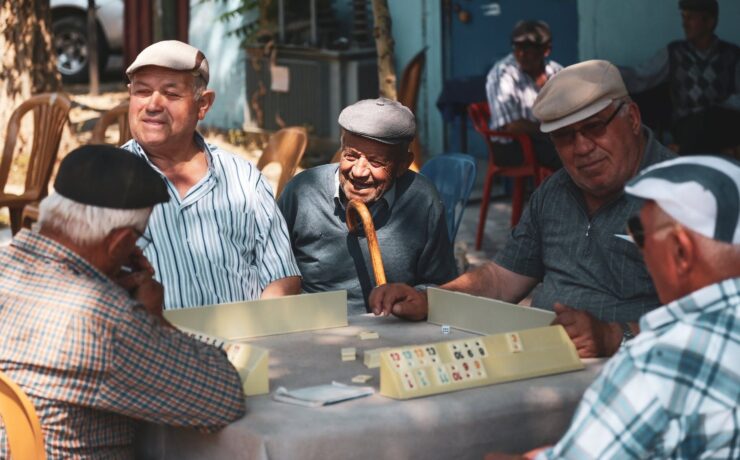
“In other words,” he stressed, “we already have more old people than young people” in the Azores, legitimizing the conclusion that in the region, “we have been losing population, that it is increasingly older, and that this is a reality for the nine islands” of the archipelago. In fact, he continued, from the 2011 Census, when analyzing the 19 municipalities in the Azores, only the municipality of Madalena on the island of Pico “has seen an increase in its resident population. Even so, this growth was insufficient to compensate for the population decreases in Lajes and São Roque municipalities.
He highlighted that between 2011 and 2021, the Azores lost 10,359 residents. Gualter Furtado also spoke about the national reality. According to the 2021 Census, the number of people aged 65 and over in Portugal would be 2,423,639, “which represents an increase of 20.6% from 2011, and in 2021, they would already have a weight in the total population living in Portugal of 23.3%”, which represents a growth of the population of 3.3%.
The difference between senior and elderly and life expectancy…

The President of the Economic and Social Council began his speech by defining the concepts of the elderly and seniors as “interdependent concepts. I would even say that they are two sides of the same coin that in common refer to the fact that,
in different contexts, older people have more experience,” he said. Setting a starting date for to be elderly or senior, he said,
“depends a lot on the geographical, economic, social and cultural context and even on the certification of these statuses.”
However, he said, “They also have an average life expectancy and the life expectancy and the legislation in force in each
legislation in force in each country, particularly labor legislation”.
He gave the example of Africa, where, according to the World Health Organization (WHO) member states, the average life expectancy is 61.2 years. In contrast, Europe’s life expectancy can be as high as 77.5 years, with significant disparities between the different countries – with Lesotho in Africa having an average life expectancy of 52.9 years, and in Europe, our Spanish neighbors can live to an average of 83.1 years, while in Portugal the estimated equivalent is 80.96 years and in the Azores this
this drops to 78.04 years, the lowest average life expectancy of all the regions in Portugal”.
In this “very different” context, he concluded, the WHO considers that in developed countries, “the elderly is the person over
65 years of age, while in developing countries, this age drops to 60 years”.
Challenges facing the elderly

Gualter Furtado then asked what challenges the elderly face and the elderly to society in this
21st century? He said, “It is important that, in the Azores, the public authorities also comply with the principles
enshrined in the United Nations Older People,” referring to all of them. Firstly, “guaranteeing the independence of older people, providing access to housing, food, adequate health care, minimum income, family and community support, and self-help.” Older people have the “right to participate according to their capacities and availability, to assistance that enables the elderly to, whether in their own homes, in family care or in institutions, can access health care and enjoy their human rights and freedoms, exercise their right to citizenship, autonomy and possibilities for rehabilitation.” The elderly have the right to “personal fulfillment, guaranteeing them access to all opportunities that fulfill them as human beings, in educational cultural, spiritual and entertainment.”
Aging in the Azores

The elderly must be “guaranteed” dignity in its various dimensions, protecting them from exploitation, physical and mental
physical and mental violence, regardless of race, economic status, gender or disability”.
Gualter Furtado concluded by stressing that “it is also important, in this context of the progressive aging of the population in the Azores and at different levels,” that the “public authorities implement policies that take this reality into account this reality and consider social security systems that do not put the future of pensioners at risk.”
“This is a very serious problem that the country and the Autonomous Region of the Azores cannot neglect for a minute,” stressed the Economic and Social Council President. In his opinion, “not all are the same, but those who still have health that allows them to develop useful skills for society and have the minimum financial conditions that autonomy, have the right and the duty to place themselves at the service of the community, and if the community curtails this right, they must
fight for it, imposing themselves by resilience and by example.” “We cannot and must not give up and let others assume a monopoly on decision-making. And this participation must have no boundaries, i.e., it must be taken up in its civic
and even political,” he stressed. ”A society and public authorities that doesn’t take care of its elderly, doesn’t
involve them, does not listen to them, that despises them, is moving towards dependence and decadence; in other words, it is a project for a society without a future,” he concluded.
João Paz, journalist for Correio dos Açores, Natalino Viveiros, director
Translated to English as a community outreach program from the Portuguese Beyond Borders Institute (PBBI) and the Modern and Classical Languages and Cultures Department (MCLL) as part of Bruma Publication and ADMA (Azores-Diaspora Media Alliance) at California State University, Fresno
 Novidades - The Islands and the Diaspora