

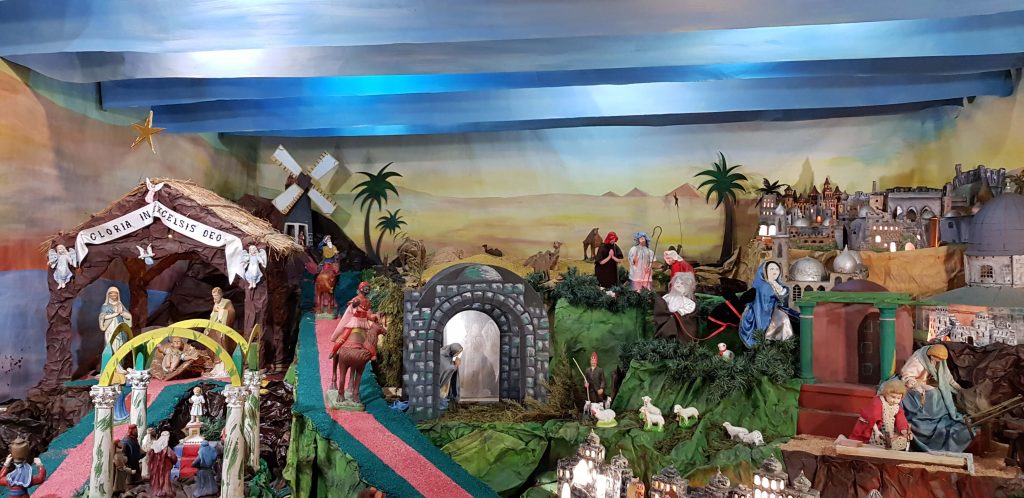
Created in 1915 by Prior Evaristo Gouveia Carreiro, of the parish of Matriz da Ribeira Grande, this nativity scene was created to catechize the Catholic youth of the parish with the representation of biblical passages.
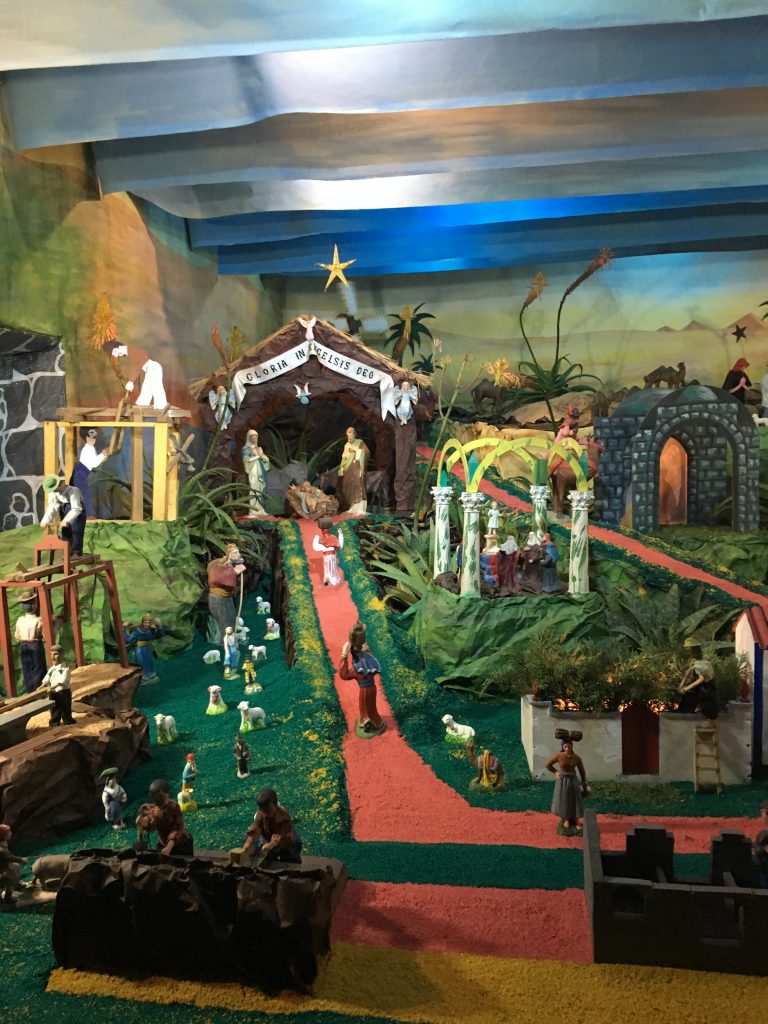
In its early days, the nativity scene included traditional clay figures, already linked to the vast art of puppetry in Lagoa. And it was around 1920 that the parish priest began to include the first moving figures in the hut of the baby Jesus. The figures moved with a hand crank and initially only included the leading figures: the donkey, the little cow, Our Lady, and St. Joseph. Around 1979, the crank was replaced by an electric motor.
Until the year of his death, 1957, the Prior put together an association of young people who, from mid-October, began to rebuild the crib. At the time, the crib was only open at Christmas time.
After the Prior’s death, it was Father Manuel Medeiros de Sousa who continued the crib. However, there was an interruption due to a lack of funds.
Later, “the Matriz Church and Ribeira Grande Town Hall joined forces to resume this tradition,” explains Elton Medeiros, coordinator of the Ribeira Grande Municipal Museum.
After passing through various locations, in 1985, the nativity scene took up residence in the Casa da Cultura, now the Municipal Museum of Ribeira Grande. Since then, it has been open all year round except for October and the beginning of December, when it is reconfigured. This is when pieces and paintings about biblical passages are added every year.
It continues to inspire several generations.
According to the Museum’s coordinator, “Every year, there’s something new, and that’s precisely what makes people visit the crib. Often to find out what the new pieces are.” He adds, “Over the years, many people have found inspiration here to create their own moving nativity scenes.”
Although there are many stories of those who have been inspired by this centenary nativity scene, Elton Medeiros mentions the case of the nativity scene in the “Chapel of São Vicente in the Municipal Museum, which also has movement, and although it is different because it has a much more recent mechanism, it came from a person who saw the Prior’s nativity scene for the first time and only then began to idealize his own nativity scene.”
Around 3,000 visitors during the Christmas season alone
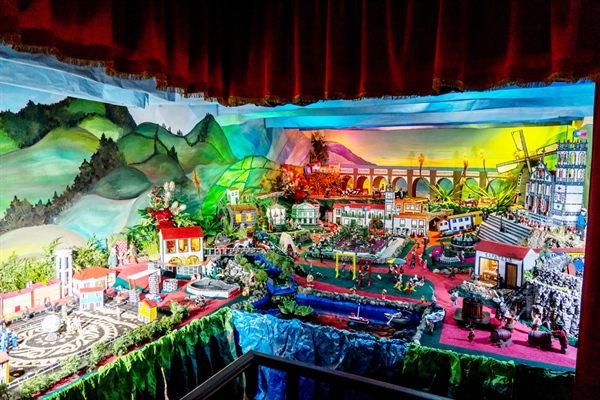
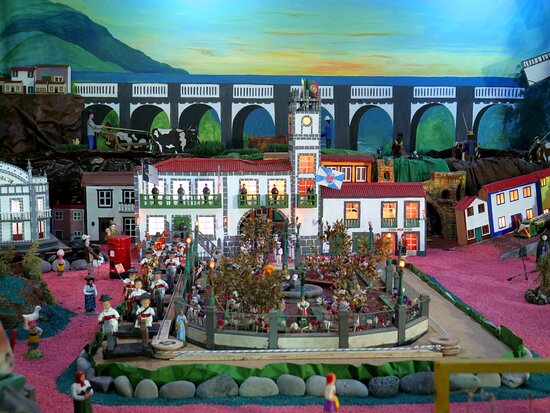
The crib has over 150 moving figures and is made of traditional clay. It is divided into two rooms, one depicting biblical episodes, namely the birth of Jesus, which also includes some pieces related to ethnography. The second room represents Ribeira Grande, with samples of the council’s various religious and cultural activities, such as the Cavalhadas de São Pedro, the Lenten pilgrimages, the revelers, and the mills, among many others.
With 25 years of dedication, Manuela Oliveira is the oldest curator of the crib. Together with Diana Medeiros and Gilberto Teixeira, she has been working on reconstructing the crib since November 3rd.
Despite being open all year round, the museum receives around 2,500 to 3,000 visitors during Christmas, from the 25th to King’s Day.
The opening on December 25th
The Ribeira Grande Municipal Museum will open on December 25, 26, and 30 and on January 1, 6, and 7 from 15h00 to 20h00. On the other days, the Museum will have extended opening hours and can be visited from 9h00 to 19h00.
Daniela Canha, journalist for Correio dos Açores, Natalino Viveiros, director
Translated to English as a community outreach program from the Portuguese Beyond Borders Institute (PBBI) and the Modern and Classical Languages and Cultures Department (MCLL) as part of Bruma Publication and ADMA (Azores-Diaspora Media Alliance) at California State University, Fresno–PBBI thanks the sponsorship of the Luso-American Development Foundation from Lisbon, Portugal (FLAD)
 Novidades - The Islands and the Diaspora