


The Bishop of Angra, Armando Esteves Domingues, will deliver the evening of the 25th his first Christmas message to the Azoreans. He urges them to listen to “the cries of a wounded humanity” by offering “a new path” based on the Hope that Christmas heralds and that goes beyond “the social festival.”
The Bishop of Angra, who addresses his first Christmas message to all island diocesans for the first time on December 25 on RTP Açores (regional public television) after the news at 8:30 p.m. (Azorean time, one less than on the mainland), says that the simplicity of the cave of Bethlehem “is the most beautiful Christmas message” because it focuses us on the essential: “Christian hope always opens the way to another life,” in which “no one is left behind, marginalized, abandoned, discarded.”
“The grotto of Bethlehem, in its simplicity, helps us to understand the essential: Christ was born and came for everyone, everyone, everyone. It doesn’t allow us to leave anyone behind, marginalized, abandoned, discarded,” says Bishop Armando Esteves Domin- gues in his message. The prelate warns of the difficulties of this time, drawing attention to war and poverty.
“We are celebrating Christmas at a difficult time. The dark nights of the world continue to make us suffer with the cries of humanity: war, hunger, lack of housing, the financial difficulties of so many families, illness, exclusion, the deprivation of freedom – these are harsh experiences that call us to rediscover Christian hope and plant it in the hearts of those who live through these problems.
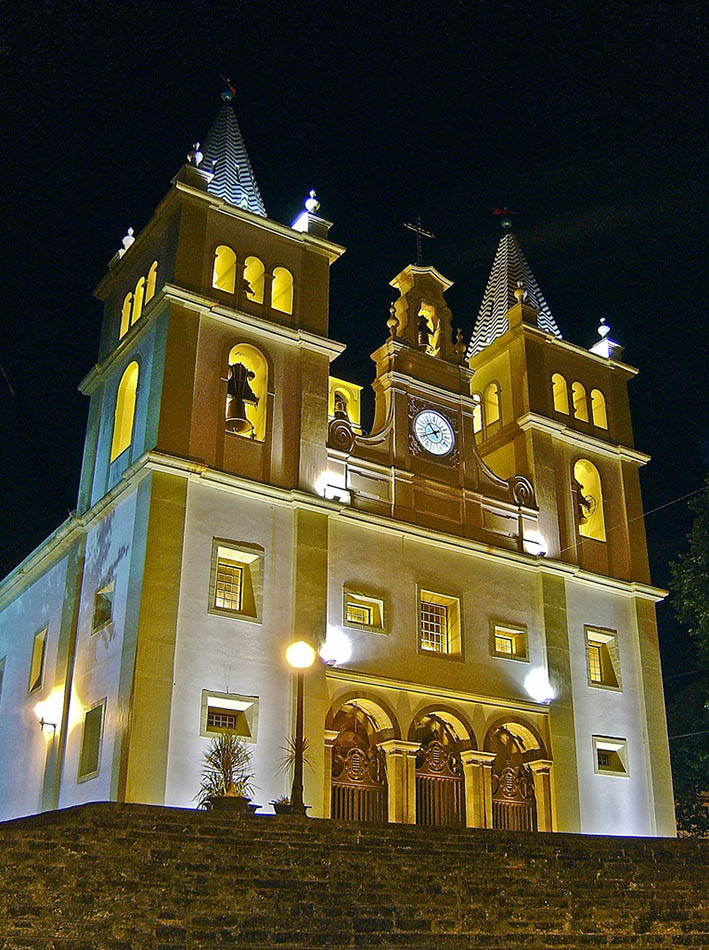
Armando Esteves Domingues recalls that Christmas is the “feast of hope.”
“Christian Christmas can’t just be made up of clay dolls in the crib or be reduced to a social festival. It has to be a feast marked by Hope,” he says, making it concrete: “In caring for others, as Mary and Joseph cared for Jesus on that night when all the doors were closed; in the trusting love of knowing that we are children welcomed into the loving arms of God the Father; in helping others, with the heart of being open to concrete solidarity, in the certainty that the Star of Bethlehem, of Jesus’ Christmas, radiates lights of love and trust that continue to be more powerful than the darkness.”
Mindful of the socio-political context of the archipelago, he concludes: “There will be no political crisis that will always last, no poverty that will always exclude, no human dignity that will always be stolen, no abuse that will always be tolerated… Christian hope always opens the way to another life: to gracious gestures of love, tenderness, and passion, which nurture a culture of care.”
In his message entitled “Christ, our Hope, is born,” Archbishop Armando Esteves Domingues also pays tribute to the first presbytery conceived by Saint Francis of Assisi in Greccio, on a rock.
“This beautiful natural space, formed by volcanic lava, reminds us that the Savior of the world, from the beginning, was not afraid of simplicity and poverty and that he identifies with the little ones of the earth,” he stressed, praising the role of the family, especially during this Christmas season.
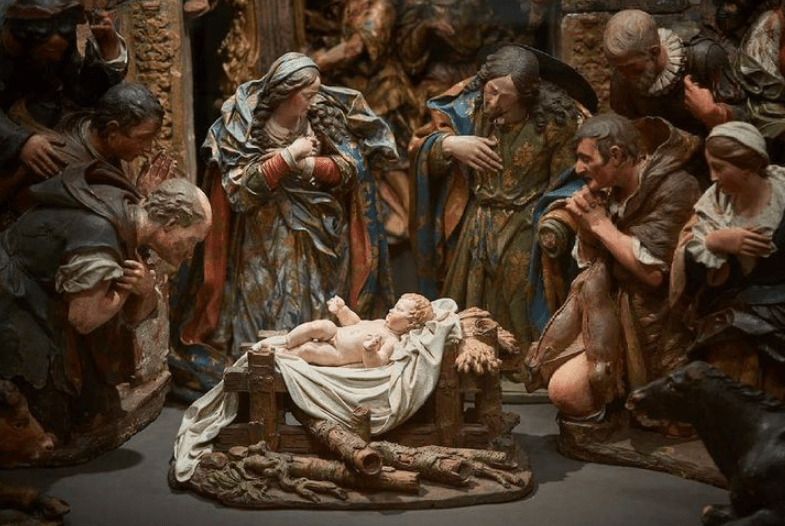
“I think and pray for all, all, all families. I ask that Jesus may be their charm and bring them, as a gift, the gifts of joy, peace, tenderness and the love that generates unity. I also remember those who don’t have families and those who have lost them,” he said.
“This Christmas, I ask you to make ourselves available, all of us, to continue the journey that we have already started and will follow until 2025, participating and reflecting, starting from the Church that we are. We can be seeds of renewed hope for the world,” he exhorted, pointing out that “the greatest hopes are born in the darkest contexts.
“This Christmas, let us look at our own existence with the same eyes as Jesus, the true author of our hope.”
The prelate ended his first Christmas message by urging “every family, every ecclesial community, every hospital, prison, public or private institution where people are at the center” to be, at this time, “a welcoming cave for all our brothers and sisters, starting with the most fragile and needy. God will be born there, because the spaces where love wins become caves where God is present!”
in Diário dos Açores – Osvaldo Cabral, director
Translated to English as a community outreach program from the Portuguese Beyond Borders Institute (PBBI) and the Modern and Classical Languages and Cultures Department (MCLL) as part of Bruma Publication and ADMA (Azores-Diaspora Media Alliance) at California State University, Fresno–PBBI thanks the sponsorship of the Luso-American Development Foundation from Lisbon, Portugal (FLAD)
 Novidades - The Islands and the Diaspora