

Temperature is expected to rise throughout the century in the Azores
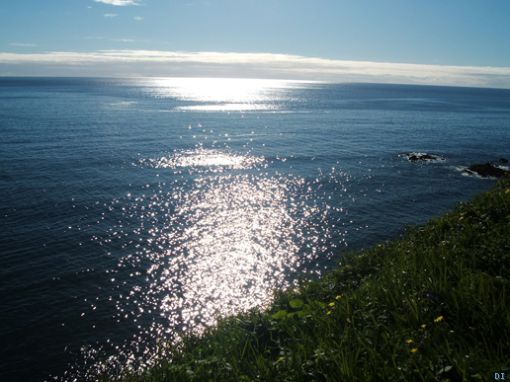
A scientific article published this month, signed by researchers from the region, warns of the vulnerability of the Azorean islands to climate change and points to a probable increase in average temperatures for this century.
The researchers argue that “standardized rules should be established in designing, reviewing and/or amending territorial management instruments at the municipal level in the Autonomous Region of the Azores to adapt to a different climate.”
“In the Azores archipelago, made up of nine islands, the geographical circumstances, the oceanic condition, the territorial dispersion, the land use model and other physiographic constraints reinforce and increase the vulnerability of the islands to changes in current climate patterns,” the paper argues.
It refers to projections from CoupledModelIntercomparisonPhase 6 (CMIP6), “used for the northeast Atlantic region to assess large-scale daily extreme weather events for the Azores region.”
According to the article published by MDPI, “the results show changes in the annual maximum number of consecutive dry days, the annual number of rainy days and, especially, the annual number of tropical nights.”
The study concludes that “the increase in CO2 observed in the Azores coincides with that estimated for the same latitude” and that “the annual average daily minimum temperature projected by the CMIP6 models in the Azores shows a significant bias compared to the ERA5 reference”, which also applies to most of the Northeast Atlantic.
“The estimated annual precipitation total for the Azores does not show a significant bias,” it says.
On the other hand, “an increase in annual average daily temperatures during this century is likely,” and “an increase in the annual number of tropical nights is very likely in all scenarios.”

It is pointed out that islands with higher mountains, such as São Miguel, Terceira, or Pico, may experience more episodes of intense rainfall. In contrast, flatter islands, such as Santa Maria and Graciosa, are prone to longer periods of drought. “Topographical differences can lead to greater differences in precipitation extremes between islands, leading to disruptive effects in vulnerable systems such as the Azores,” it says.
According to the scientific article, “the survival areas of some native and endemic species may also be threatened by climate change,” and there is an economic threat.
“Other important sectors for the economy of the Azores, such as agriculture, livestock, fisheries and tourism, could suffer significant impacts as a result of the increased risk of natural disasters resulting from these changes, especially in isolated and small regions, where recovery is usually more expensive and time-consuming,” it is stressed.
The authors stress that the global temperature “will continue to rise until the middle of the 21st century in all the emissions scenarios considered”.
“Thus, a global temperature increase of 1.5 °C and 2 °C is expected to be exceeded during the 21st century, unless considerable reductions in carbon dioxide (CO2) and other greenhouse gas emissions occur in the next decade,” they warn.
The article’s first author is Fernanda Carvalho, from the Afonso Chaves Observatory, Portuguese Institute for the Sea and Atmosphere (IPMA), and it was co-authored by researchers Diamantino Henriques and Patrícia Navarro, from the same institution, as well as Maria Gabriela Meirelles, João Porteiro and Helena Vasconcelos, from the University of the Azores.
in Diário Insular, José Lourenço-director

Translated to English as a community outreach program from the Portuguese Beyond Borders Institute (PBBI) and the Modern and Classical Languages and Cultures Department (MCLL) as part of Bruma Publication and ADMA (Azores-Diaspora Media Alliance) at California State University, Fresno–PBBI thanks the sponsorship of the Luso-American Development Foundation from Lisbon, Portugal (FLAD)
 Novidades - The Islands and the Diaspora