

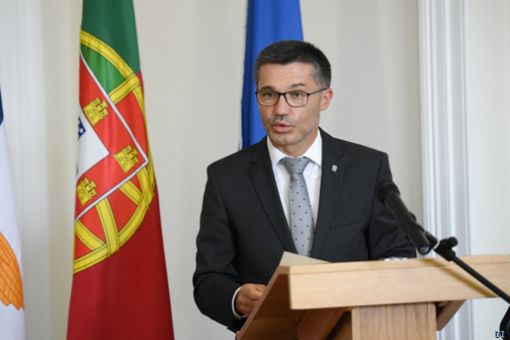
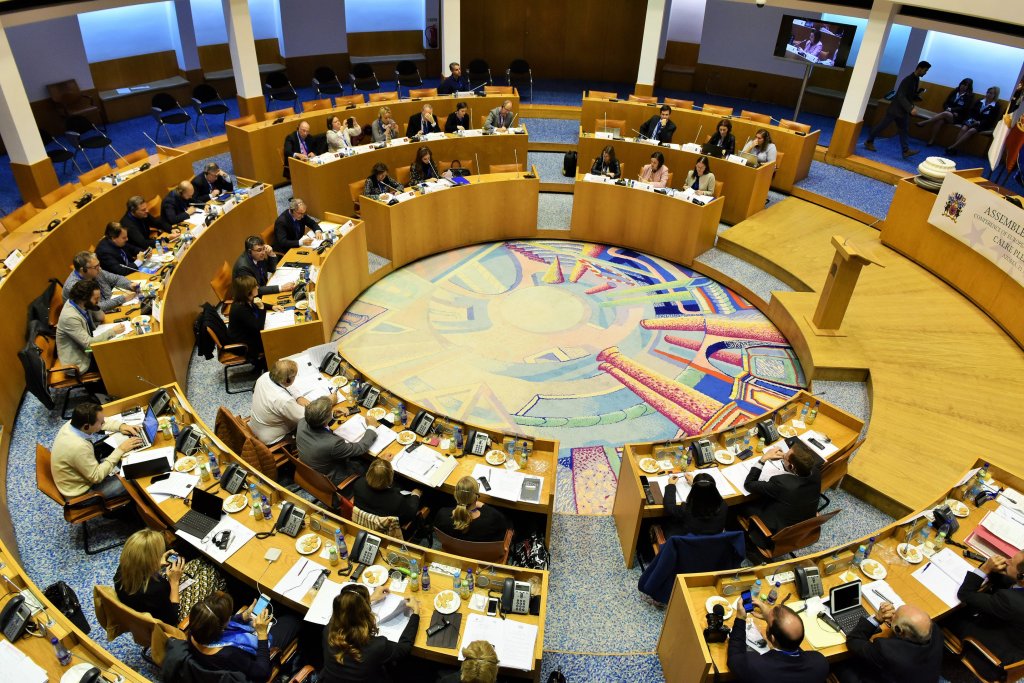
In his New Year’s message, the president of the Azores Legislative Assembly, Luís Garcia, argued that the Autonomy “has been too used to absolute majorities” but that “it must prepare for other scenarios, as a result of party multiplication, which seems to be here to stay.”
The new political scenarios require a capacity for dialog, stressed Luís Garcia, leaving the assessment of the origins of the regional political crisis “to each Azorean.”
“Throughout these three years, as President of the Legislative Assembly, I have always defended the fact that the current legislature, in order to come to an end, required a great deal of dialogue from all the political players, and an enormous capacity for compromise and negotiation. But today I know that this need does not end here, on the contrary,” he said.
He added that “the premature end of this legislature reinforces the need to cultivate dialogue and the capacity for compromise as essential democratic tools.”
Luís Garcia believes that “an Autonomy that is making strides towards its 50th anniversary must demonstrate maturity and flexibility” and that “governments, majorities, and oppositions, must be capable of dialoguing, at least in the search for the best policies for medium and long-term structural challenges.”
“To do this, we need to put the interests of the Azores and the Azoreans above all else. Anyone who doesn’t understand this will sooner or later fall by the wayside,” he warned.
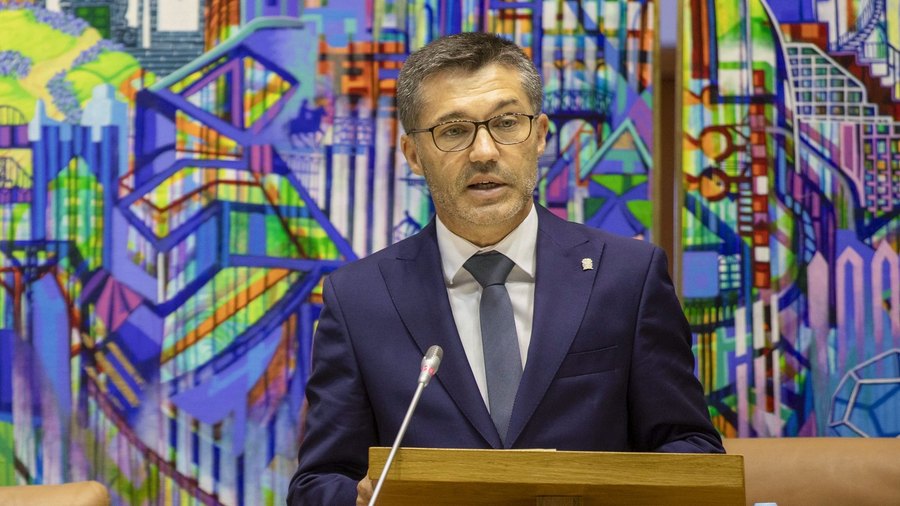
Luís Garcia criticized the national political crisis. “The reasons that led to the national crisis should seriously concern any democrat, because they weaken and discredit institutions and democracy itself. Anyone who holds public office must see it as a mission of service, guided exclusively by the public interest,” she said.
The responsibility lies with the politicians themselves, he stressed. “The need to reform the political system has long been advocated. But it’s also important to recognize that creating more laws and regulations doesn’t solve all the problems. There is a very significant part of re-founding the system that depends on each individual politician. It depends on the attitude, ethics and transparency that each public servant instills in their actions,” he said.
The President of the Azorean Parliament recalled the context of international instability. “The challenges of migration, terrorism, climate change and the pandemic have been compounded by the impacts of war. First in Ukraine and now in the Middle East. This holiday season, it’s normal to ask for peace. And in this particular context, it makes even more sense. But peace cannot be built with terrorism or by killing innocent people. We must state, and reaffirm, that our battlefield must always be the negotiating table. Our only weapon must be dialog, consultation,” he said.
“As if all this weren’t enough, we have added two political crises to this broth of uncertainty: one at national level and the other at regional level,” he said, leaving an appeal to vote “in the regional, national or European elections”.
“It is therefore essential that you participate and get involved in the decisions that affect your lives and the lives of your communities. Don’t leave the power to decide your tomorrow in the hands of others,” said Luís Garcia.
in Diário Insular–José Lourenço-Director
Translated to English as a community outreach program from the Portuguese Beyond Borders Institute (PBBI) and the Modern and Classical Languages and Cultures Department (MCLL) as part of Bruma Publication and ADMA (Azores-Diaspora Media Alliance) at California State University, Fresno–PBBI thanks the sponsorship of the Luso-American Development Foundation from Lisbon, Portugal (FLAD).
 Novidades - The Islands and the Diaspora