

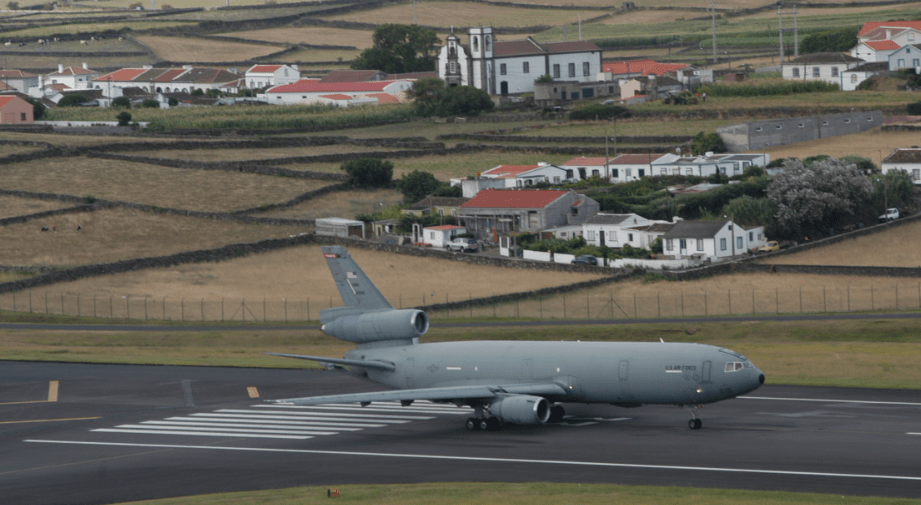
It’s official. Lajes Base will provide permanent support for the operations of the P-8 aircraft used for submarine search and maritime patrol missions. The Department of Defense, more specifically the United States Navy, has launched a tender for a design-build contract to upgrade facilities at Lajes Base.
According to the notice of contract opportunity, published Tuesday on the government website sam.gov, the objective is the “complete renovation” of building 705 and associated support areas for aircraft operations functions.
It is to repair “approximately 282 square meters of existing paved area to provide a secure area for outdoor storage and equipment staging in support of P-8 operations.
According to the document, “the contract term will be 705 days after notice to proceed,” and the “magnitude of the construction project” is between five and 10 million dollars (about nine million euros). The expected award date is June 2025.
The story has already made headlines in the US, with several publications and websites reporting that Lajes will be modernized to support the Boeing P-8 A Poseidon multi-mission maritime aircraft (MMA).
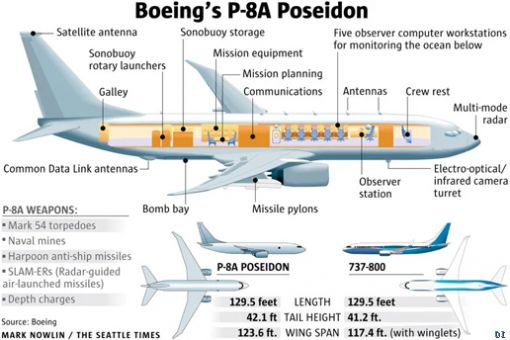
It is noted in the news articles that it is not yet clear whether the facilities upgrade is intended to support the current transition flights or whether there is a plan to project anti-submarine warfare missions from Terceira.
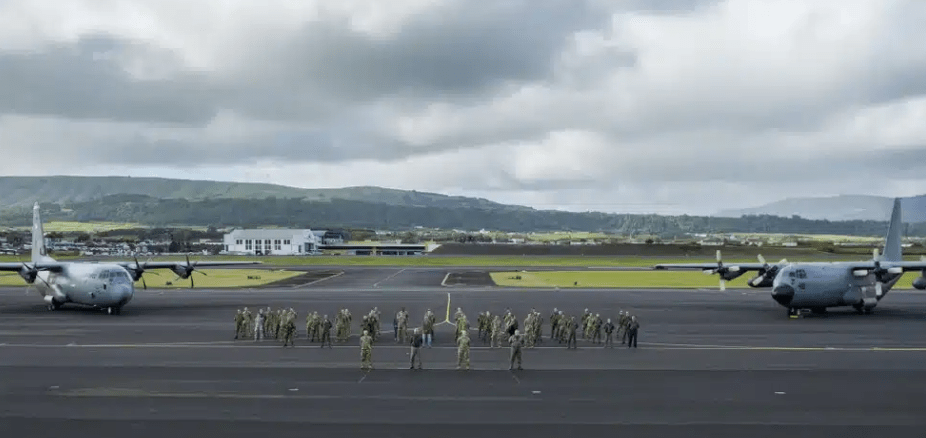
Russian submarines will be at the center of the Americans’ attention. The role of Lajes in supporting the P-8s has become more transparent in recent months. At the beginning of December last year, when Terceira hosted the 50th Permanent Bilateral Commission between Portugal and the United States of America, a visit was made to the military infrastructure with a US Navy P-8 aircraft placed prominently on the runway. A plaque was also unveiled, marking the “historic alliance” between the two countries and reaffirming a “future-oriented partnership.”
The speeches were in line with this idea. The US commander of Lajes Base, Christopher Boyd, who leads the 65th Air Base Group, considered the geostrategic location of Lajes Base to be “extremely important.” In 2023, the base invested 34.6 million dollars, the highest since 2006. ”We want to focus on the here and now. What we do now is of critical importance. Suppose there’s an increase in the mission in the future. In that case, we’re talking about some of those things – then we’ll adapt and pursue that growth,” said Christopher Boyd in October at a session at the base. Boyd stressed that the 65th Air Base Group provides “access to many scenarios” worldwide. “We are important pieces, both in Lajes and in Morón (Spain), to do that,” he said.
In July, the then second-in-command at Lajes, Shawn Littleton, argued in an interview with “Diário de Notícias” that in the next 20 to 50 years, the military base in Terceira should be “strategically the most significant that the US has access to in Europe.”
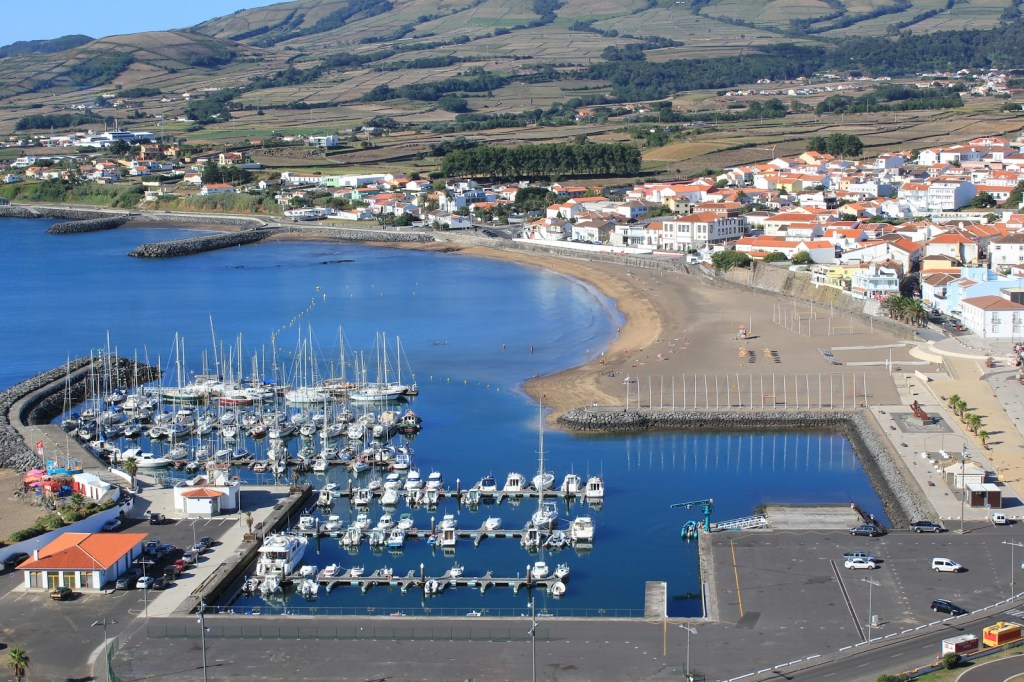
The study in the Bay of Praia da Vitória
The military presence on the island could take on a different shape. As reported by DI, the US Embassy in Lisbon requested, in a document dated August 23, “permission” from the Portuguese Ministry of Foreign Affairs to carry out a study that included the entire bay of Praia da Vitória, including the commercial port.
This documentation indicated that the return of warships to Praia da Vitória was at stake. “The request is based on increasing access for new classes of ships,” and taking into account the infrastructure of the Defense Logistics Agency/United States Air Force in Lajes, said the embassy communication.
The document specified that the infrastructure engineering and hydrographic study was part of the Maritime Infrastructure Assessment Program (MIAP), “which is the mechanism to allow greater access to ports of interest to the Sixth Fleet, while providing diving services to host nations at no cost.”
The US Navy’s Sixth Fleet operates in the Mediterranean and Atlantic.
The documentation accompanying the diplomatic note noted that “the Sixth Fleet lacks basic knowledge of the depth, condition and capacity of many key ports on which we depend for operations or in the event of a crisis”.
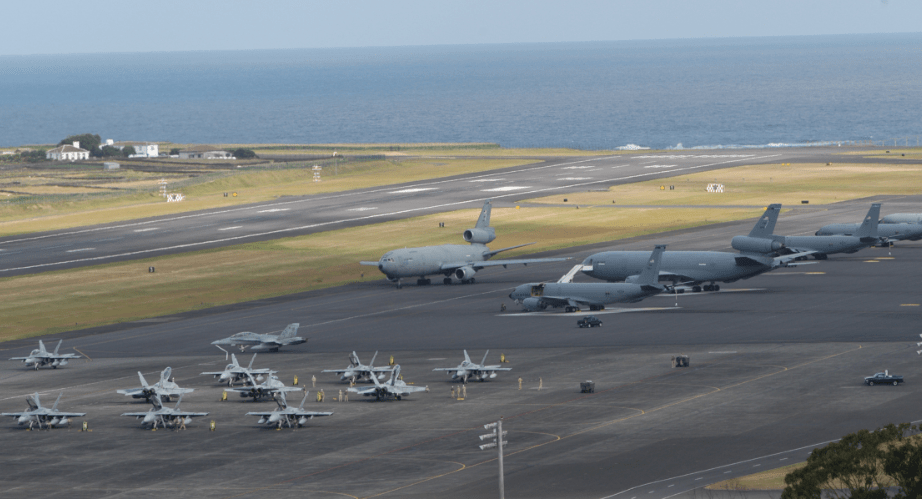
Lajes continues to be an important Base.
In the summer of last year, international relations expert Luís Andrade once again argued that the geostrategic importance of the Lajes Base and the Azores may be more or less evident, depending on historical moments, but it always remains.
In August, Luís Andrade was reacting to statements made by the former US commander of the Lajes Base, Brian Hardeman, who left the military infrastructure stressing that the “strategic location in the North Atlantic makes access to the Azores, especially to Air Base No. 4, of primary interest to China”.
Brian Hardeman added that the United States must work with allies and partners “to deter our adversaries while China continues to expand into Africa and the Atlantic region.”

“I have always defended, for many years now, the geostrategic importance of the Azores and the Lajes Base. Obviously, there are periods of greater international instability when this importance becomes more concrete and more visible. However, it has never been lost,” said Luís Andrade.
The eternal unpredictability of international relations will keep the United States in Lajes, which, he recalled, is “a fundamental point for the United States, especially for the projection of power to North Africa and the Middle East.
in Diário Insular–José Lourenço-Director
Reviewing the very old Lajes Agreement—Commentary
The Lajes Agreement dates back to 1995, expired in 2000, and is still active by annual extension until one of the parties denounces it. It is also a visibly and shamefully unconstitutional agreement, especially in its labor dimension. Just think of the problem of access to justice.
The geopolitical and geostrategic environments have changed significantly in all these years. In fact, the 1995 agreement was already very bad, mainly because the Portuguese side never understood the times then and to come, unlike the US side. In Portugal, moreover, it was taken for granted that the geostrategic space of the Azores would be negligible after the Cold War, akin to a total inability to think.

Today, the Lajes Base is where it has always been – sometimes more visible, sometimes in the shadows. In truth, control of the geostrategic space of the Azores (action, denial, pre-emption, etc.) is essential for those who want to dominate this important area of the Atlantic. The ongoing strategic competition is projected onto the Azores, with US, Russian, and Chinese interests (among others) becoming increasingly evident and having psychological and physical expression. The P8s (submarine search and destroy aircraft) are rotating at Lajes and will be permanently stationed there. And that’s saying a lot.
It’s time to review the Lajes Agreement and take from the base the income that should be ours. So, let’s have the courage, ingenuity, and art to set up and develop a negotiating process.
Armando Mendes- editor-in-chief of Diário Insular
Translated to English as a community outreach program from the Portuguese Beyond Borders Institute (PBBI) and the Modern and Classical Languages and Cultures Department (MCLL) as part of Bruma Publication and ADMA (Azores-Diaspora Media Alliance) at California State University, Fresno–PBBI thanks the sponsorship of the Luso-American Development Foundation from Lisbon, Portugal (FLAD)
 Novidades - The Islands and the Diaspora