

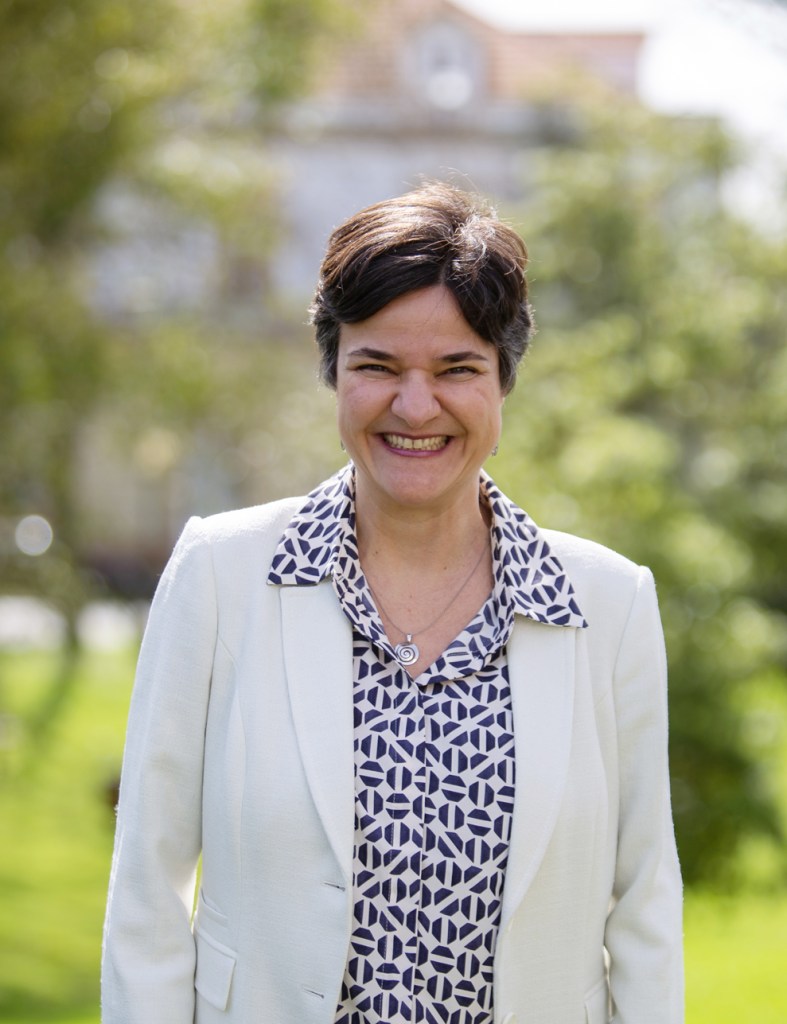
The Azores Tourism Connections Blog, the University of the Azores Tourism Student Group (NETUA), and the Faculty of Economics and Management (FEG) promoted the event “Azores Tourism Strategies 2030” at the University of the Azores last Monday. The event focused on publicizing the actions of public authorities for tourism in the Azores. Daniela Fantoni Alvares, Director of the Tourism degree, stressed the importance of the event in bringing the academic community closer to the public sector. She also stressed that the critical reflection and debate made it possible to analyze ways forward, emphasizing the need to define planning and management instruments in addition to the PEMTA.
Correio dos Açores – Can you summarize the speeches at the Debate on Tourism Strategies for the Azores 2030, which took place at the UAc?
Daniela Fantoni Alvares (Director of the Tourism degree program at the University of the Azores) – The main outcome of the event “Tourism Strategies in the Azores 2030” was an in-depth discussion on emerging regional tourism issues. Of particular note was the Regional Director of Tourism, Dr. Rosa Costa, who participated in the opening and debate tables.
At the main table, three talks gave the audience insight into the work carried out by the regional public administration. The first talk, “Azores on the road to sustainability,” was given by Carolina Mendonça, Coordinator of the Azores DMO (Destination Management Organization), and began with a reflection on how tourism can be a driving force for the region’s development. One issue the speaker reinforced was that sustainability is a continuous process. She also talked about the relevance of the Green Teams, one from each of the nine islands, and their importance for sustainable development.
In the second lecture, “Structuring and enhancing the nature tourism product”, Paulo Garcia, member of the Azores DMO, spoke about the “Regional Network of Walking Trails” and some of the constraints, including the difficulty in defining the responsibilities of government entities for the trails and their maintenance. It is a complex problem, involving various government bodies and several kilometers of trails throughout the islands.
In the third lecture, José Toste, an Azores DMO member, presented the Azores Tourism Strategic and Marketing Plan – Horizon 2030 (PEMTA) guidelines. The vision set out in the PEMTA should be the main motto to be followed, namely, “in 2030, the Azores will lead the international scene as a sustainable, exclusive nature destination, with a unique cultural heritage, where tourism contributes positively to economic and social development, guaranteeing the satisfaction of residents, businesses and tourists”.
In your opinion, what conclusions came out of the event?
The “Azores Tourism Strategies 2030” event helped to bring the academic community closer to the public sector. This type of action is important because it gives students contact with this type of initiative and may awaken their desire to become public managers. Critical reflection and debate made it possible to analyze ways forward, emphasizing the need to define planning and management instruments in addition to the PEMTA.
What kind of tourism do we want for the Azores in 2030?
The tourism we want for the Azores is that which promotes development and is beneficial to its population. The main focus is quality tourism! A tourist with sustainable behavior who has a harmonious relationship with residents and a respectful relationship with the natural and cultural environment. An agent that contributes to regenerative tourism, with the potential to contribute to regional improvements. In addition, tourism activity develops on all the islands, enhancing the vocation and uniqueness of each one.

As Director of the Tourism degree, what role do you play in the debate and development of regional tourism strategies?
Young students are our future public and private managers who will majorly impact the development of sustainable tourism strategies. Education, therefore, plays a fundamental role in this process. Training qualified human resources to join the job market goes far beyond technical training. Quality tourism involves hospitality and the development of new products, and this is where creativity and innovation come in.
How does the university, through its degree in Tourism, contribute to developing and analyzing these strategies?
The university plays a role in shaping and developing critical thinking. We contribute to developing informed citizens who will play an important role in our society. Therefore, in addition to classes and study visits, we promote events such as this one, which enable critical reflection on the strategies outlined.
In addition, we highlight the Azores Tourism Connections Blog, which is a space for bringing the job market closer together, exchanging experiences with specialists, and critically analyzing tourism theory and practice. It’s important to note that the blog is an initiative that originated at the FEG and has aroused the interest of various audiences. There are interviews with businesspeople and tourism experts, lectures, and opinion pieces. The “Azores Tourism Strategies 2030” event will soon be edited and made available on the blog.
What role should local communities play in tourism growth in the Azores?
Local communities are key social players in the proper development of tourism. There’s a saying in tourism: “A city is only good for tourists if it’s good for residents.” The local population always needs to be listened to in tourism planning and development processes, and their contributions should be taken into account by the public authorities, remembering that the greatest benefits of the activity need to remain in the hands of the communities.
Carlota Pimentel, journalist–Correio dos Açores–Natalino Vivieiros, director

Translated to English as a community outreach program from the Portuguese Beyond Borders Institute (PBBI) and the Modern and Classical Languages and Cultures Department (MCLL) as part of Bruma Publication and ADMA (Azores-Diaspora Media Alliance) at California State University, Fresno–PBBI thanks the sponsorship of the Luso-American Development Foundation from Lisbon, Portugal (FLAD)
 Novidades - The Islands and the Diaspora