


1. What is the name of your group?
Carnaval Sem Fronteiras
2. When and how did it begin?
In 2016, our Founders were in between cities during our group’s first year. Kevin Coelho, originally from Artesia, CA, and residing in San Jose, CA, during that time, and Jenny Coelho, born and raised in San Jose, were relocating to Hanford, CA. Due to their relocation, they had no group commitment. In the travel between cities to visit their family in Hanford and check in on their home being built, the dream to start their own group became a reality. Through various conversations with David and Vivian Santos from Hanford, along with close family and friends, it was decided that the time was right to start a dança group. The issue is that Kevin and Jenny would be between cities through the planning and rehearsal process. What would normally be an obstacle became an opportunity… they invited friends and family from Hanford and San Jose, including a member from Artesia for that year. Practices were held between Hanford and San Jose, which continues to some capacity today. After lots of planning and logged miles, the group debuted in Carnaval of 2017 and has continued.
3. How many danças and bailinhos has your group done?
Our group has been making danças since 2017; we have only taken one year off due to the pandemic. While all our members have participated in Carnaval for a good amount of time, this year will be our fifth danca under the Carnaval Sem Fronteiras name.
4. What are some of the themes that you have touched upon over the years?
We have had a wide range of themes for our danças, we try and stay themed across all elements of our dança (assunto, clothing, music, etc). Some of the dança themes we have done are as follows… Retiro Para Casais (Couples Retreat, tropical theme), Cyrano de Bergerac (medieval theme), Tres Homens e um Bebé (Three Men and a Baby, Mexican theme), Diferentes Modos da Vida (Different Ways of Life, “throwback dança”)

5. How do you recruit for your group?
Much of our recruitment has been amongst family and friends to whom we have had Carnaval ties. Over the years, we have had a few newcomers and some departures, but the general core of the dança remains intact. Usually, our recruitment is word-of-mouth interest, and others that we know can bring something special to the group and fit in with our dynamic. We do have a firm internal rule for recruitment in that unless someone comes to us showing interest, we will not reach out to anyone who was a member of another group in the previous year. While no danca “owns” anyone, we realize it’s in the good nature and spirit of Carnaval to not recruit away people from other danças. Finding talent is already hard enough, losing those hard to find people to other danças is tough to overcome.
6. What are your thoughts on the Terceira Style Carnaval (danças and bailinhos) in California today compared to when your group began?
I have personally been participating in Carnaval for roughly 20 years, consistently taking only two years off, one of those due to the pandemic. Overall, the number of danças I have had some level of involvement in is touching 30 due to participating in some capacity in groups with multiple danças some years. Danças haven’t changed that much from 2017 to the current day. Danças from the 2000’s and before compared to today have changed a bit.
Today, more danças are made with “non-traditional” Carnaval instruments. There was a time when a dança was typically made with strings, accordions, sometimes a saxophone, and some basic percussion. Now we have horns (brass and woodwind) and elaborate percussion (including drums). Regarding assuntos, material, and clothing… I would say that danças in California have done a good job preserving traditional Carnaval. Again, this will obviously vary based on who you speak to. However, we still have danças written in rhyme, music that speaks to saudades da ilha (longing for the island), and topics relating to the culture and the love we all have for carnival. Overall, I am rather proud of our group’s work and all danças outside of Terceira, especially in California.

7. Carnaval in Terceira has continuously evolved in the last 20 years. How do you see that evolution here in California?
I would say the evolution isn’t as dramatic here in California vs Terceira. In general, yes, things have changed here. Women are more commonly involved in Carnaval these days; I’m proud to say our group is one of those danças to include women. It’s also less common to see a dança group making multiple danças. We have 3 of these situations this year, but this is not always true. Back in the 80s and 90s, this was definitely more common. Regarding the evolution compared to Terceira, there are some differences of note. Some danças in Terceira do not tell a story at times, they have what are referred to as anedotas or jokes, some that don’t even rhyme. Again, part of the evolution of Carnaval. While it’s not my preference to make a dança that strays so much from the “traditional style,” it’s a reality that things change over time.
8. Have the audiences (number in attendance) decreased or continued the same since your group’s inception?
Since the start of our group, crowds have reduced. While not nearly as dramatic as the reduction since I started in Carnaval and certainly others in our group that have been making danças since the 80s, it’s still noticeable yearly. Sadly, it’s the reality of what we have outside of Terceira. The same can be said about Portuguese events here in California in general. With the stop/reduction of immigration and the aging Portuguese population of immigrants, the crowds have suffered. From what I can tell, the younger crowds aren’t as interested as those making or participating in danças.

9. Since fewer folks in California are fluent in Portuguese, how do you see this cultural presentation 10 to 12 years from now regarding participants and audience?
I see the audiences and participants reducing over time. I’d love to tell you that we will have Carnaval in California in 10-12 years, I would love to share the stage with my kids one day. However, I just don’t know the answer to that. One thing is certain: Carnaval will always have some level of existence while those making danças and those that love Carnaval are around, but to what extent is the question. While fluency is always a hurdle, it remains true that Carnaval is one of the biggest Portuguese schools we have in California, if not the biggest. A good amount of my Portuguese fluency today is thanks to Carnaval. I hope that will remain true for others over the years.
10. What has been the “secret” to your group’s longevity, and what prospects do you have for the future, especially for your group?
I wouldn’t necessarily say we have “longevity”; this is our fifth dance. However, I will say that in the short time we have been making danças, our longevity is thanks to patience, understanding, and the close bonds we have with everyone in the group. Making a dança across such great distances takes sacrifices by everyone in the group, some more than others. However, with the understanding of these circumstances and hurdles and the love of Carnaval that many of us share, anything is possible.
Carnaval is part of who I am, I don’t see myself stopping any time soon. So long as there is air in my lungs and I can continue to do what I do, I plan on making or participating in danças. Every year is different than before, so saying what our plans are is difficult. Sometimes participation isn’t what it was the year before; perhaps our theme isn’t as elaborate as before, but we always plan to do something. We always try to improve from previous years and push ourselves as musicians, singers, and actors. I can say that one thing I hope to strive for as a group, in general, is to find and groom new talent to participate for years to come. I realize not everyone plays an instrument or has the desire to act… but everyone has a place in a dança from mestre to dancarinho. It would be great to continue finding individuals who can hopefully find a love for Carnaval, much like many of us did in years past.
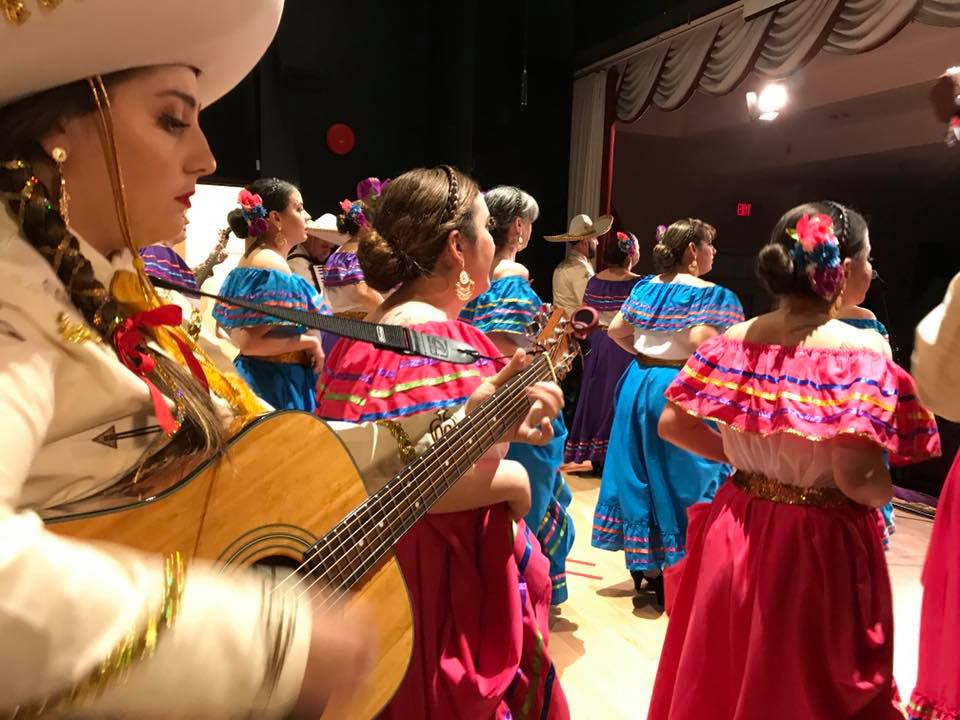
11. In Terceira, many of the “danças and bailinhos” contain much criticism directed at government, organizations, and society, and many focus on current events. Does your group do the same here in California?
We don’t touch politics in our dança. There are a few reasons for this… firstly it’s a rather polarizing topic, and not everyone shares the same views; I like to be sensitive to that, and frankly, talking politics, in many cases, has damaging effects. Second, I prefer to make danças that can have some relevance and understanding for someone watching live or online across age groups and locations. Some overly political danças from Terceira just don’t have relevance for us outside of the island and Portugal, as not many keep up with what goes on with their politics. It’s not bad that they make these danças, in fact, there was a time that Carnaval was an opportunity that folks could speak out against the government. Still, it’s not for me personally.
Sometimes, we may have some current events referenced in our dança. This is more prevalent in our song lyrics than anything; we like to send a message through our songs. In the assunto, the goal is to keep things timeless and not overly current in the material.

12. What do you attribute to the considerable reduction in groups this year throughout the state compared to prior years? Although there was a decrease statewide, Tulare has five groups, almost half of the total for this year throughout the state. What do you attribute to the continuance in Tulare and the decrease in other areas? Do demographics play a role, such as more people moving to other parts of the state and further away from the traditional places where Terceira Style Carnaval has deep traditions?
The timing of Carnaval I feel is a huge culprit of this. Carnaval is very early in 2024; some groups just didn’t have the time to gather for the year. A reduction in writers has also played into this. Hélio Costa, as many know, has stopped writing new danças. He was a huge source of assuntos (themes) and materials for danças in Terceira, but certainly outside, especially in California. We are all feeling that effect this year. That said, it’s an opportunity for others to rise up. Case in point: this year, there are some new writers. I applaud them for taking that leap and am excited to see what comes.
Another thing to consider regarding the reduction is that some cities and regions historically strong in danças don’t have groups this year either. Sometimes life gets a bit too busy, and having the drive to even gather yourself to get started is tough. Planning a dança, aside from rehearsals, isn’t easy; sometimes, it’s just not in the cards.
Meanwhile, Carnaval Sem Fronteiras is not branded as a dança from a specific city due to our reach across multiple cities. I guess you can say our roots are due to our organizer being in Hanford. That said, we aren’t counted as part of those 5 Tulare danças, but I suppose our group can be used as part of the same logic. Folks are relocating across the state, and more and more people are finding themselves in areas that are simply more affordable. My family is a testament to that. Other groups also share that same luxury, though not the sole reason for the continuance in Tulare and the Central Valley. Having a growing talent pool closer to you certainly doesn’t hurt.
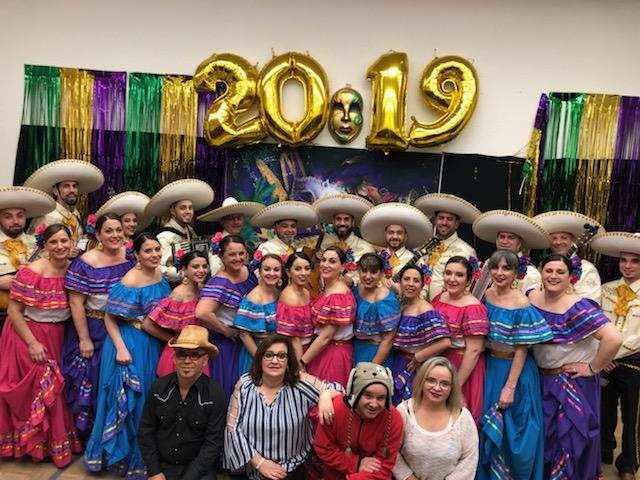
13. What is your group’s stand on live broadcasts of the “danças and bailinhos”?
I am in a unique position here. I can’t speak for everyone in the group, but I can speak on my behalf and that of quite a few folks I know. I worked in the Portuguese media for many years, I was with RTA for 10 years before relocating to San Jose. I believe I speak with a non-biased hat on as I have lived on both sides of this topic. The Portuguese media, is important in what they do, they cover the communities and events for all to see, near and far. That said, many of the events, until recent times, have not been live. Technology has changed over time, and the ability to transmit live events has become much more feasible. I was part of one of the first events broadcast by a Portuguese media outlet (RTA) with the Festival das Filarmónica’s, so believe me when I say I’ve been there.
What do I see as the result? Events such as the previously mentioned Festival das Filarmónica’s, LUSO convention, Folklore Festival, and yes, Carnaval (just to name a few) have reduced crowds over time. Is the transmission the sole reason for this? Surely not, but you can’t help but find the connection to the reduction in attendance. I’ve heard folks say, “Why go watch Dancas in the hall when I can sit on my couch with a blanket”?
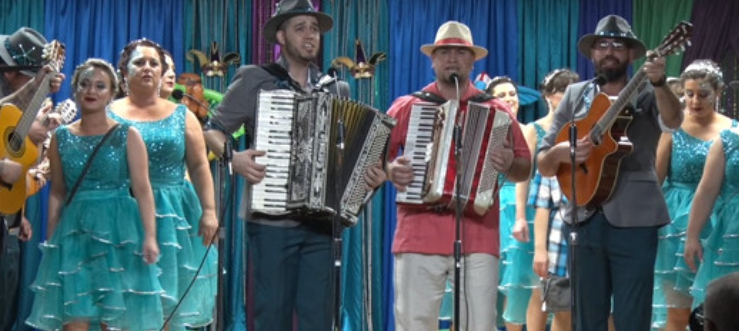
Why is this a problem? Unlike in regular theater, performances, or live events such as sports, not having a crowd is hugely impactful. Try watching a sporting event during the pandemic with no fans; it’s just not the same. Carnaval, in my opinion, shares this same issue. If no people are watching, then the dança isn’t the same. The group typically will feed off of the crowd’s reaction, and that helps drive the performers to be at their best. I’ve always heard it said “o carnaval e no salão para sentir o calor”, translated to “Carnaval is in the hall to feel the warmth”. While not as literal in direct translation, you get the gist: living it live and in person is the best way to consume a dança.
Am I opposed to the filming? Of course not, I want our dança and all dancas to be appreciated by as many folks as possible. Heck, I’d like to see how we did ourselves. Posting to YouTube or a similar outlet after the fact is not only okay with me, I encourage it. Some will say, “you can’t watch danças during quaresma (lint)” and I respect the views that others have. However, I see this as an old way of thinking, at least in my opinion. If you cannot be there live and share the view of not watching danças during Quaresma, it’s okay; the dança will be online for you to enjoy after the 6 weeks of lent. Those who choose not to live by that standard can watch as soon as the dança is available online. In our home, carnival is a year-round thing.
Some will say that the feed should just be blocked in the area where you want people to show up. In this case, California, or in the case of Terceira, have it made available outside of the islands. Believe me when I say that I’ve looked into this and can say that this is very involved and not cheap. I will spare everyone the details, but it’s less feasible for a standard outlet like the Portuguese media than you would think.
14. Is there anything else you would like to cover and inform the readers of NOVIDADES?
I want to take this opportunity to thank NOVIDADES for the chance to chat a bit about our group and Carnaval. Also, on behalf of Carnaval Sem Fronteiras, I’d like to invite everyone to head out to your local hall and support all the groups in California. We all work very hard and spend countless hours and dollars to produce entertainment for the people. While we love this tradition, we do it for you as well. We’re excited for another year of performances and hope to see o salão cheio (full hall). Bom carnaval a todos.
Thanks to Kevin Coelho amf David Santos for collabatiing with NOVIDADES on getting their grupo also registered through our PBBI-Oral Histpry Project. Pictures from the group’s Facebook Page


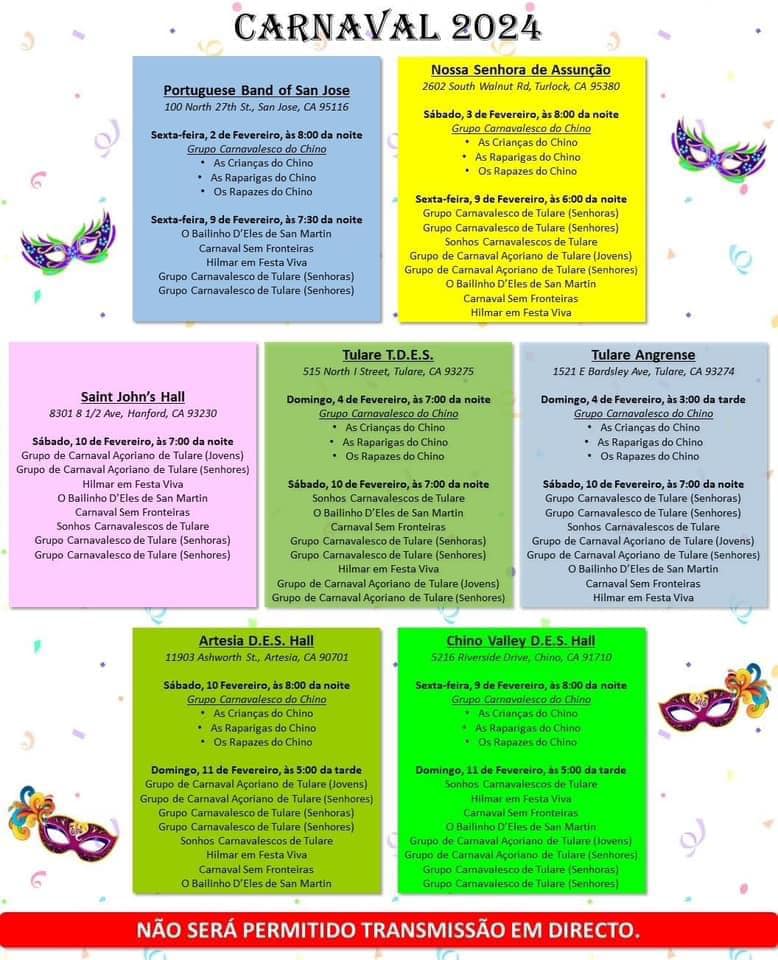
Prior danças and bailinhos from this group…take a look
P
 Novidades - The Islands and the Diaspora