


Correio dos Açores – Can you tell us a bit about your career?
Jéssica Garcia Uchôa (scientist at the University of the Azores) – My educational journey took place in public schools in Brazil, and afterwards I completed higher education at the Federal University of Espírito Santo, where I completed two degrees in Geography simultaneously (BA and BSc).
During this academic period, I had the opportunity to do internships at a state environmental institute and at my city council. These practical experiences were fundamental to consolidating the foundations of my professional future, providing me with a realistic understanding of the challenges and opportunities in the field of Geography and especially related to Geographic Information Systems.
In addition, I actively participated in two scientific initiations, being guided by a mentor in each of them over the course of a year. These experiences were crucial to the development of my scientific thinking, allowing me to apply theories learned in the classroom in a practical and innovative way and, in the end, I was awarded the prize for the best research developed in the Humanities area in 2017 at the Federal University of Espírito Santo.
Professionally, I’ve had experience in both the public and private sectors, accumulating valuable experience in different contexts. The turning point came at the end of 2019, when I decided to immigrate to the Azores, to embark on the challenge of doing a master’s degree in Volcanology and Geological Risks at the Faculty of Science and Technology of the University of the Azores.
This move represented not only a geographical transition, but a significant evolution in my career, providing me with a deeper immersion in the field of Remote Sensing applied to Volcanology and Gas Geochemistry. This academic experience in the Azores has been a crucial chapter in my journey, broadening my horizon of knowledge and consolidating my commitment to scientific research and the practical application of my knowledge in the region.

What attracted you to the Azores?
The attraction to the Azores was a natural outgrowth of my interest in Geography, an incredibly vast science. I was looking for a specialization that would not only broaden my knowledge, but also harmoniously reconcile a subject as enriching as Volcanology with the skills I already possessed in Geotechnologies.
While researching opportunities to further my studies, I came across the Master’s degree in Volcanology and Geological Risks offered by the Faculty of Science and Technology at the University of the Azores. The program proposal not only aligned perfectly with my interests, but also offered a unique environment.
In 2020, you began collaborating with the University of the Azores. How did this opportunity come about?
At the beginning of 2020, I was invited to take part in a project at the Institute of Volcanology and Risk Assessment (IVAR).
The invitation involved organizing geospatial data in a three-dimensional environment, which not only aligned perfectly with my interests, but also represented an exciting challenge in the practical application of the knowledge acquired during my master’s degree.
In 2021, I began the work that I have been doing to this day. My focus is on developing a web application aimed at making geographic data available for the European MaCoBioS project with the Azores Biodiversity Group (GBA-CE3C). This opportunity has not only broadened my involvement in scientific research, but has also provided valuable practical experience in the application of geotechnologies.
What work have you been doing in the region?
After completing my master’s degree, I started a technical course in Web Application Development (DAW) at the University of the Azores. I’m now about to complete another crucial stage in my academic career.
Participating in this course has been immensely important, as it has given me a technical and practical perspective on programming. This training has not only expanded my skill set, but has also opened doors to a deeper integration into the world of technology.
This integrated approach reflects my commitment to bringing geospatial science and technology together to drive progress in the areas of regional research and development.
Has living here been a good experience? In what way?
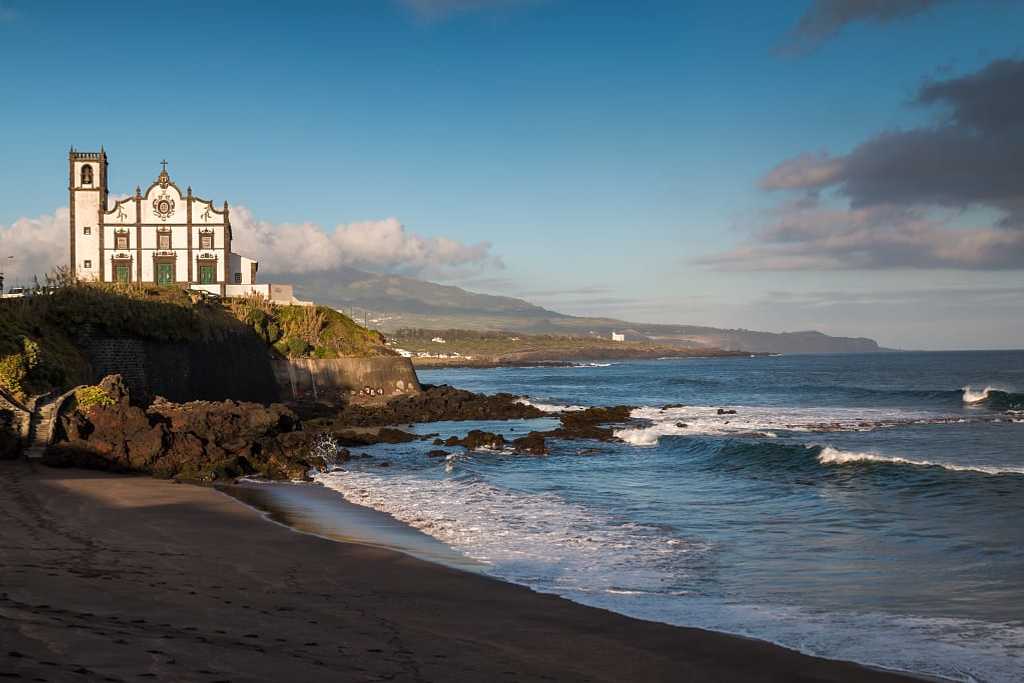
Living in the Azores is not just a change of geographical location but an immersion in a lifestyle that balances natural serenity with enriching opportunities. This experience has been a fundamental chapter in my journey, shaping my personal and professional growth in ways I wouldn’t have found elsewhere.
You have now been distinguished as one of the world’s 50 most promising young geospatial scientists for 2024 by the international portal Geospatial World. What was the reason for this distinction?
Receiving the distinction as one of the 50 most promising young geospatial scientists for 2024 by the Geospatial World portal represents a significant achievement and a profound honor. I believe that this recognition is the result of a continuous commitment to research, combined with an innovative approach to the application of geotechnologies in projects of great relevance.
In addition, the distinction also recognizes my commitment to sharing my acquired knowledge. I currently maintain the practice of making free material available on my social networks (Twitter, LinkedIn, GitHub and Geoportal.tech), offering valuable resources for professionals interested in learning about programming and processing satellite images from free technologies. This initiative reflects my commitment to contributing to the training and development of other professionals in the geospatial field.
In 2023 you created Geoportal.tech. What does it consist of?
Geoportal.tech is an initiative that a coworker and I developed. The main objective of this platform is to organize information related to events in the geospatial sector and the main news, seeking to consolidate this data in a single place on the internet. Our purpose is to provide interested parties with a centralized access point, facilitating access to relevant information that would otherwise be scattered across various online sources.
It certainly did what we call the first and second cycle of education (basic education in the Brazilian education system). Did you already feel a vocation to be a scientist at this time?
At the time, my vocation to be a scientist wasn’t clearly defined, but I’ve always been driven by an innate curiosity and a deep fascination with knowledge, especially subjects relating to geography. This incessant quest for knowledge was intrinsically linked to the transformative power I always saw in education. I believe that these elements combined were the driving forces that led me here, even if, at that stage, I wasn’t fully aware of the scientific path I was about to tread. It was a gradual awakening to the journey that would follow in my academic and professional career.
What other work do you have in hand at the moment?
At the moment, I’m immersed in the final stage of developing a webgis (digital and interactive map) that incorporates information from the MaCoBioS project. The central aim of this work is to provide decision-makers with comprehensive data on marine environment scenarios, covering both the present and projections for the future. This webgis aims to provide a detailed and up-to-date overview, using free technologies.
What are your next goals?
I’m in the final months of my technical degree in Web Application Development and my aim is to integrate the knowledge I’ve acquired in programming with geospatial science. My mission is to contribute to the advancement of scientific knowledge, while actively promoting the dissemination of relevant geographic information to the scientific community. The intersection of these two areas is key to exploring new possibilities and creating innovative solutions that can boost the understanding and sharing of geographic data more effectively.
Mariana Rovoredo journalist for newspaper Correio dos Açores, Natalino Viveiros, director
Translated to English as a community outreach program from the Portuguese Beyond Borders Institute (PBBI) and the Modern and Classical Languages and Cultures Department (MCLL) as part of Bruma Publication and ADMA (Azores-Diaspora Media Alliance) at California State University, Fresno–PBBI thanks the sponsorship of the Luso-American Development Foundation from Lisbon, Portugal (FLAD)
 Novidades - The Islands and the Diaspora