

Please give us a brief biography: where you were born, your journey to where you are today, and your connection to the Portuguese and Lusophone world.
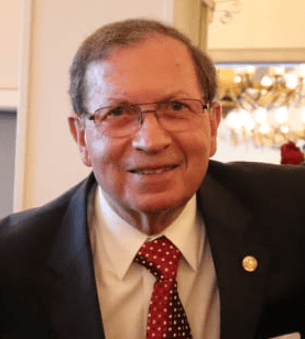
My name is Manuel da Silva Bettencourt, I was born on the Island of Graciosa, Azores. I am the oldest of 13 children. My parents emigrated to San Jose, California, in the late 1960s, where two of my younger siblings were born. I began working full-time at the Hyatt Hotel in San Jose, washing dishes, and attending San Jose High School at nighttime, where I graduated. Then, I attended San Jose City College for two years, graduating with an AA degree in General Education while working as a waiter at the same Hotel. I transferred to San Jose State University (SJSU), where I graduated in Biology in 1975. While attending SJSU, I was on the Board of Directors of the Portuguese Athletic Club (PAC) in San Jose. One day, we held a symposium at PAC, where I met Professor Heraldo da Silva, who was studying for his Ph.D. at UCLA. He was the first person to tell me about the Luso American Education Foundation and suggested I join this organization, which I later did. I wanted to continue my education, so I attended Dental School at Universidad Autonoma de Guadalajara, Mexico, where I graduated in 1979. Transferring to the University of California Los Angeles (UCLA) into the dental internship program. While at UCLA, I met Dr. Eduardo Mayone Dias, who helped found the Cabrilho Cultural Center (CCC) at UCLA and suggested that I should start a CCC at SJSU. Dr. Mayone Dias told me I should support and volunteer at the Luso American Education Foundation. These were my first connections to the Portuguese Language and the Lusophone World.
How did you get involved in the Luso-American Education Foundation, and what has been your trajectory in this organization?
The first time I got involved with the Luso American Education Foundation (LAEF) was in the 1980’s. Mr. Rodrigo Alvernaz contacted me to participate in the meetings for the Dia de Portugal celebrations. The sessions were held in Oakland, where the Luso American had its main office. At this time, they were trying to include more organizations during the Dia de Portugal Parades. Even today, in 2024, I am still involved with the LAEF Dia de Portugal Celebrations. In March 1989, I was on the committee of the 13th annual conference on Portuguese American Education in San Jose, with the theme “Our Children, Our Future.” In April 1992, I was the co-chair of the 16th Annual Conference on Portuguese American Education in San Jose with Jose Luis da Silva. The Luso American Education Foundation (LAEF) president was Eduardo Eusebio. We had 66 people on the Conference Planning Committee. The conference’s theme was “Celebrating the Past, Building the Future.” This year, 2024, the LAEF will hold its 48th conference, which will take place in October at California State University, Fresno. Since the 13th annual conference in 1989, I have volunteered in most conferences as board director, president, chairman of the board, and co-chair of these conferences or in the conference committees.
I have volunteered the most at the Annual Conferences and the Dia de Portugal celebrations at the Luso American Education Foundation. (LAEF). I have been President of the LAEF twice. The first time was from 1996 to 2000, and the second was from 2008 to 2012. I have also served as chairman of the LAEF board many times over the years. The board’s chair is in the highest position on the LAEF board. However, as president of the board, it’s where most of the challenges are because as president, I was involved in all committees; Annual Conferences, Dia de Portugal Celebrations, Fundraising, Golf Tournament, Membership, Summer Camp, Finance Committee, Foundation Anniversary, Scholarships Evaluation, Public Relations, representing the Foundation at events and participating in meetings in the San Joaquin Valle Community.
What is your vision for LAEF? How do you see the organization’s relevance today compared to half a century ago?
My vision of the LAEF now is that it needs more individuals willing to work for the success of the Foundation. We need young people and older people to join the board. It’s good to have a combination. They have the time and are willing to work in different board positions. The foundation affords many options; therefore, people can volunteer in the position(s) they feel comfortable volunteering for. I have been involved in organizations for over 50 years. The LAEF is the only one where there is usually no problem finding people who are willing to give of their time since they just have to dedicate their time to the foundation and not the clerical part; this is due to the generosity of the Luso American Financial that pays for an Administrative Director/Secretary. In addition, it is a privilege to be a Foundation board member, to promote the Portuguese Language and Culture, to help our students, and to contribute to a better community. However, at the LAEF, as in all other organizations, some volunteers work more than others, and unfortunately it comes down to a few board members who do most of the work. The board members must commit to LAEF and make it a priority. This way, we can do more, and the load will be lighter on each one. The LAEF is as relevant today as 40 or 50 years ago. However, the board members’ commitment is different. While it’s prestigious to be on the LAEF board, it’s important to remember the reason we are there in the first place.
What would you like to see as short and long-range goals for the organization? Are there any changes you would want to see come to fruition at LAEF?
What I would like to see as a short-range goal is to give the same amount of scholarship money but an increase in the amount given to each student. Fewer students would receive scholarships, but the increased amount would benefit those who need it the most. As to long-range goals – I believe supporting more students studying the Portuguese Language in Community Schools, High Schools, Colleges, and Universities would be an excellent long-term goal.
Can you briefly reflect and summarize your thoughts on the Portuguese and Lusophone Diasporas in California, considering that immigration, at least in significant numbers, ended over 40 years ago? What challenges and opportunities do you see for our Portuguese and Lusophone diasporas in California.
The Portuguese and the Lusophone Diasporas in California have changed in the last 40 years due to immigration. When I emigrated to California approximately 50 years ago, immigration from Portugal to the USA was 10,000 to 11,000 a year. Now, immigration is about 1,000 a year. This was the result, partly, by the end of the dictatorship in Portugal, a democratic government years later, with more work and liberty. Also, Portuguese couples now have only one or two children. In addition, with Portugal’s entrance to the European Union in 1986, Portuguese people emigrated more to Europe, especially to France, Germany, and other European countries, and less to the USA.
The challenges of less emigration from Portugal to California have tremendously impacted our Portuguese organizations. Some of them, like the Portuguese Bands, Clubs, Folklore Groups, Holy Ghost Halls, and other associations, are having difficulty in finding enough people for the board of directors because some of our children and grandchildren are integrated into the American culture, which we can call acculturation, or have married into other ethnic groups.
The best opportunity that I see for Portuguese Americans is to have an education. To attend colleges and universities to have a degree. We need more doctors, engineers, lawyers. Teachers and more politicians of Portuguese descent for local, state, and federal governments. We have more influence in our communities when we study and have a higher degree.
These interviews are conducted as part of a series put forth by the vice president of the LAEF for publicity to increase community awareness of the many men and women who serve on the Luso-American Education Foundation boards. They are published in the order they are received.
We are publishing these interviews in Novidades as a community outreach program to pay tribute to the many who have contributed to our community through countless hours of community service. The see profiles in service have and will continue to make a difference in our Portuguese and Lusophone Diasporas in California.
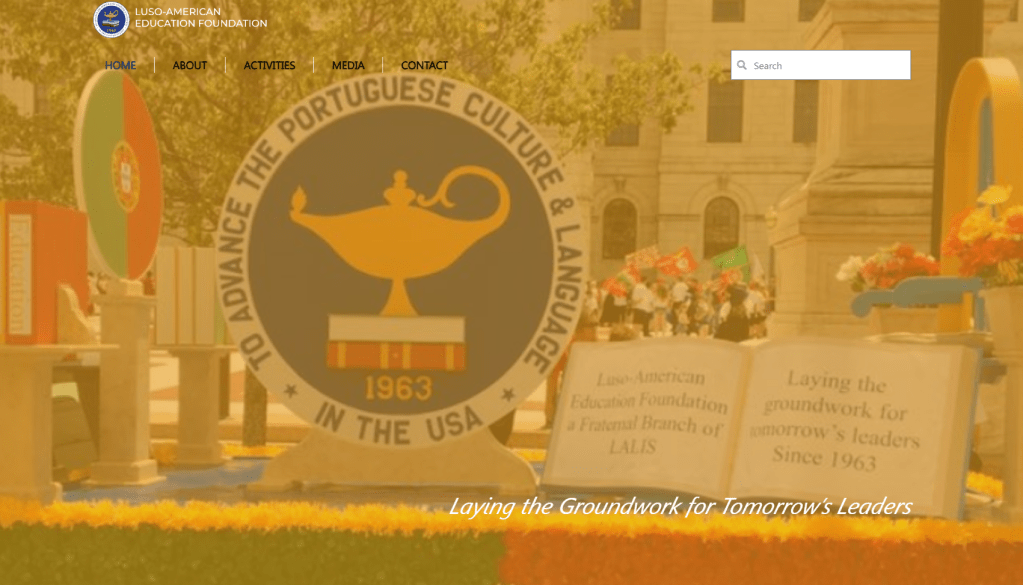
For more information on the work of LAEF please consult the website:
https://luso-american.org/education
 Novidades - The Islands and the Diaspora