

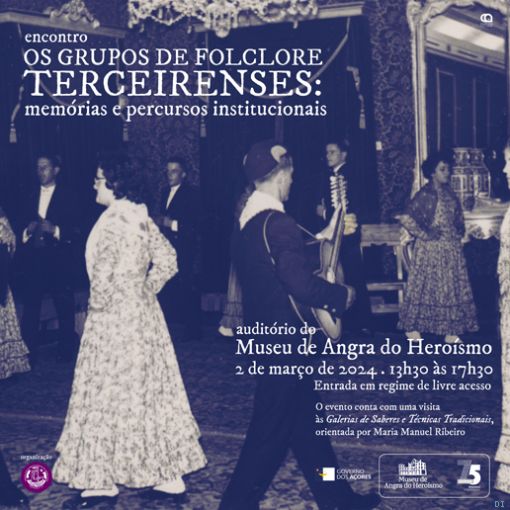
The “anxieties” and challenges faced by folklore groups in Terceira and their contribution to safeguarding traditions will be debated this Saturday, March 2nd, at 1.30pm at the Angra Museum.
It’s organized by the Fontes da Nossa Ilha folklore group, from the parish of Fontinhas. The chairman of the board, Leandro Ávila, points to aging, attracting audiences, and the role reserved for folklore in festivities as the significant current dilemmas.
“There is concern about the ageing of the members of the groups and some difficulties in attracting younger people,” he says.
Then, he points out that promoting to new audiences is necessary. “There is a loyal audience, but there is also a lack of a greater number of people who see themselves involved in this type of event,” he says.
The event, with the participation of eleven groups, aims to generate an exchange of opinions. “We need to realize that only together can we succeed. There should be no fear of one group taking the place of another. Everyone has their place on the island,” he stresses.
Leandro Ávila also advocates a change in mentality regarding how folklore is viewed in popular festivities.
“Sometimes it’s included almost as if it were an obligation, which also discourages those who spend a whole year rehearsing,” he warns.
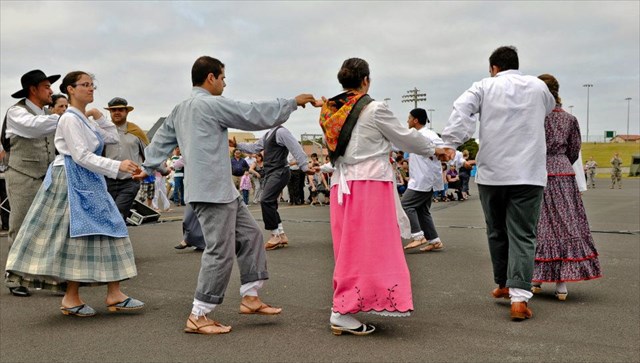
Protecting memory in a global age
Folklore groups, argues Leandro Ávila, have a role to play in modern global society.
“The increasingly global context is not a drama, but a reality. In this scenario, folklore groups have to be the guarantor of local memory and identity. I see the groups as being about the future and not about nostalgia for the past,” he continues.
“The Folklore Groups of Terceira: Memories and Institutional Paths” is the theme of the meeting, which is free to attend.
The program includes visiting the museum’s Ethnography Reserve and the Traditional Knowledge and Techniques Gallery, led by senior technician Maria Manuel Ribeiro.
Leandro Ávila highlights the dissemination component. “Although they have a mission to fight for the preservation of memory, groups often neglect their own memory, their journey, how they came to be and with what objectives, the projects developed over time,” he says.”It’s also a way of getting to know each other, not just by name, but by the history behind each one,” he says.
There will be presentations about the groups and spaces for debate. The end of the event will feature a musical moment around the 15-string guitar (viola regional terceirense).
in Diário Insular–José Lourenço-Director

Translated to English as a community outreach program from the Portuguese Beyond Borders Institute (PBBI) and the Modern and Classical Languages and Cultures Department (MCLL) as part of Bruma Publication and ADMA (Azores-Diaspora Media Alliance) at California State University, Fresno–PBBI thanks the sponsorship of the Luso-American Development Foundation from Lisbon, Portugal (FLAD)
 Novidades - The Islands and the Diaspora