

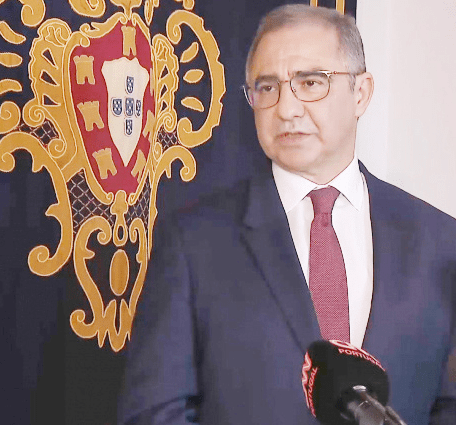
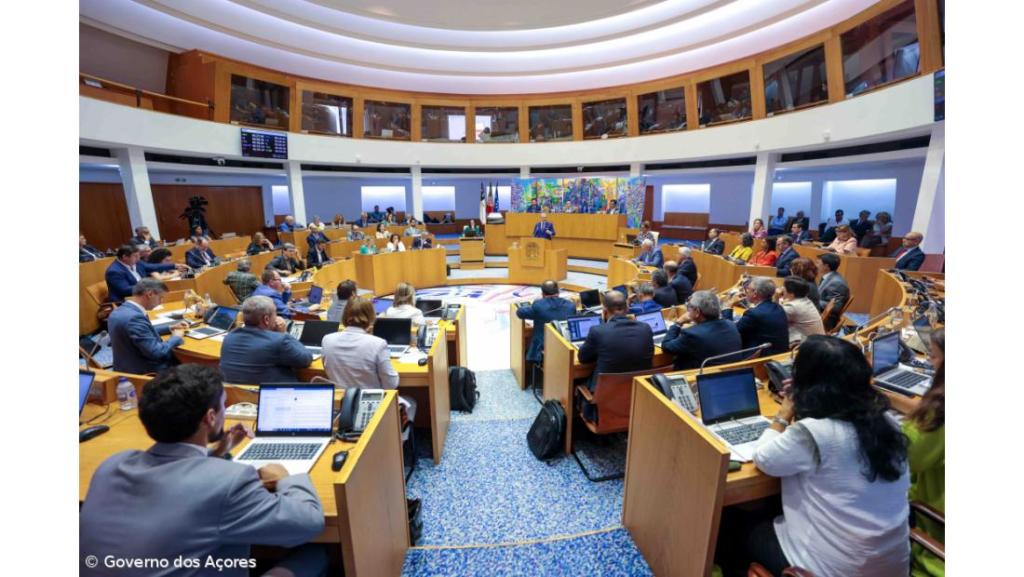
The Government Program of the PSD/CDS/PPM Coalition, which will be debated Wednesday and Thursday in the Regional Legislative Assembly of the Azores, puts forward a pilot project for the 4-day/telework week in the Azores “which can also be extended to the private sector, always by mutual agreement between the worker and the employer, to better reconcile professional life with the worker’s personal and family life.”
The Program announces that the Government of the Azores will present a draft law to bring forward the retirement age of Azoreans “because they make the same contributions, but their average life expectancy is lower in the region, by about two years and seven months.”
The document “extends the “Nascer Mais” program to all municipalities in the region, supporting newborns with 1,500 euros.”
The “New Elderly” program will also be extended to the 19 municipalities of the Azores. This initiative is “unprecedented and disruptive in how we approach the elderly, in which the priority is to keep them in their homes, with their families, for as long as possible, with the necessary health, social and psychological support.”
The Government Programme calls for an “increase” in the number of crèches and mini-crèches “until needs are met, by building new crèches and upgrading existing buildings, as well as making them free of charge, which are essential for improving the quality of life of parents, allowing a balance between family and professional life, as well as a process of socialization from the earliest ages.”
Another measure in the government’s program is to “make it possible to renew chronic medication in pharmacies, every two months, without the need for a doctor’s appointment for chronic patients who take regular medication, with the prescription being made available on a computer platform for a period of one year, making the process easier and avoiding unnecessary inconvenience.”
The program, among other measures, provides for the continuation of the process of valuing careers in Public Administration, with a reduction from 10 to 6 in the number of points needed for career progression, an end to quotas in the evaluation of workers, and “Extending the complementary remuneration in the careers of workers in public functions to all those earning salaries of up to 1,750 euros.”
It provides for implementing a system in which students enrolled in higher education will only pay the amount stipulated in the public service obligations (99 euros for mainland Portugal and 89 euros for Madeira) for the round trip to mainland Portugal without requesting subsequent reimbursements.
On its 18th anniversary, the Government Program foresees that young people will receive a 100-euro book voucher to buy books in physical bookstores in the Azores.
The Government proposes to “take steps with the European Commission and the Government of the Republic to increase the maximum differential allowed by law in the reduction of VAT, IRC, and IRS about national rates, in line with other outermost regions of the European Union.”
It announces the creation of the ‘Azores Price’, “a transitional measure to help families by reducing the price of the basket of essential food products from the Azores, involving various entities representing production (Agriculture and Fisheries), and distribution companies, so that, under certain conditions, a discount of up to 20% can be applied to Azoreans, in the case of products from the Azores, in a system similar to the ‘Azores Tariff’.”
The Government Program announces the continuation of the “control and reduction of the regional public debt by reference to GDP (only indebtedness when absolutely necessary for the full use of community funds), now that it has been possible to clarify its value, through the refinancing of the debt and the integration into the government sphere of all the inherited debt and various entities of the Regional Public Business Sector.”
The government’s aim in its program is to “reduce the number of political posts and appointments” and “reduce operating costs with consumables, disposables, electricity, water, among other public service expenses, by 2.5% per year, reducing the environmental footprint and using this amount for projects to improve its operation or to reduce debt, reducing its burden and freeing up funds for what really matters. The Public Administration must be restrained in its spending and focused on providing services to citizens, in accordance with high levels of quality.”
It is proposed that “new powers and more conditions be given to the Office for the Prevention of Corruption and Transparency”.
It calls for reforming education at various levels and introducing a second language at school from the first year.
It proposes to reduce the rate of early school leavers to no more than 15% by 2028.
Advocates compliance with the obligation imposed by the European Commission to privatize Azores Airlines by 2025.
The proposal is to create a new legislative framework for financial support, with “criteria of objectivity, independence, stability and regularity for the media in the Azores.”
in Correio dos Açores-Natalino Vivieora, director
Translated to English as a community outreach program from the Portuguese Beyond Borders Institute (PBBI) and the Modern and Classical Languages and Cultures Department (MCLL) as part of Bruma Publication and ADMA (Azores-Diaspora Media Alliance) at California State University, Fresno–PBBI thanks the sponsorship of the Luso-American Development Foundation from Lisbon, Portugal (FLAD)
 Novidades - The Islands and the Diaspora