

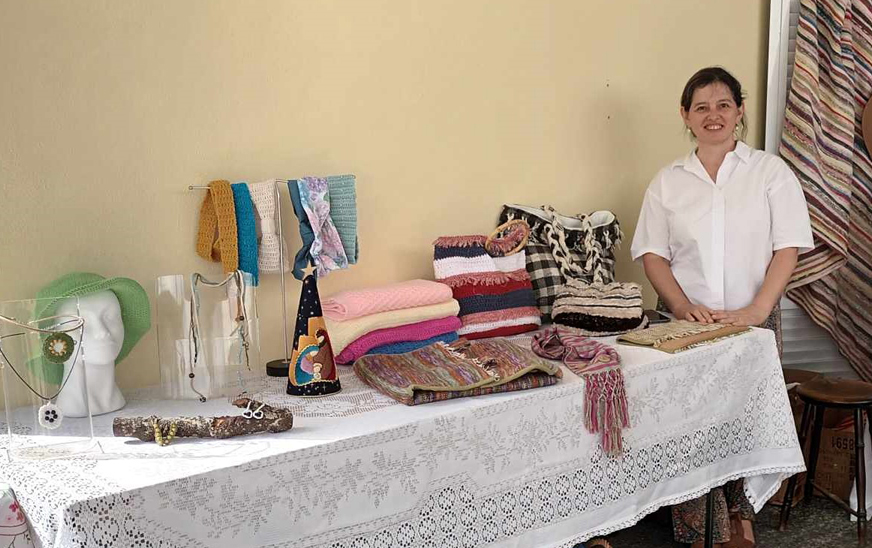
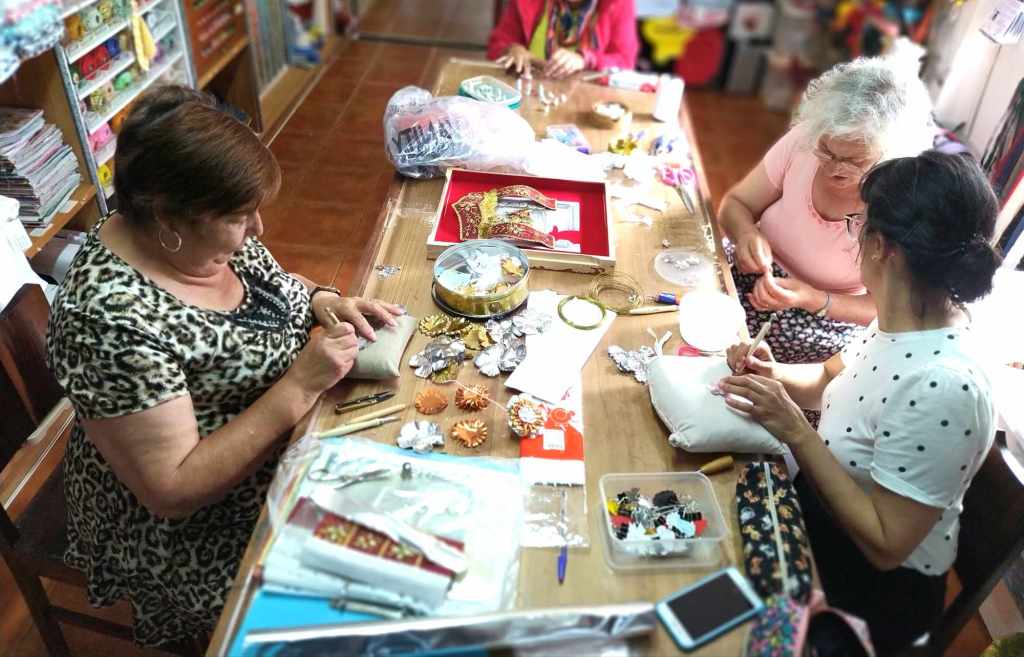
Since 2015, Açor Arte has been dedicated to handicrafts, weaving, decorative arts, and haberdashery. It also promotes various workshops ranging from sewing to traditional fish scale flowers. The owner, Jacinta Teixeira, is from the island of São Jorge and, at the age of 11, was already weaving in her mother’s business. She met her husband at the Senhor Santo Cristo Handicraft Fair and arrived in São Miguel, where she worked for 22 years in her mother-in-law’s haberdashery, the emblematic ‘Silva Pipi’. Today, the artisan is committed to perpetuating “traditions that are being forgotten and to encouraging more people to work in handicrafts.”
Correio dos Açores —Açor Arte was founded in 2015, but it’s part of a long-standing family tradition. Can you tell us a bit about this history?
Jacinta Teixeira (owner of Açor Arte) – I was born in Fajã dos Vimes, in São Jorge, where there was a long weaving tradition. My mother had a family business, and I started working early. Although my mother never learned the loom, she had her own staff, spun the wool, and sold the quilts. At the time, the pieces worked as barter goods, and, with my aunt – who passed on her knowledge of the loom to me – they would walk to Rosais and exchange the quilts for corn and wool. Then they would bring the wool to be carded, spun, and dyed and head to another fajã where they would make those quilts from pulled threads.
Ever since I was a child, I’d seen the people in my house doing this, and I was eager to start. When I was 11, I finished fourth grade and started working at the loom. It wasn’t until I was 21 that I went back to school, and later, I got my 12th grade through the Internet. And I would like to mention this because we should motivate women, especially those who don’t have compulsory schooling. After all, they always have time to study. It’s never too late to achieve your dreams; learning is always an asset.
I met my husband at the Santo Cristo Craft Fair in 1991 and married a year later. I came to São Miguel and worked for 22 years in my mother-in-law’s haberdashery, ‘Silvia Pipi’, but I always continued weaving.
What was it like growing up in an environment closely linked to handicrafts? Was this always the area you wanted to pursue?
There weren’t many options. We didn’t live in a time with the internet where we could access all the information. The first 10 years of my life were spent without electricity, but I miss that time. I remember arriving at dusk and my mother telling me to turn on the light because I was the smallest one in the house, and we would do handicrafts by the lamp’s light. And I remember vividly when television first came on the air and how we used to iron with hot coals. I was still a child, but I have a perfect memory of seeing all this work that has nothing to do with what we have today. They had different lives and were happy ones, too. We can only say that we’re unhappy when we have more knowledge and the option of embarking on a career that sometimes isn’t the one we’d like, but for that, we also have to know that path.
When did you come up with the idea of creating Açor Arte?
Açor Arte came about after I became unemployed. With knowledge of weaving, a degree in decorative arts, and 22 years of experience in my mother-in-law’s haberdashery, I combined the useful with the pleasant and opened the company. Today, I feel delighted and fulfilled.
What were the most significant milestones for Açor Arte?
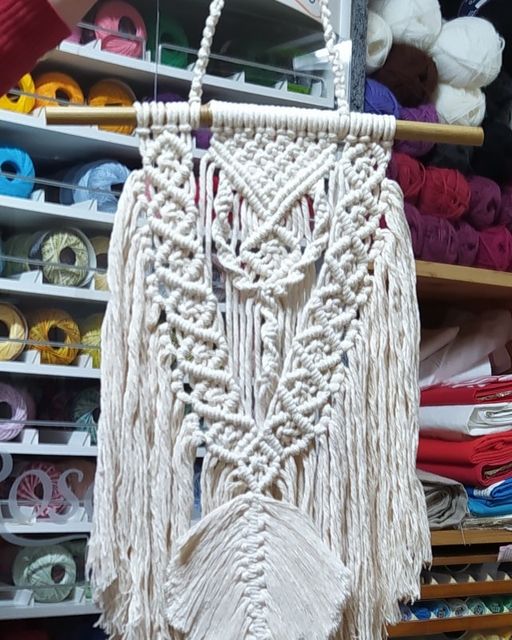
One of the biggest milestones was staying in business despite being out of town. I continue to work every day so that the company is recognized, and the workshops have helped a lot in this regard. We’ve done many seminars on weaving, fabric painting, patchwork, knitting, crochet, beginning and continuing sewing, registers, embroidery, lappets, and fish-scale flowers.
I feel that I make many people happy because, by doing a job that they identify with, they can be more fulfilled, they don’t feel so isolated, and don’t spend so much time on television and computers. And in the Azores, we have the particularity of women being very educated in handicrafts, which we should value and encourage even more. For example, I’m currently learning how to make lace that few people know about, the frillier. In the past, it was used to finish linen fabrics; it was a very peculiar lace, and nowadays, it can also be used for many applications, such as earrings, bracelets, and necklaces.
What role does Açor Arte play in keeping traditional handicraft techniques alive?
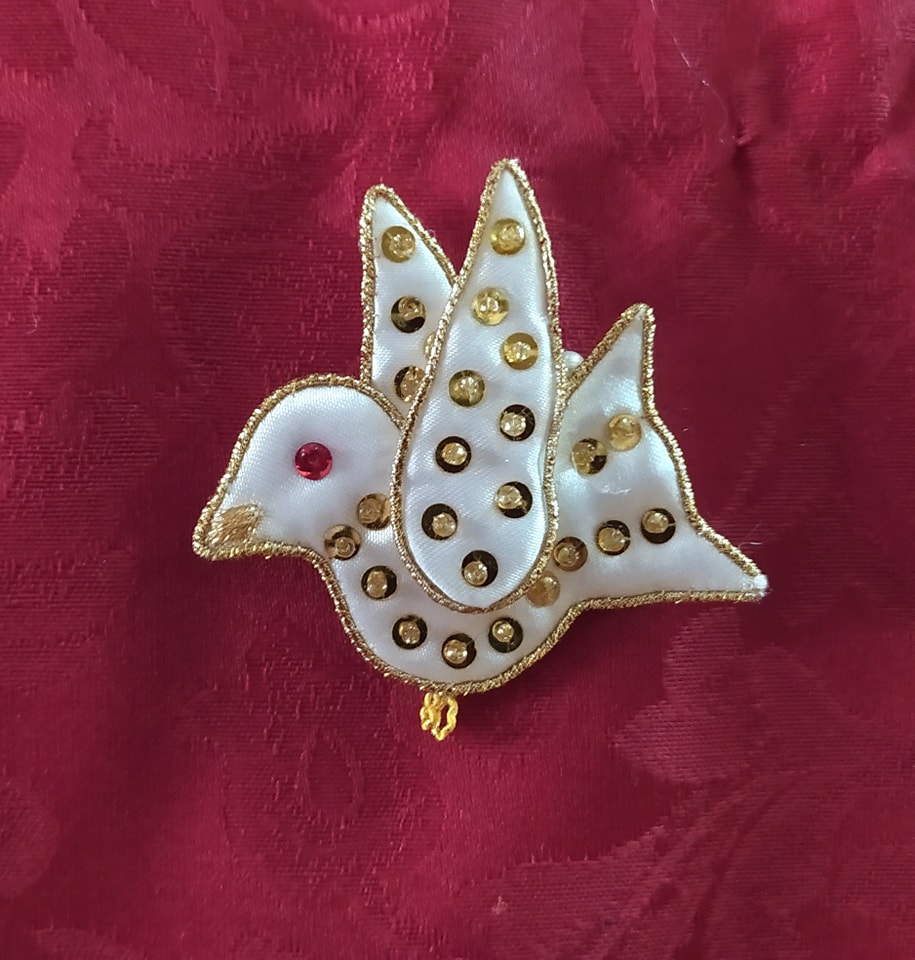
The company’s role is to disseminate traditions that are already being forgotten and to encourage more people to work in handicrafts with new ways of applying the art of our ancestors. In the old days, handicrafts had a specific purpose, i.e., the chillier was used to finish linen work; lace itself was used to make table runners to decorate the house; table runners, which today are often made in patchwork. Weaving and bedspreads were made because there was a need to make them, as there wasn’t much on the market. We had to make quilts for the coats, and knitting was used a lot to make gloves for the men of the sea. Even today, these garments are made for folklore groups because they represent fishing and agriculture at that time.
How has turnover been, and who are your biggest customers?
The business has been evolving, but we’ve always been careful to manage orders, as there has to be a balance between purchases and the material that goes out. My biggest customers are people who work in handicrafts, those who appreciate handicrafts, such as immigrants and foreigners, and those who participate in workshops.
How far have your pieces gone, and which are your best sellers?
I’ve sold a bit everywhere, mainly in England, France, and mainland Portugal. The best-selling items are scarves from natural raw materials such as merino wool, alpaca, and cashmere. Tourists value these noble raw materials much more than acrylic, a synthetic that is unfortunately widely used. In the Azores, we have a wealth of plants and natural materials that could be used for many jobs, such as Espadana, which can be used for weaving and making bags and rugs.
How do you see the future of Açor Arte?
One of my biggest challenges is to put Açor Arte on the tourist trail. Foreigners who come here are delighted when, for example, they see how a simple fish scale turns into such a beautiful flower. But they often don’t know if what they’re buying is from here or how it’s made. In this sense, it will be essential to show how the pieces are made: how weaving is done, the lace, the records of our faith in the Santo Cristo, flags of the Holy Spirit… We have a tradition of weaving from when this work was essential, but when it came to be seen as a superfluous act, people here stopped valuing it. Fortunately, foreigners appreciate handmade work, encouraging me even more to show and perpetuate our traditions. Azoreans have much knowledge to pass on because we are a region rich in handicrafts.
Daniela Canha-journalist for Correio dos Açores-Natalino Viveiros, director
Translated to English as a community outreach program from the Portuguese Beyond Borders Institute (PBBI) and the Modern and Classical Languages and Cultures Department (MCLL) as part of Bruma Publication and ADMA (Azores-Diaspora Media Alliance) at California State University, Fresno–PBBI thanks the sponsorship of the Luso-American Development Foundation from Lisbon, Portugal (FLAD)
 Novidades - The Islands and the Diaspora