


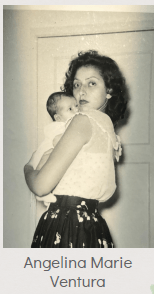
Everyone has a story that deserves to be told. For the Portuguese Community, an extensive history has barely begun to be told. Especially the exciting knowledge of Azorean history. A history that we can only learn through those still here with us today. These are the ones helping our stories come and stay alive. Living on through these individuals and told with pictures, documents, traditions, celebration, language, food, and even religion. This community’s culture runs deep and has such rich roots. I would like to add that this whole assignment has been extremely rewarding. I have learned some great things and am excited to see what I learn next. I will take you on a quick look into my family history and tell you a story about my great-aunt. The last one still lives out of my family’s first-generation Portuguese Americans. A look into the life of a first-generation Portuguese American. What is her name? Angelina Marie Ventura.
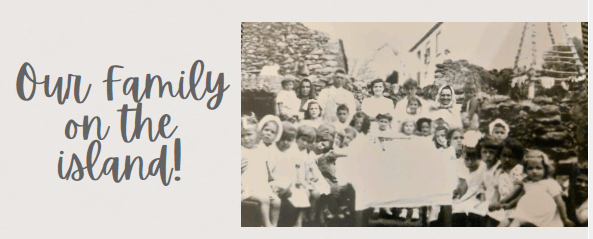
First, I would like to give you some background information on our family’s immigration to the United States. Our American journey started in the late 1800s and continued until 1907. Like most families that left the Azores, the men left for America to find work. The men who left were Angelina’s great-grandfather, her grandfather, John, and her father, Frank. Once they steadily worked and found stable living conditions, they returned to get the rest of the family. Angie’s grandfather got in trouble before they left the islands. Apparently, he was one of those men who threw the heavy balls, and he threw one at someone’s head. My great-grandmother Ignacia was only 6 years old when she left the island of Terceira with her grandmother, grandfather, brothers, and sisters. The family first touched down in San Jose when they arrived in America. They then went to the Central Valley and settled in Laton, California. The work was already lined up. Ignacia did not like her name, so she changed it to Mary when she got here.
Angelina Marie Ventura was born on June 6, 1938. Angelina also known as Angie since long before I was born. Her mother, Mary Toste Ventura, gave birth to her in Dos Palos, CA. After Mary gave birth to Angie, they lived all over the Central Valley. Angie remembers living in Laton, Riverdale, Gustin,e and Newman. Angie’s father’s name was Frank Cordosa Ventura. Angie’s parents had 5 children in total. Their names were Delores, Vivian, Irene, Alvin, and, of course, Angelina. Angie’s memories of her little brother were not many. Alvin was only a baby when he passed away and not even a year old. In 1947, Frank and Irene were in a fatal car accident, and neither one of them made it. After the accident, the entire family moved back to Dos Palos and bought a ranch where they all lived.
Growing up, Angie and Delores were always the closest siblings. The two girls were always dressing up and taking pictures together. Delores was her best friend, so when she moved away, Angie was sad. She even tried to talk her mom into letting her go stay with Delores. Once Delores had her first son, Angie returned to trying to convince her mother to let her quit high school and move to South Gate, Los Angeles. Angie pleaded that Delores needed help and that she could find a job, too. Finally, her mother agreed since Angie hated school anyway. Angie moved out to South Gate at 16 and began babysitting and waitressing.
Angie met a man named Ralph Jackson, and they got married. Angie changed her last name to Jackson, and they had three beautiful children. Their children’s names are Kenneth, Sandy, and Wendy. Angie continued to work as a waitress even after marrying and having kids. She did not stop waitressing until the 80s when she started having hip problems. This hip problem led to surgery, which meant waitressing was no longer an option. At this time, Angie remembers conversing with her mother about what she would do next. Her mother told her she needed to return to school to get another good job. So, what did Angie do? She went back and finished school and began doing office work. Angie said she worked most of her time at Kearney Manufacturing, but before that, she had landed a job at the Fresno Bee. Angie expressed her excitement upon receiving the job, but it quickly changed. She says they wanted her to start interviewing people, but she was not interested or comfortable. They kept pressuring her to do interviews even after she politely refused and let them know she wanted to stay doing office work. So, after two weeks of hassling, she decided that just was not the place for her.
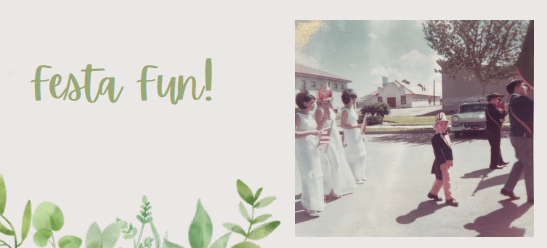
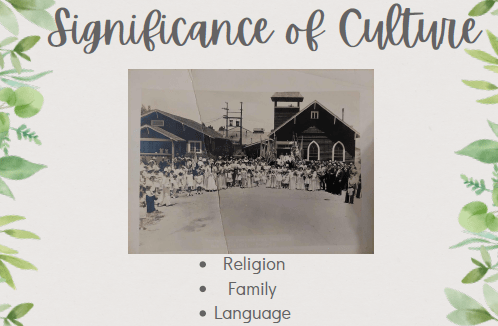
Now that we’ve looked into the history of her life. I want to tell you about how important it was that she was raised with a strong Portuguese identity. Angie’s mother ensured they were in mass every Sunday, “if you didn’t want to go, well too bad because you were going.” That is a direct quote. Angie’s mother, Mary, believed if you committed to something, you would follow through, and she was sure to instill this in their children. The family always attended festas and participated in them throughout the Central Valley. Angie says she remembers going to the festas and having so much fun. When they got to the festas it was a lot of dancing and laughing amongst everyone. Angie looks back at eating sopas at the festas, and as a child, she did not like it, but that is what they ate. Although her mother made it abundantly clear how important it was that they teach the language to their kids. Angie did not pass on the Portuguese language or any of her siblings. She expressed her regrets about it and said if she had the chance, she would ensure she taught them. The most important thing of all of these, though, is FAMILY. The family would always come together anytime somebody was in trouble, no questions asked, and in any situation.
Being Portuguese American to Angie means putting family first and helping whenever you can, staying in contact with everyone quite often, and maintaining traditional holiday foods and celebrations. The main thing she is most proud of is that she was never afraid to work. She did not like school, but she loved to work. Her first job was at a Drive-in, washing dishes and cleaning countertops for $10 a weekend. Being a Portuguese American means hard work, dedication, and selflessness.
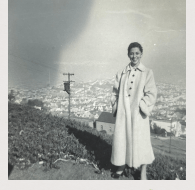
This is merely a glimpse at one individual’s story within the Azorean American history yet to be told. I always think, “If only by some miracle, we could get our hands on journals written by our ancestors. We would be granted the greatest insight on the past of our people and a powerful understanding of our history.” I am lucky to have my great-aunt with whom I can share these memories and pieces of history. This history should be told; everybody deserves to be told and shared with others. You never know who might keep your family’s history alive.
Legacy is an oral history continuous publication series by PBBI-Fresno State. It is part of the Central California Portuguese-American Oral History Collection, which is funded in part by the Luso-American Development Foundation (FLAD) in Lisbon, Portugal.
 Novidades - The Islands and the Diaspora