

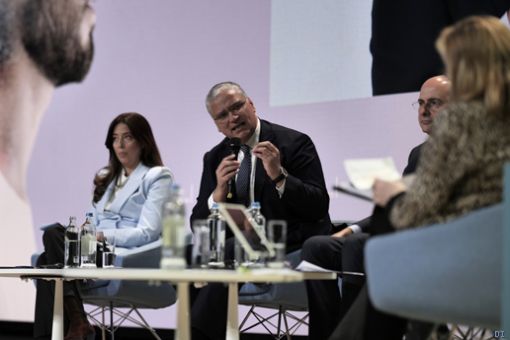
Yesterday, the regions and municipalities warned about possible changes to the Cohesion Policy, drawing attention to transformations that could even jeopardize the European project itself. The warning came from the President of the Committee of the Regions, Vasco Alves Cordeiro, who spoke at the 9th European Cohesion Forum, which took place over the last few days in Brussels, where he said that the Forum is a unique opportunity to affirm the importance of a robust Cohesion Policy, at the service of the people and at the heart of a more united and fairer Europe. He added, “This is no time for complacency or business-as-usual discussions about this policy and its future. Suppose we don’t mobilize and defend a common vision for a renewed policy that continues to serve all regions, based on its fundamental principles. In that case, we run the risk of being presented with a future Cohesion Policy in name only. And that is a threat to the European Union project as a whole.”
What future?
The President of the European Committee of the Regions was speaking on the panel “What Cohesion Policy for the future? Vasco Alves Cordeiro also argued that “the danger of establishing a direct link between Cohesion Policy and structural reforms is that, in all likelihood, it will be the regions and cities that pay for mistakes made by national governments, and that’s not fair!” He went on to say that it was obvious that “we should consider some changes to Cohesion Policy to improve its implementation and results. But it is also clear that some aspects must be maintained: the willingness to cover all regions, the principles of partnership and multi-level governance or the long-term approach.” Vasco Cordeiro also warned of the need to simplify this policy “not only for the beneficiaries but also for the managing authorities and those responsible for auditing the results of cohesion policy.”
Speaking about the contribution made by the Cohesion Policy to dealing with the effects of the COVID-19 pandemic and supporting the Ukrainian populations displaced by the Russian invasion, he added that “it is still necessary to make predictable how we can decide to use this Policy when it comes to extraordinary circumstances. If we want to put it another way, let’s not decide in panic mode; let’s decide with flexibility and predictability.”
Lastly, Vasco Cordeiro stressed the need to use the period before the European Parliament elections to promote an intense debate and mobilization around this issue and to engage in dialogue even with those who are not yet convinced, showing the results that Cohesion Policy produces daily in education, employment, qualifications, support for integration and the ecological transition, among many others. For two days, the Cohesion Forum brought together around a thousand participants, including representatives of the EU institutions, national, regional, and local authorities from all the Member States, social and economic partners, non-governmental organizations, and academics, among others, to address the conclusions of the 9th Cohesion Report presented by the European Commission on March 27.
in Diário Insular-José Lourenço-director
Translated to English as a community outreach program from the Portuguese Beyond Borders Institute (PBBI) and the Modern and Classical Languages and Cultures Department (MCLL) as part of Bruma Publication and ADMA (Azores-Diaspora Media Alliance) at California State University, Fresno–PBBI thanks the sponsorship of the Luso-American Development Foundation from Lisbon, Portugal (FLAD)
 Novidades - The Islands and the Diaspora