

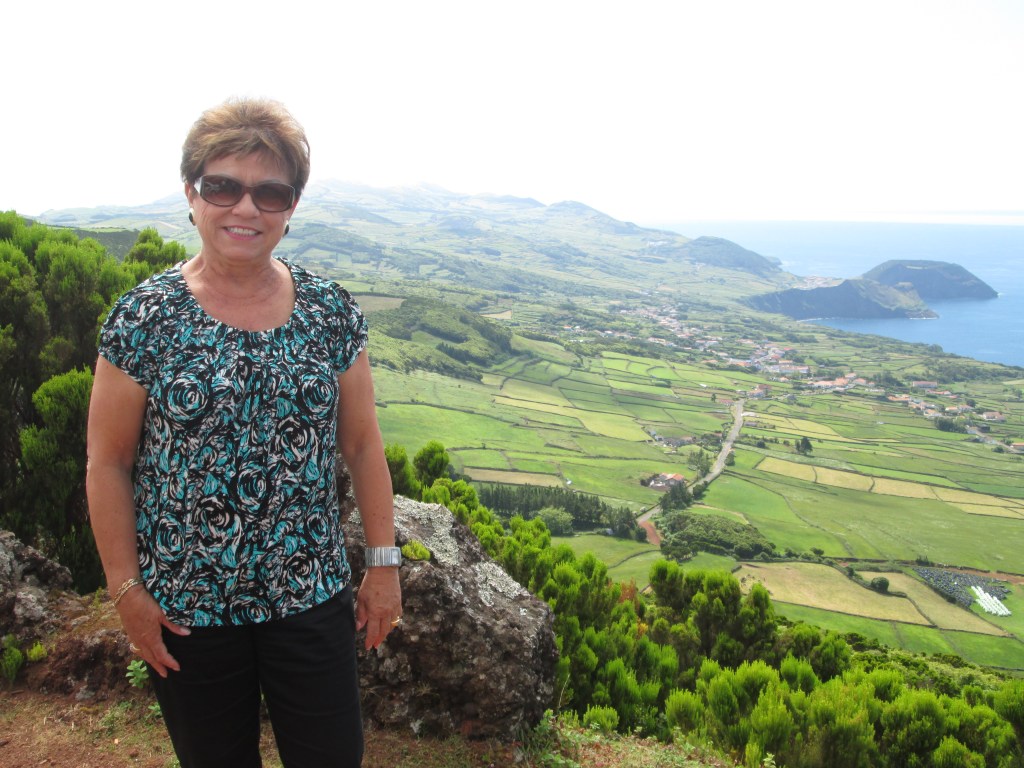
My name is Bernice Pelicas, and I was born in Oakland, California. My father immigrated from Tondela, Portugal, to the United States in 1920. He was the only sibling of 8 to immigrate to the United States. My mother was born in Oakland, and her parents immigrated from Sao Jorge island, Azores.
Although my parents were not involved in any Portuguese organizations, I was introduced to the Portuguese community as a small child, attending Festas in the Bay Area and marching in the parades. As a teenager, I joined the Luso-American Fraternal Federation, now Luso-American Financial, and became a member of the Oakland Youth Council.
I graduated from Castlemont High School in Oakland and began working for the Federal Government. My formal career began in 1966 at the Naval Air Station in Alameda. I started as a clerk, GS-2, and over the years, after working at several agencies, I was promoted to a Human Resources Supervisor, GS-14. I retired in 2004 after 38 years of service.
My husband and I met at a Portuguese dance and at Luso and married in 1967. We have 3 beautiful children who were also active youth members of the Oakland council. We introduced our children to Portuguese culture through our participation in various Portuguese organizations. My daughter, Anne Marie Adao, and my grandchildren remain active in Luso-American to this day.
As a young adult, I joined the Oakland Adult Council. I was the Oakland Council Secretary for 22 years and a Director of Luso-American Fraternal for 3 years.
HOW DID YOU GET INVOLVED IN THE LUSO-AMERICAN EDUCATION FOUNDATION, AND WHAT HAS BEEN YOUR TRAJECTORY IN THIS ORGANIZATION
I became active in the Luso-American Education Foundation in the early 1990s. I volunteered for several years and then became a board member, serving on several committees. I also held the position of vice President of Fundraising. In this capacity, we started the annual golf tournament, which was and still is the biggest fundraiser for the Luso-American Education Foundation. We also had more minor fundraising activities to support our scholarship program.
I served as President of the Luso-American Education Foundation from 2019 to 2022. As President during this challenging COVID, the Foundation continued its mission to promote the Portuguese language and culture. While we continued awarding scholarships, other activities were canceled or rescheduled. The Foundation’s Annual Conference, typically held in person at various colleges and universities, had to operate remotely. Thanks to the foresight of Director Diniz Borges, the platform for the Foundation’s Annual Conference was broadcast on several social media platforms and on Zoom.
During this same period, I was employed by the Luso-American Education Foundation as the Administrative Director. I was responsible for all administrative functions and acted as the Foundation’s secretary.
WHAT IS YOUR VISION FOR LAEF? HOW DO YOU SEE THE ORGANIZATION’S RELEVANCE TODAY COMPARED TO HALF A CENTURY AGO?
I’m optimistic that the Foundation will continue to grow as we move forward with new and exciting ideas. Our current volunteer Board of Directors and the advisory board are committed to attracting younger members that will move the organization forward. Our more “seasoned” directors also support new ideas and approaches to increase our membership and promote the organization’s mission to provide scholarships and advance our Portuguese culture and language.
WHAT WOULD YOU LIKE TO SEE AS SHORT AND LONG-RANGE GOALS FOR THE ORGANIZATION? ARE THERE ANY CHANGES YOU WOULD WANT TO SEE COME TO FRUITION AT LAEF
The short-term goal is to increase the amount of scholarship awards. It has been several years since the Foundation increased the amount of awards. This is being discussed and expected to be approved by next year’s scholarship program. The long-range goal is to continue exploring new ways to celebrate our organization and recognize individuals’ and other organizations’ contributions to promoting the Portuguese culture. We are moving forward and incorporating some traditions for the past 60 years. This complements the current board of directors consisting of young adults and seasoned members working together to make this incredible organization thrive in the future.
CAN YOU BRIEFLY REFLECT AND SUMMARIZE YOUR THOUGHTS ON THE PORTUGUESE AND LUSOPHONE DIASPORAS IN CALIFORNIA, CONSIDERING THAT IMMIGRATION, AT LEAST IN SIGNIFICANT NUMBERS, ENDED OVER 40 YEARS AGO? WHAT CHALLENGES AND OPPORTUNITIES DO YOU SEE FOR OUR PORTUGUESE AND LUSOPHONE DIASPORAS IN CALIFORNIA
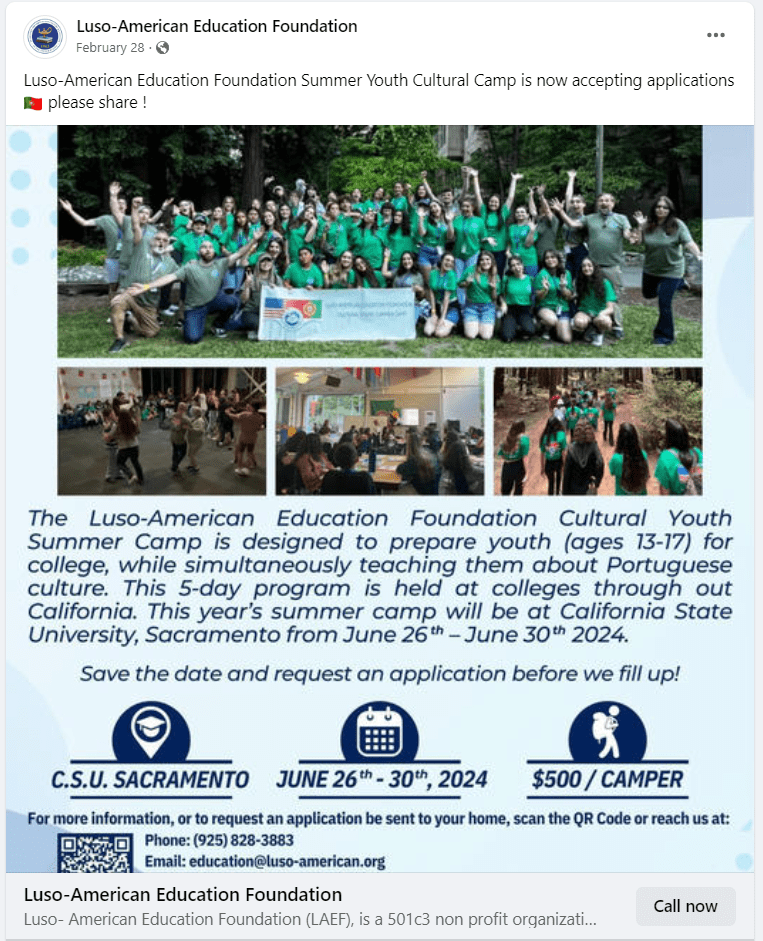
As we all know, immigration from Portugal is nonexistent, which presents a challenge. So, we need to focus on the young people of Portuguese descent to continue to embrace our many traditions and cultures. While today’s youth have so many more opportunities to participate in other activities such as sports, music, etc., we have many of Portuguese descent who want to learn about their ancestry and culture and love to participate in youth groups. We can look at the success of the Luso-American Fraternal youth program as an example of the youth embracing their culture and loving to participate in youth administration. As they develop into young adults, many continue within the organization, and that is reflected in the success of the 20-30 group. They not only learn about their culture but learn leadership and communication skills. Another example of what we are doing in California and at Luso-American is the Foundation’s annual youth cultural summer camp. This is another example of how we can continue to grow as a Portuguese community by attracting youth to our culture and language.
I am very proud of my ancestry and look forward to contributing to the future success of Luso-American Financial and the Luso-American Education Foundation.
Empowering Tomorrow is a segment of NOVIDADES by Bruma Publications from PBBI-Fresno State, featuring the directors of the Luso-American Education Foundation.
 Novidades - The Islands and the Diaspora