

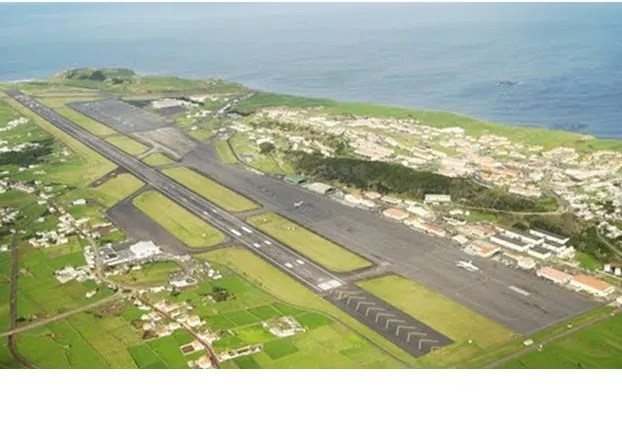
The United States of America only became close to Portugal because of the Azores. Brazilian historian Tácito Rolim defended this idea at a conference this Monday in Lajes.
“The research I carried out at the University of Porto and the University of the Azores, in which I examined the relationship between Portugal and the USA between 1945 and 1965, revealed the blatant centrality of the Azores in this relationship, which was in fact the only reason why the United States drew closer to Portugal in the post-war period, giving it a seat as a founding member of NATO, guaranteeing it Marshall Plan resources, despite the reluctance of the Portuguese government, and sponsoring it in the process of joining the UN,” he said.
A professor at the State University of Ceará in Brazil, Tácito Rolim did his doctorate in history at the Fluminense Federal University, researching US military operations in the Fernando de Noronha archipelago.
In the documentation he gathered in the United States, he came across information about the Lajes Base. “My initial intention was not to research the Azores, but the Azores ended up collaterally appearing in my research,” he revealed on the sidelines of the event.
Looking at the Azores’ past, Tácito Rolim concluded that the archipelago was “of gigantic strategic importance and indispensability to the United States” between 1945 and 1965.
“During the period of my research, the strategic importance of the Azores for the United States fluctuated, but always at very high levels. At no time could the archipelago be ruled out by the US military, despite what the US State Department and some sectors of the mainstream press might say,” he said.
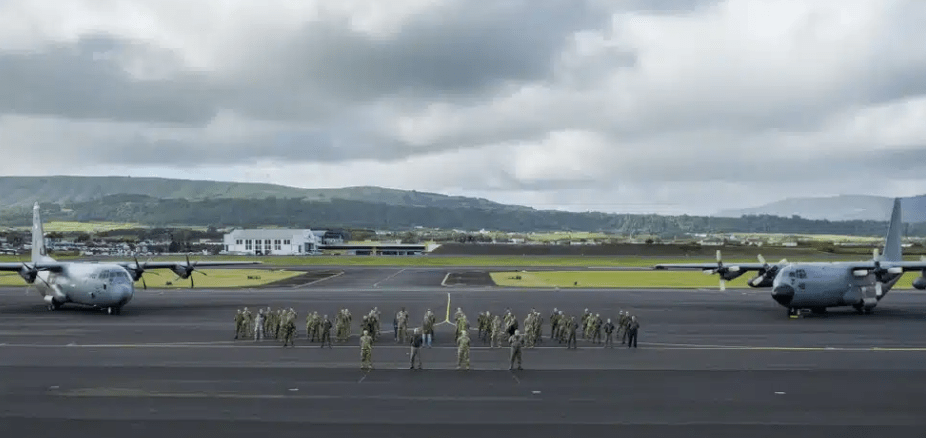
The researcher gave two examples of the importance of the Lajes Base in the Cold War: as a “barrier protecting the US east coast from a possible Soviet attack” in the 1950s, and in monitoring a US military operation that tested “the explosion of nuclear artifacts in the upper atmosphere”.
According to Tácito Rolim, Operation Argus was the “largest scientific experiment ever carried out” and aimed to “test the defensive capabilities of the US against an attack by intercontinental ballistic missiles, which were being developed at the time.”
“This operation had a global reach, being monitored in both the South and North Atlantic, which makes the Azores archipelago the protagonist of the largest scientific experiment ever carried out,” he said.
He discovered that “drums containing radioactive materials” were found in the Azores in the early 1950s.
“This fact indicates that regions close to the archipelago were used to dispose of this type of material, most likely without the knowledge of the Portuguese government and military, who were only informed later,” he said.
Costly investigation
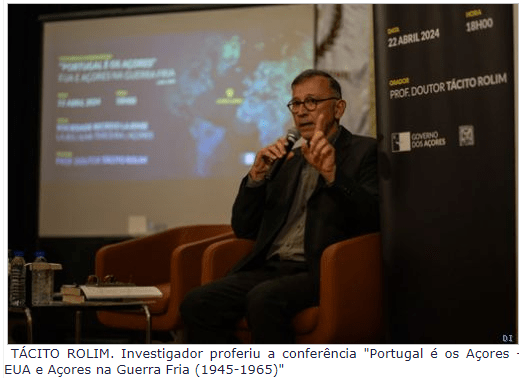
Tácito Rolim spent four months in Washington collecting documents that served as the basis for his doctoral thesis. The Brazilian researcher stressed that although some information is already available online, it is only a “tiny fraction” of what exists in the National Archives in the United States.
“The National Archives website only has 1.52% of the collection,” he said.
By 2026, the National Archives plan to make around 500 million documents available online, more than twice as many as currently exist. However, this will still be “a very small number compared to the volume of the institution’s collection.”
“On-site research is not only desirable, but necessary, especially in the archives of the Department of Defense and the Atomic Energy Commission,” he added.
Tácito Rolim could only gather information in the United States because he had a doctoral scholarship.
“For researchers, grants are essential, because it’s an expensive region to live in and it’s research that requires time, because it’s a huge archive. Washington is a privileged place for a researcher, because the largest archive of secondary and primary sources is in Washington, the National Archives and the Library of Congress,” he said.
In addition to financial support, research in archives of this size requires “method” and “discipline,” he warned, revealing that he has adopted an “atomic approach,” more focused on the technological and scientific aspects, which have allowed him to detect information that sometimes escapes those who approach only the political and diplomatic component.
At the end of the conference, Armando Mendes, the moderator, and coordinator of the study and work plan for the creation of the Lajes Base Interpretive Center, appealed to the US military command, which was represented at the event, to “recover for Terceira Island the documentation that left after the extinction of the figure of the historian.
According to Armando Mendes, these are “essential documents” for his doctoral research in this area and for the preparation of the interpretive center.
in Diário Insular-José Lourenço, director

Translated to English as a community outreach program from the Portuguese Beyond Borders Institute (PBBI) and the Modern and Classical Languages and Cultures Department (MCLL) as part of Bruma Publication and ADMA (Azores-Diaspora Media Alliance) at California State University, Fresno, PBBI thanks Luso Financial for sponsoring NOVIDADES.

 Novidades - The Islands and the Diaspora