

We invite our readers to look at this interview with Jorge Rita, an industry leader in the archipelago.

Correio dos Açores – What is the current state of the dairy industry in the Azores?
Jorge Rita (President of the Azores Agricultural Federation): Due to the current situation in the industry, we are in an apparent calm moment. The European and international outlook for milk is one of slight rises in product prices. Therefore, there are already some indications of an increase in some European countries, such as the Netherlands and others, and this is always positive.
Obviously, milk, a vital sector in the region’s economy, has not always been properly valued. That’s our big problem when it comes to milk in the Azores.
We have some deficiencies in production due to certain situations that we need to improve. Here, we have been talking about investments by the Regional Government, which have not been few, but there still needs to be a lot more. We’re waiting for the next Community Support Framework because there’s a lot of need to modernize farms and invest in agricultural infrastructure regarding roads, water supply, and electricity. In this regard, there’s still a lot to be done on many islands. This clearly affects the cost of each milk product.
The labor shortage is becoming a glaring problem in many sectors of activity, and even in the dairy sector, it is too much. Then there’s the disillusionment of many traditional families, which makes it difficult for young people to believe in this sector. I think we need to reverse this paradigm.
Concerning the price of milk, there is still a vast gap between the production prices practiced in the Azores and those in force in mainland Portugal and Europe. Since costs are essentially allocated to transportation, this means that we always have some difficulties in the region.
Instead of blaming these increased costs on the price of the raw material, i.e., the purchase of milk, the industry should organize itself and demand that the regional and national governments and even the European Union, if possible, make transport cheaper and energy cheaper. In other words, fuel and transport must be more affordable for the industry so that industrialists can replicate this reduction in costs positively in milk prices.
Over the years, the industry has shown little appetite for these kinds of talks. Only recently has it shown some willingness to talk about it. Reducing their costs and making their factories more efficient are ways in which they can better compensate producers.
So you’re starting to create conditions for the price of milk to increase in the Azores…
That would be important. The legitimate expectation that producers have at the moment is this. There are starting positive indications, and no more production exists in Europe. In other words, there are all the conditions right now for farmers and milk producers to start thinking about a rise in the price of milk shortly.

Maritime transport has a considerable impact on imported raw materials and exports of processed products…
There is something that the industry needs to do quickly: take action with the regional government, the government of the Republic, or even the European Union so that its costs also go down. And when we’re talking about costs, we’re talking about what they consume regarding fuel, energy, and transportation. I think this is a good way of demanding that they can and should pay more for milk.
Nowadays, there is a growing awareness that the dairy industry can’t squeeze the producers much more because the situation is already complicated. The industrialists know the production difficulties because the producers also turn to them, and some of these dairies have even served as banks for some of them. That’s not what we wanted or what we liked. But in any case, this is the current scenario.
We’re more or less at the limit of last year’s milk production. And, there isn’t much food available again. Due to climate change in the region, this has been a challenging year for cutting grass. We won’t have a year of incredible food abundance in terms of grass. Corn sowing has just started, and, in some cases, it’s a little late due to the weather.
We know that concerning high production costs, fertilizer prices and feed prices are falling. In other words, there is an improvement in income that farmers didn’t anticipate, essentially due to the fall in production costs, which is good. It’s worth pointing out that these production costs are still rising, but there has been an improvement compared to the previous year.
Do you believe in POSEI Transportes?
I do, and that should be a banner for the Autonomous Region of the Azores. I don’t understand what will happen in the next European elections. We had hoped that the region would again have two European Parliament members. At the very least, the Autonomous Region of the Azores must demand the election of two members of parliament, as has happened in the past.
We have seen the consequences for all sectors of economic activity of the region’s lack of Azorean legislators in the EU. We know that there are two among many. Still, obviously, these two must always be part of political families at the European level with great decision-making capacity and then have their own offices that help influence specific measures.
We know that the Azores have elected legislators who have done exceptional work. We’ve had brilliant legislators in the European Union. Just look back at the demands they made and achieved for the region.
If no MEPs are elected from the Autonomous Region, this situation will be unpleasant, especially at the AD (Center-right coalition) level. The placing of our candidate in eighth place on the AD list, who may not be elected, represents an unacceptable step backward at the regional level. Given the size and knowledge that the nominee has at the European level, I think it would have been an asset to have gone to a much safer place regarding eligibility. Obviously, the PS has almost guaranteed its deputy for the Azores. In other words, we could have one or two legislators. One will always have the merit of being there, but two will always be ideal.
Concerning defending the POSEI Transport banner, it is well known that transport costs affect our entire economy: everything we import, everything we export, everything we consume.
We all know we have the country’s most expensive maritime transport. Knowing how much it burdens every product we export and import is unsuitable for our economy. That’s why it makes perfect sense for POSEI Transport to be one of the great flagships of the Autonomous Region of the Azores.
The Azores and Madeira give much more to Portugal and Europe, not least because of the size of our oceans. (…) Therefore, the Azores give much more to Portugal and Europe and should be compensated in this area of maritime transport.
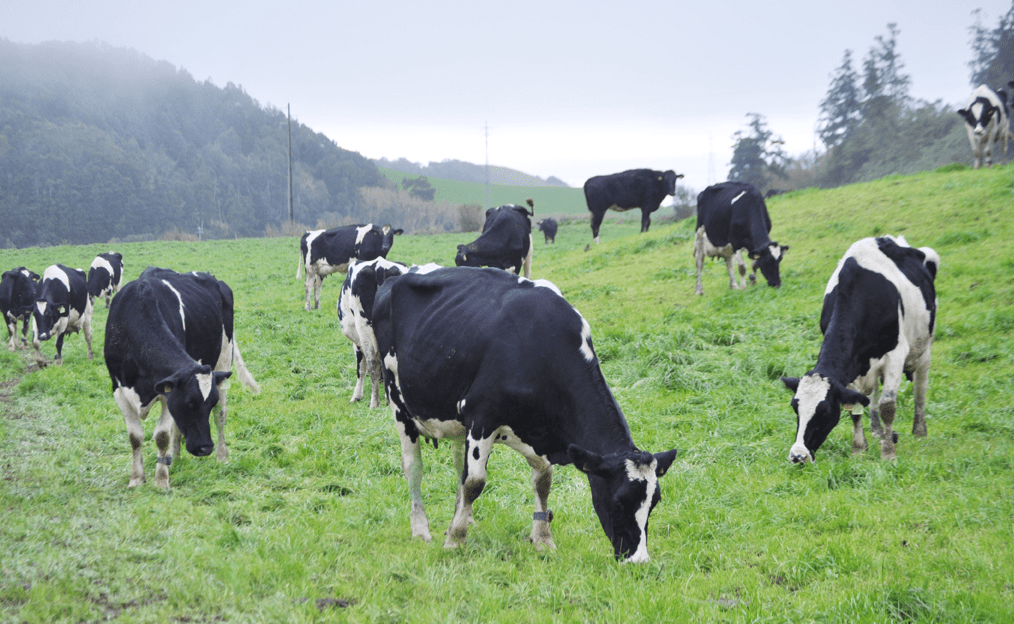
In the Azores, parents are starting to find it challenging to keep the family farming because their children are moving away…
That’s true. Over time, we’ve all been saying—including myself—that one of the sector’s major concerns is very much related to income. In other words, producing milk in the Azores or anywhere in the world is extremely difficult because it’s a 365-day-a-year life. There aren’t many professions that work 365 days a year, and when those professions aren’t well paid, and those incomes don’t provide sustainability and confidence, it causes panic in every family.
For example, in December, which is a month when almost everyone gets an extra paycheck, it’s a month when nearly everyone wants peace and quiet in the family everywhere. When an industry lowers its prices in December, what indication does it give to farmers and their families? It’s driving them into the abyss, it’s psychologically devastating these families who live off this income. Then the parents at home start having trouble communicating with their children that this is a great life when they are worried every day. The worry with which they live day-to-day, the complexity that exists in terms of bureaucracy, paperwork, and everything that is required by the community, industries, and society to have a product of excellence; the producers understand all of this. We want the milk we produce to be compensated appropriately and valued, which is what doesn’t happen. In other words, in practice, we always have the dilemma of not valuing our product.
We all have to work together – the industry, the government, production, and distribution – to make the most of what we produce. And that’s what we’re trying to do, but the constant talk about it being a problematic life comes from discomfort, discontent, lack of confidence, and security in a sector as important as ours.
Despite all the difficulties, is there a sense of hope?
Of course, there is. Even though I’m not from Sporting, I’m a man of great hope… And I believe. This sector will always have many difficulties, but no one can think of any kind of economy in the Autonomous Region of the Azores without the dairy sector. It’s unthinkable. From what we know, there is no more critical sector, in terms of the economy and settling in rural areas, than agriculture because we produce traded goods with excellent export capacity, with products that are recognized in the market and with the Azores brand associated with them. So, milk is a raw material and an excellent dairy product.

You have advocated more significant investment in the production and internationalization of dairy products.
Of course. This is a task from which the Regional Government cannot be exempt. The region will always be worth what it exports, not imports. We have excellent products that can be exported, such as pineapples and tea (…). These are gourmet products linked to the Azores brand. Then there are our products, milk and milk derivatives, which win prizes in all the competitions they enter. We need valorization; in this, we have to be much more consistent and persistent and believe that we are doing well.
The government needs to grab hold of these products, this anchor we have in the region, and take it to levels much higher than we are, with good marketing campaigns 365 days a year, just like the 365 days we produce.
If the government manages to help industries to better value their product on the market, the industry will undoubtedly be able to pay its producers more, which is what we want: for the whole sector to win.
What incentives should young people have to become more involved in milk production?
We talk about young people because they are the future. We all have a responsibility to try to attract young people. They understand that today, we have a modernized sector. The PRR Recovery and Resilience Plan could reward some young farmers in certain areas. We know that they are very concerned about Social Security taxation. We are trying to reverse this situation with aid that can compensate them. This has been more or less agreed upon with the regional government.
What’s more, young people who are coming to a milk production model today don’t want to return to the past model. They’re already thinking a lot about digitalization; there’s already a lot of talk about robots and drones, in other words, something that could differentiate our dairy farms from what they were 20 or 30 years ago. And yes, with this interest in IT, in the area of digitalization that is currently being used to modernize farms, we can attract young people. It’s not just in dairy farming but also in horticulture and fruit growing, where there’s already a lot of monitoring in IT systems. And that will make a difference so that young people can come. They no longer have that behavior that their parents had for many years, which was just work, and today, they can have work, but with a particular cycle of scientific knowledge. This will be an essential tool for attracting young people.

You’re asking the question between when milk was taken by hand and the robotization of milking…
The lack of manpower could lead to robotization in milking and feeding the animals. In other words, we’re talking about cutting-edge technology. It can’t yet be generalized to all producers, but some of our top farms can go down this road, and this will also bring in some young people. If there’s a way to attract them to the sector, it’s through the technological growth that the farm itself has experienced. We all know that young people are incredibly good at digitalization. This could be a click that could make a difference on some farms, and then we’ll get to the others. We need to create attractive conditions for young people to feel useful and to do something different from what their parents have done all their lives.
You have to give credit for the work that has been done. Still, with evolution and parents passing on to their children what they have done so far, the children can obviously continue their parents’ work with a qualitative leap in digitalization and new technologies. We already know that not everyone is going to invest in robots. Some may have robots, and others drones. Plenty of tools are available, and there will be support for digitalization. In addition to the income and confidence we want to give young people, it’s essential for them to feel that they can be meaningful and valuable beyond the importance they can provide to our economy. This is also a challenge for schools regarding teaching that agriculture is necessary and essential for human sustainability, the environment, the planet, and food. Have people ever thought of food without agriculture? There’s no such thing…
João Paz, journalist for Correio dos Açores, Natalino Viveiros, director
Translated to English as a community outreach program from the Portuguese Beyond Borders Institute (PBBI) and the Modern and Classical Languages and Literatures Department (MCLL) as part of Bruma Publication and ADMA (Azores-Diaspora Media Alliance) at California State University, Fresno, PBBI thanks Luso Financial for sponsoring NOVIDADES.


 Novidades - The Islands and the Diaspora