

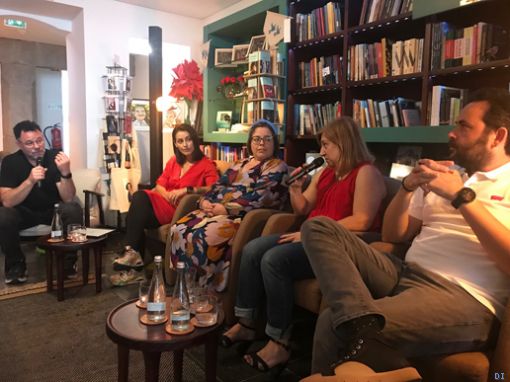
Anabela Marques, Public Prosecutor at the Angra do Heroísmo Juvenile and Family Court, says that there is an increasing awareness of children’s rights in the Azores, but that “situations of deprivation, of human misery, much more serious and in much greater numbers” persist there than on the mainland.
“Situations of sexual abuse are much greater, there is much more promiscuity in the family and a misery that is not exactly due to a lack of means, because they exist, people just have to go looking for them. It could be going to a social worker or some other association; people don’t even do that. People are reduced to having no expectations for themselves or their children,” she describes.
The prosecutor, who also points out the “huge divide between the mainland and the Azores” when it comes to teenage pregnancy figures, took part last Saturday in the talk “The child of the 21st century and its challenges” at Lar Doce Livro, in Angra do Heroísmo.
However, she notes a “very big difference” since the first time he was in Terceira in 2007. “The community in general, checks whether or not the child is in danger, if all their rights are being exercised, namely if the parents are complying. There’s a lot of scrutiny of the family,” he said.
The scenario is “better than before”without being “perfect.” The prosecutor says, “particularly at school and hospital levels, there are still fewer complaints and fewer reports of when children’s rights are not being guaranteed and when there are situations that really put them in danger.”
Anabela Marques believes that although there are institutional channels, educational and health establishments professionals may be afraid to take cases to child protection committees or the courts. “The environment is small, and people are afraid to report it because they always think they will be identified as having led to the process,” she points out, assuring that it can be done safely.
According to the prosecutor, today, “many more children” are removed from families where dangerous situations have been identified. “People are more attentive; there is more reporting and more monitoring,” she added.
Another problem is that of teenagers living without prospects. “We have a lot of teenagers who are dropping out of school and who need intervention because they don’t have access to this right, although they might say it’s because they don’t want to… It’s debatable whether it’s because they don’t want to. Sometimes what’s lacking are alternatives,” he reflects.
“They don’t know what they want to do, they have no idea, they don’t even know what they like. They spend their days watching tiktoks or youtube. A complete lack of perspective on what the future might hold for them,” he laments.
She explains that these cases have worsened with the pandemic and remain “mostly due to the complacency or negligence of the family.”
He points out that the concentration model in social housing estates increases the risks. “Maybe they look at their neighbor, two houses down, who lives well but on the side. This also happens a lot. Those are the heroes,” she says.
Anabela Marques has no concerns about the elites. “At regional level and in education, it would be easy, if people sat down and thought about it, to come up with a solution. Find alternatives, for example. We can’t expect all kids between the ages of zero and 18 to have the same abilities, the same prospects and the same dreams. That the model for all of them should be the same: study until the 12th grade with that rigid program. If the elites want to, they can change the system.”
In Diário Insular, José Lourenço-director
Translated to English as a community outreach program from the Portuguese Beyond Borders Institute (PBBI) and the Modern and Classical Languages and Literatures Department (MCLL) as part of Bruma Publication and ADMA (Azores-Diaspora Media Alliance) at California State University, Fresno, PBBI thanks FLAD from Lisbon Portugal for their support.
Bruma Publications, in collaboration with Letras Lavadas, published a work of fiction by Joel Neto, Jénifer or a French Princess, translated to English by Diniz Borges and Katharine Baker, which dives into these social issues, focused on this talk at Lar-Doce-Livro.
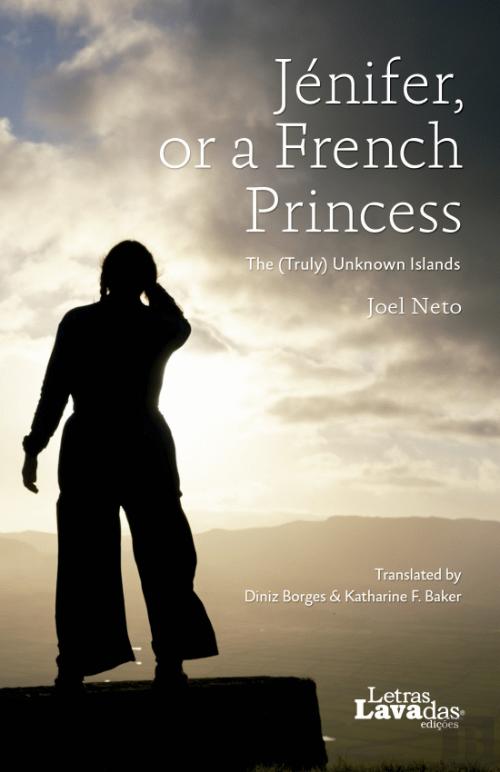
You can order the book here
 Novidades - The Islands and the Diaspora