


Interview with João Luís Gaspar, academic, researcher, and leader of the Crisis Office at IVAR
Terceira Island is alert regarding the Serra de Santa Bárbara volcano and the fissure system. Can you explain the two systems in question and whether or not they are related?
The island of Terceira has several volcanic systems, some of which are active, such as the Santa Bárbara Volcano and the Fissural Volcanic System. The Santa Bárbara Volcano is a central volcanic edifice with a caldera, which occupies the western sector of the island and covers, in a broad sense, the Serra de Santa Bárbara and the surrounding area up to the coastline. The Fissural Volcanic System, as its name suggests, corresponds to a longitudinal zone marked by the presence of faults that cross the entire island, from Ponta da Serreta to S. Sebastião. The latter is the subaerial expression of a regional fracture system, which, to the west of Terceira Island, includes the Serreta Submarine Ridge, where the 1998-2001 eruption occurred.
Given that the Santa Bárbara Volcano is crossed by faults in this regional system, there is a close connection between the two. This was clearly evident during the historic eruption of 1761 when the domes that make up the Mistérios Negros (Black Mysteries) on the eastern flank of the Santa Bárbara Volcano and the basaltic eruption of the Pico do Fogo and Pico Vermelho (Red Peak) on the fissure system took place in the space of a few days.
And what is the significance of the V3 alert for the Serra de Santa Bárbara volcano and the V1 alert for the fissure system?
The volcanic alert scale follows a protocol we have been implementing and improving. It currently includes 7 levels, ranging from V0 (resting state) to V7 (volcanic eruption of great magnitude).
The V3 alert level for the Santa Bárbara Volcano confirms the reactivation of the deep volcanic system, whose instability was recognized around two years ago with the change to alert level V2. This change in level is the result of the increase in seismicity observed over the last two months and the detection of signs of deformation, albeit slight, in the same area.
The change to alert level V1 for the Fissural Volcanic System is because seismicity sometimes extends further east than the Santa Bárbara Volcano and to our knowledge of the interaction between the two volcanic systems.
What can the population of Terceira expect as long as the new alert levels are maintained? What phenomena can be expected (seismic, volcanic, with the possible appearance of gases and/or lava, etc.) and, predictably, in which areas of the island or the surrounding sea might occur?
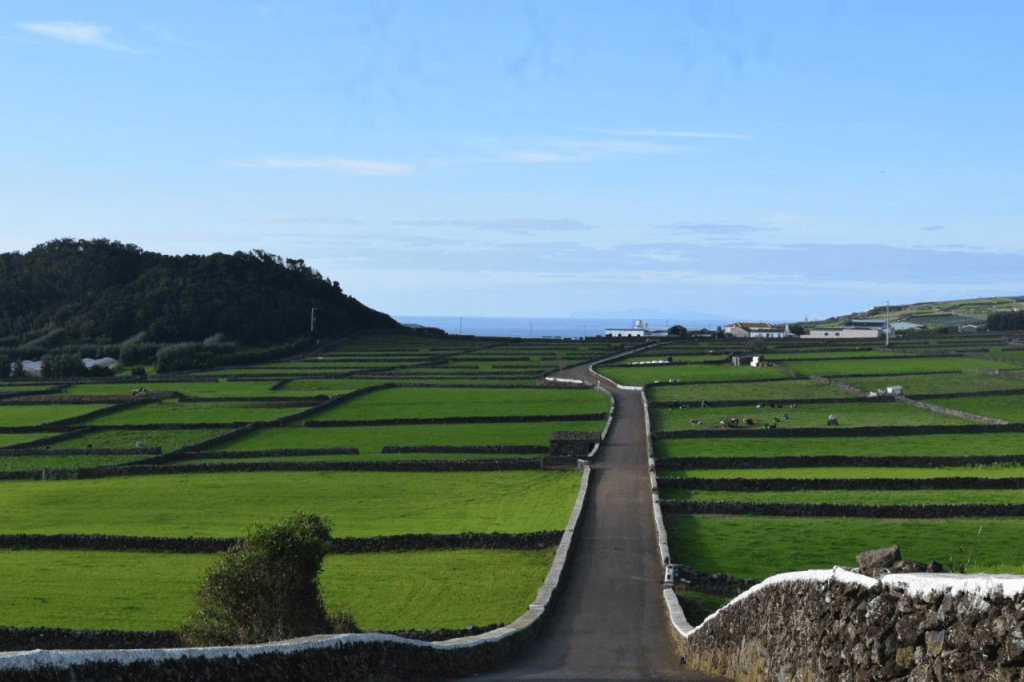
Seismic-volcanic activity has developed mainly in the island’s western half and the adjacent submarine areas, with a notable incidence within the perimeter of the Santa Bárbara Volcano. But, as mentioned, there have also been occasional earthquakes to the east, between Mistério dos Negros and the Terceira golf course, and in the strip stretching along the south coast, from Serreta to Angra do Heroísmo, in this case, because the tectonic structures there have to adjust to the tensions being generated in the Serra de Santa Bárbara area.
The pattern of the earthquake-volcanic crisis shows us that seismic activity will continue in these areas and will essentially be marked by low-magnitude earthquakes. However, in certain phases, peaks of more outstanding energy release occur naturally, with earthquakes that can be equal to or even more significant than the strongest recorded so far. In this context, it is essential to follow the recommendations of the civil protection authorities, which are typical for this type of situation and to which the population is accustomed, namely to avoid staying in buildings with low resistance to seismic action and not to drive near slopes that are susceptible to slope movements.

Is it likely, as in São Jorge, that the ongoing situation will decline rather than evolve? Is a return to normality possible without a volcanic eruption occurring in the meantime?
Yes, the system returns to normal in 80 to 90% of cases without evolving into a volcanic eruption. In any case, all scenarios must be prevented, as these are natural phenomena. If the situation develops more worryingly, the volcanic systems will show precursory signs. Still, we must remain vigilant because the development of these situations always involves a degree of uncertainty.
In your opinion, is it time for the population to know evacuation zones in the face of foreseeable scenarios, including routes, means of evacuation, and warning communication systems (or are we going to pray to Our Lady of Miracles of Serreta, promising more “quake processions” and hoping that she will intercede and nothing special will happen…)?
Emergency planning and carrying out civil protection exercises based on existing hazards are standard practices, and the information I have is that there has been a lot of work on these issues, both by the Regional Civil Protection and Fire Service of the Azores and the local authorities. I think that this is work that the civil protection authorities are directing according to the evolution of the situation, and, for this reason, what I can tell you is that we have participated in some meetings and initiatives related to the assessment of vulnerabilities and the construction of scenarios that can translate into efficient and, above all, adequate preparation and response. Concerning communication, I also know that public sessions have been held. Information on emergency procedures has been distributed, and the University of the Azores, through the Institute of Volcanology, has participated in some of these actions.
In short, a lot has already been done, but there will still be a lot to do, as this job is dynamic. I understand your question, but it touches on more structural issues that should be dealt with outside the current crisis within a framework of normality and future prospects.
in Diário Insular-José Lourenço, director
Translated to English as a community outreach program from the Portuguese Beyond Borders Institute (PBBI) and the Modern and Classical Languages and Literatures Department (MCLL) as part of Bruma Publication and ADMA (Azores-Diaspora Media Alliance) at California State University, Fresno, PBBI thanks Luso Financial for sponsoring NOVIDADES.

 Novidades - The Islands and the Diaspora