

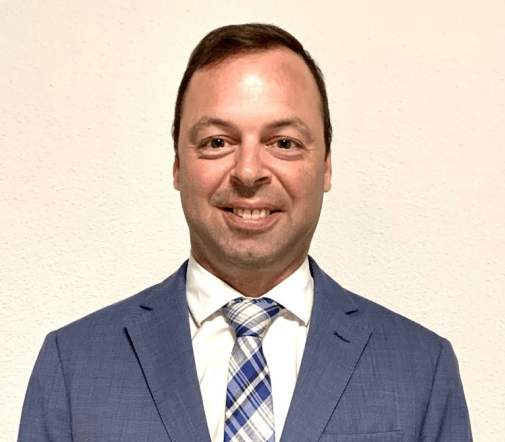
The Government of the Azores has appointed Rui Miguel Furtado Coutinho as Chairman of SATA Holding and given him the task of assigning the remaining members of the Board of Directors.
Duarte Freitas, the Secretary for Finance, Planning, and Public Administration, and Berta Cabral, the Regional Secretary for Tourism, Mobility, and Infrastructure, announced the move yesterday.
The Government also decided to keep Bernardo Oliveira and João Crispim Ponte on the Board of Directors of SATA Holding SA as non-executive directors to monitor the work under the restructuring plan.
The Board of Directors of SATA Holding SA will propose the Boards of Directors of the other SATA Group companies for subsequent approval by the General Meeting.
The Government of the Azores defines the priority of the new Chairman of the Board of Directors of SATA Holding as “strict compliance with the restructuring plan approved by the European Commission and, consequently, it should include the stabilization of the organization of the business structure, the adequacy of the operation with improved efficiency and cost reduction, the safeguarding of SATA Air Açores, the privatization of Azores Airlines, the restructuring and sale of the handling business as an autonomous company of the SATA Group and the submission of a bid in a possible new tender for territorial Public Service Operations “since the company is prohibited from operating loss-making routes. “
With these decisions, the Government of the Azores states that “it is completely convinced and confident that the SATA Group and its employees will move towards a future of sustainability and fulfillment of the fundamental mission for which SATA was born.”
Who is the new Chairman?
According to the Government of the Azores, the new President of SATA Holding has “several years’ experience in the airline and transport sector,” having been Regional Director of Air and Maritime Transport and Regional Director of Mobility.
He was head of the Airport Operations Department at Ponta Delgada Airport, Director of Santa Maria Airport, and head of the Planning, Management, and Control Division of the Açores Airports Directorate under the management of ANA Aeroportos de Portugal SA. He coordinated planning and management control, investments, marketing, licensing, environment, and information systems.
Strategic Council created
The creation of a strategic council was also announced, with the aim of “making decision-making processes in matters considered strategic more robust, promoting alignment of all the interests involved and strengthening the reflection on SATA’s role for the Region.”
The Government believes that the creation of a Strategic Council within the governance structure of SATA Holding SA “is pertinent, especially to facilitate and deepen debates on the main strategic challenges facing the company, taking in the perspectives of various representatives of the interests of the Azoreans and the SATA Group.”
This Strategic Council of the SATA Group will have between 7 and 9 members. It will be led by “a personality of recognized merit and professional suitability who excels in strategic thinking and business development.”
In this strategic council, created in SATA Holding’s statutes, “by a person with credibility, recognition and notoriety in the area of business but also in the area of business and management, what is intended is that we can have various sensitivities, various experiences, various approaches so that we can reflect with those who are the various social and political and business actors in the Region.”

During the meeting with journalists, he reaffirmed that the SATA Group “has to comply with what is defined in the Portuguese State’s commitment to Brussels. This is unquestionable and unavoidable. But within this commitment, and about the Group’s future, there are many strategic changes, and the intention is that it is not just the Government that reflects and defines strategies, but that the Government and SATA itself can have various contributions here so that we can have the most in-depth and most consensual definition possible of what the group’s main guidelines will be.”
One of the journalists raised the question of “discarding” the commitment to Brussels. The answer was, “What we have today is a commitment until 31 December 2025 to privatize more than 50% of Azores Airlines and 100% of handling.”
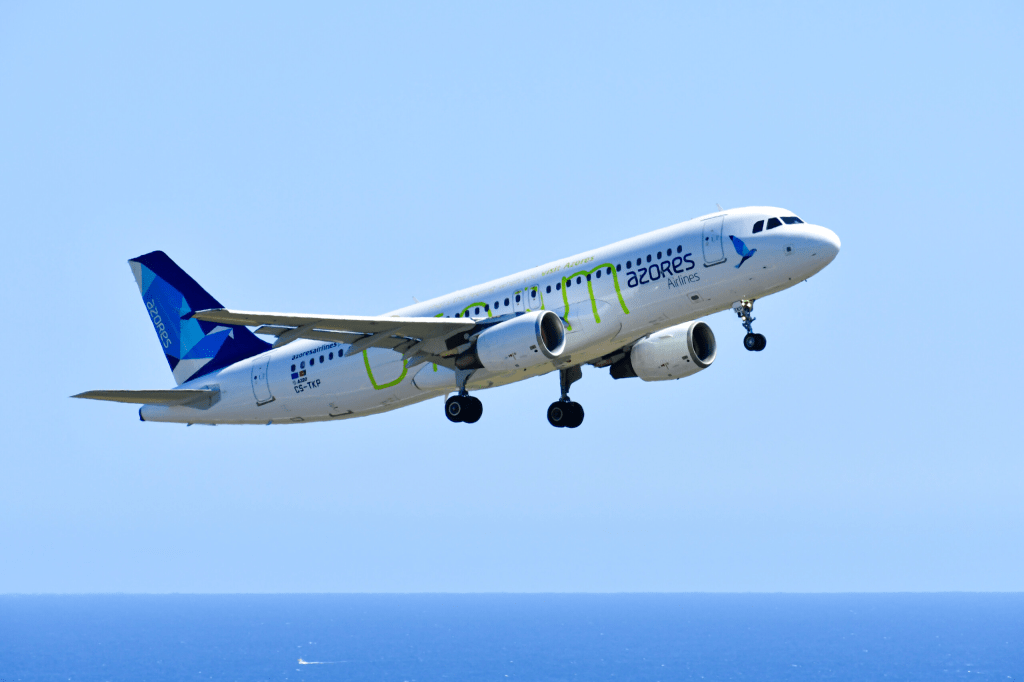
At Azores Airlines, the first and second steps have already been taken. The first step was creating the holding company and the spin-off of Azores Airlines to proceed with the privatization process, which has followed the path you know.
The short-term objective will be to handle the group’s structure so that we can complete its sale by December 31, 2025. “All these tasks can’t stop, and we can’t relax this concern and this effort, thinking there’s going to be a renegotiation. Because if we don’t have the conditions for renegotiation if the doors to renegotiation don’t open, we have to comply.”
“Today, the most certain thing is that we will have to comply with what is in the restructuring plan and that’s why the next Board of Directors has a kind of mission statement here, which is to carry out this restructuring: to make handling autonomous and move forward with the privatization process. Of course, whether it’s for these processes or for the future, the Board of Directors will have an important role here, central to defining the lines of organization,” stressed Finance Secretary Duarte Freitas.
The OPS issue
One of the topics of the press conference was the issue of the 90 million euros corresponding to the Public Service Operations that the SATA Group has been paying due to a lack of commitment from the Government of the Republic. The Secretary for Tourism and Mobility, Berta Cabral, began by replying that the issue that “must be borne in mind is that it is incomprehensible that, over the course of 7 years, neither the Regional Government nor the Government of the Republic resolved this situation and let Azores Airlines get into the situation it did.”
If it hadn’t paid this 90 million euros, Azores Airlines would have gone from a net loss of 30 million to a net profit of 60 million. “It would have made all the difference and what I can’t understand is that a Regional Government and a Government of the Republic, which were even of the same party, have not been able to resolve this issue since 2016 and have let SATA Internacional enter into a process of permanent losses when they knew that it was in their hands to pay for the public service that SATA provided and provides, making trips to non-liberalized gateways.”

Berta Cabral said that SATA’s proposal for the public tender for OPS was above the actual price. “It was above the limits to be accepted, so it was excluded. We are trying to achieve a transitional solution between the Government of the Republic and SATA International to subsidize and support these loss-making routes of the non-liberalized gateways. At the same time, a new public tender is not opened.”
“I’d like what’s behind to be recoverable, but this is the responsibility of people who are no longer in the Government of the Republic or the Regional Government,” Berta Cabral stressed.
Finally, when asked if the privatization process for Azores Airlines would not be held hostage to the court’s decision, the answer was that “that is our conviction.”
The meeting with journalists began with the Azorean government stating that SATA “is a strategic asset of the region and a true symbol of regional autonomy.”
Frederico Figueiredo is a journalist for Correios dos Açores-Natalino Viveiros, director.

Translated to English as a community outreach program from the Portuguese Beyond Borders Institute (PBBI) and the Modern and Classical Languages and Literatures Department (MCLL) as part of Bruma Publication and ADMA (Azores-Diaspora Media Alliance) at California State University, Fresno, PBBI thanks Luso Financial for sponsoring NOVIDADES.

 Novidades - The Islands and the Diaspora