

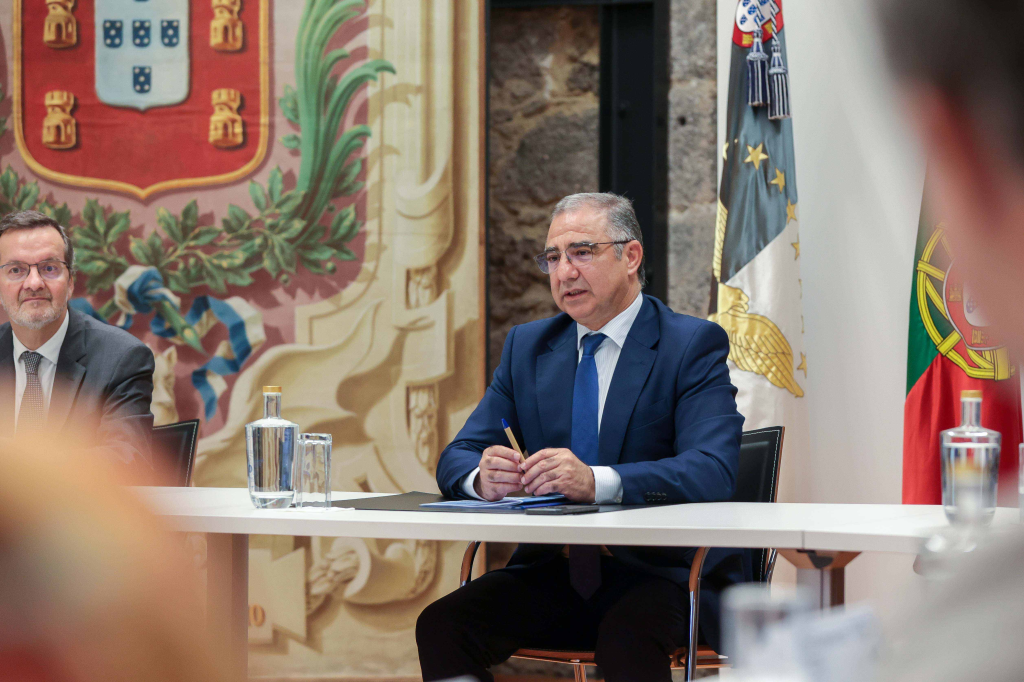
The President of the Regional Government of the Azores, José Manuel Bolieiro, presided over the III Consular Meeting of the Azores in Ponta Delgada today, which included members of the Region’s consular corps.
During the event, José Manuel Bolieiro Bolieiro highlighted the region’s growing capacity to receive and integrate immigrants, stressing the demographic stability of the increase in foreign residents.
“The Azores are increasingly a territory and an economy that welcomes immigrants. We do this with a great capacity for integration and a good welcome,” he said.
He added: “although the natural balance on our islands is negative, there is demographic stability as a result of this increase in immigrants living in the Azores.”
The meeting was divided into two thematic panels: the first panel focused on consular support for foreign citizens in the Azores, with interventions from consular representatives.
The second panel dealt with institutional support in the Region, with the participation of the Regional Director for Communities, José Andrade, the Director of the Association of Immigrants in the Azores, Marina Aguiar, and the Director of CRESAÇOR’s Migrant Support Office, Ana Silva.
The event highlighted the importance of collaboration between regional institutions and consular bodies to guarantee the support and integration of foreign citizens in the Azores.
The Regional Directorate for Communities has played a fundamental role in this process, offering continuous monitoring and support to immigrants, thus demonstrating the Region’s capacity to welcome and integrate immigrants.
José Manuel Bolieiro took the opportunity to inform the consular corps of the Azorean government’s intention to establish a protocol with the Association of Immigrants in the Azores (AIM) to certify biometric data on each island. This protocol will be facilitated by the Integrated Citizen Support Network (RIAC), allowing documentation without the need to travel between islands, optimizing the process, and making it more accessible for all immigrants in the region.
Translated to English as a community outreach program from the Portuguese Beyond Borders Institute (PBBI) and the Modern and Classical Languages and Literatures Department (MCLL) as part of Bruma Publication and ADMA (Azores-Diaspora Media Alliance) at California State University, Fresno, PBBI thanks Luso Financial for sponsoring NOVIDADES.

 Novidades - The Islands and the Diaspora