

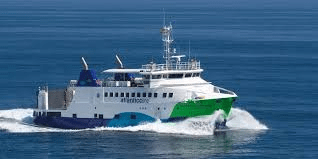
Atlânticoline may go on strike this month. The union representing the workers who run Atlânticoline’s ships has submitted a strike notice that will begin on July 20, if there is no consensus with Atlânticoline’s management.
As a result, the São Jorge Island Business Group expressed its “deep concern and anger” in a press release about the potential economic impact that the Atlânticoline strike, announced on July 2, could have on the Azorean tourism sector, particularly on the island of São Jorge.
The group explains that the almost total stoppage of maritime passenger transportation will seriously compromise the experience of our visitors and the sustainability of hundreds of local businesses.
The entrepreneurs say that there will be four “foreseeable” impacts, including the difficulty of accessing the other islands, the damage to the local economy which “will certainly exceed one million euros per week, the damage in terms of image and promotion, and the cancellations and refunds which “will overload travel agencies and tour operators, creating an environment of uncertainty and frustration concerning the destination.”
The São Jorge Island Business Group recognizes the right to strike but states that it is “fundamental that this right does not harm hundreds of entrepreneurs who are waiting for the high season to ensure the sustainability of their companies and the maintenance of jobs.” It also explains that continuing this situation could cause “irreversible damage that will take years to overcome.”
The entrepreneurs also say that “the freedom of some ends when the freedom of others begins” and that a balance between “personal freedom and social responsibility” is needed.
“The tourism sector is vital for the economy of the Azores and for the well-being of local communities, particularly in the Triangle, where seasonality is a major factor penalizing economic growth. A strike of this magnitude is an unspeakable level of irresponsibility,” the group warns.
The group advises the regional government to consider alternatives such as “civil requisition” or “in the future, the privatization of the company,” as the note states.

The Mayor of Velas says this strike during the high season damages the local economy.
The Mayor of Velas, on the island of São Jorge, Luís Silveira, says that this strike will harm people in the triangle and also people with connections to Graciosa or Terceira, explaining that the “high season generates very considerable turnover in the local economy”.
“It’s obvious that the strike, especially in this high season, will do a lot of harm to people in the triangle and also to people with connections to Graciosa and Terceira. At that time, in addition to the high number of tourists, there are the summer festivals. This weekend it was in Velas, next weekend it will be in Calheta (São Jorge), then Madalena (Pico), then São Roque do Pico and then Horta (Faial). So, there are the summer festivals that move a lot of people around the triangle and also the marches on the islands of Terceira and Graciosa. There is a cultural aspect that then hits the economic aspect, which ends up damaging the summer festivals, which are a complement to tourist entertainment in the summer. In high season, they generate very considerable amounts of money for the local economy in each of the municipalities. Obviously, the strike has a huge impact on each of the municipalities, particularly the six municipalities of Pico, Faial and São Jorge,” says the mayor of Velas
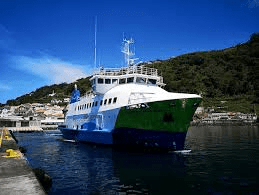
Luís Silveira explains that the non-realization of these trips will cause immediate damage and harm the Azores’ image: “There are many groups that have bookings made. Many groups are in São Jorge and are going to spend the day in Pico or Faial or vice versa. It’s obvious that it’s not just immediate damage, but it will also damage the image of the Azores. If they don’t have these trips, they will have a bad image of the Azores, in addition to the embarrassment it creates for tourists. This is terrible. Obviously, they are aware of this. And because they are aware of this, they go on strike at this time to use it as a weapon to put pressure on Atlânticoline’s management in relation to what they want.”
The Mayor of Velas believes that “you shouldn’t play around with the economy of a region” and that you can’t negotiate, get everything right, and then go back to asking for new negotiations.
“We think, and I in particular, that you can’t play games with the economy of a region, particularly with these islands and these municipalities, which feel the lack and it happens year after year. You can’t negotiate one year, everything’s fine and then, a few months later, negotiate again and put pressure on the high season. It’s not sustainable. And it’s terrible for us,” he says.
Luís Silveira explains that he respects the right to strike and is not against strikes, but believes that they can’t happen “on purpose”.
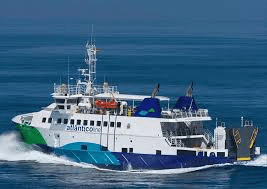
“If the strike does go ahead, I don’t see it in a good light. First of all, I respect the right to strike and I’m not against it either. However, I’m not in favor of strikes happening every year and being provoked in high season on purpose, which greatly affects the economy of these municipalities and islands. There needs to be some awareness of this and there needs to be a balance between the company, its employees, the representative unions and realizing that it can’t continue the way it is. There needs to be a solution, which we don’t know what it is because every time they negotiate and everything is fine, they want to start new negotiations again in the high season,” he said.
The Mayor of Velas also says that “tourism isn’t waiting to find out if there’s going to be a strike or not” and that the “announcement of a strike notice is clearly damaging”, giving an example.
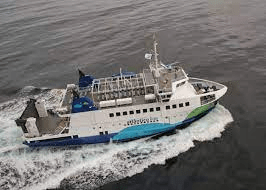
“If I’m a tour operator who has a group of tourists to make a connection between, for example, Pico and Faial, and that trip isn’t going to happen because of the strike notice, I’m not going to subject my clients to that. If the day comes and it doesn’t happen, what will it be like? Basically, I’d be selling a product that won’t end up happening and that would complicate the tourist’s stay. It’s obvious that not making the trip will harm the local economy of the municipality that would be visited, namely restaurants, tour guides, bus operators, among others,” concluded Luís Silveira.
Correio dos Açores tried to hear the positions of the mayors of Madalena do Pico and Horta, but by the end of this edition, we were unable to do so.
Filipe Torres, journalist for Correio dos Açores-Natalino Viveira, director
Translated to English as a community outreach program from the Portuguese Beyond Borders Institute (PBBI) and the Modern and Classical Languages and Literatures Department (MCLL) as part of Bruma Publication and ADMA (Azores-Diaspora Media Alliance) at California State University, Fresno, PBBI thanks Luso Financial for sponsoring NOVIDADES.

 Novidades - The Islands and the Diaspora